Hewë-e
AeroFoundry · Brazil · Updated

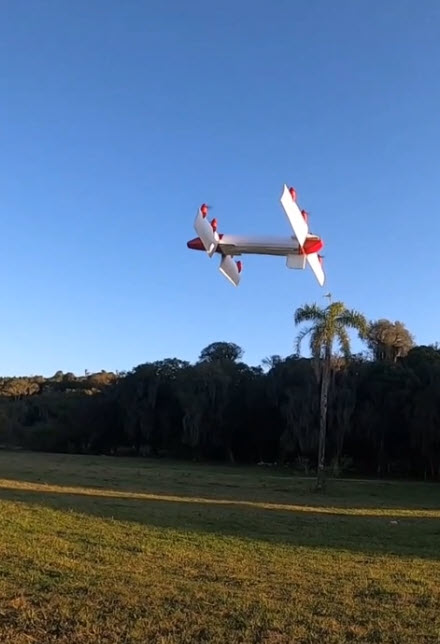
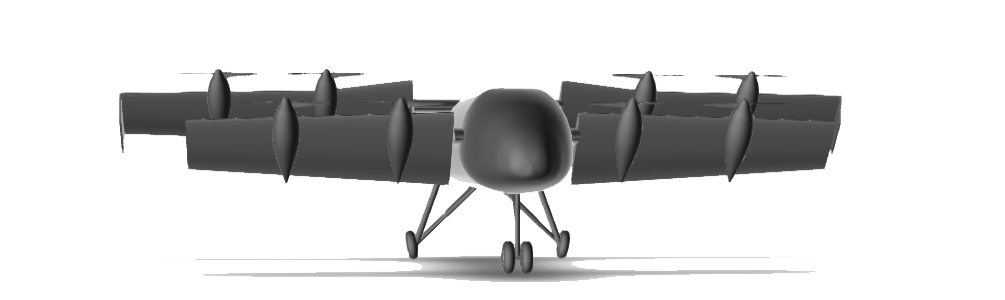
Hewë-e is a backpack-portable, twin-engine tailsitter micro aerial vehicle (MAV) developed by AeroFoundry of Brazil for vertical take-off-and-landing or hand-launched operation, marketed for agriculture and surveillance use.
Overview
AeroFoundry named the aircraft Hewë, a word the manufacturer's original product material translates from the Yanomami language as "vampire," with "Hewë-e" used as the model designation. The manufacturer describes it as a practical micro aerial vehicle built for operators who need a compact, foam-bodied airframe that can be deployed from a backpack rather than requiring a runway or launch rail. AeroFoundry's current product catalogue, which lists the Yaró, Köpari family, Texo VTOL, Siemarí and Biguá platforms, no longer includes the Hewë-e; this listing reflects the aircraft as it was described when AeroFoundry originally brought it to market.
Design and capabilities
Hewë-e uses a tailsitter configuration, which AeroFoundry's original description presents as a way to combine vertical take-off and landing with efficient forward flight: the aircraft takes off and lands on its tail, then pitches over into level flight, avoiding both the arm strain of hand-launching and the scratching risk of a horizontal belly landing on rough terrain. The manufacturer's original material describes a roughly 3 kg foam airframe, vacuum-bag laminated with aramid fabric for durability in rugged environments, powered by a twin-engine layout that the manufacturer says gives better trajectory control through the transition between hovering and forward flight. AeroFoundry did not publish independently verifiable figures for the aircraft's weight, speed, endurance or range on its current site, so those specifications are left unconfirmed here rather than estimated.
Use cases
AeroFoundry positioned Hewë-e for agricultural monitoring and surveillance missions in terrain such as rugged or remote sites where a conventional runway-launched fixed-wing aircraft would be impractical. No specific operator or customer is named in the available material.
Frequently asked questions
What is the Hewë-e?
A backpack-portable, twin-engine tailsitter micro aerial vehicle from Brazil's AeroFoundry, designed for vertical take-off and landing.
What is the Hewë-e used for?
Agricultural monitoring and surveillance, according to the manufacturer's original product description.
Is the Hewë-e still made?
It no longer appears in AeroFoundry's current product lineup, which as of this review lists the Yaró, Köpari family, Texo, Siemarí and Biguá platforms instead.
Why is a tailsitter design used?
AeroFoundry's original material says the configuration combines vertical take-off and landing with efficient level flight, avoiding the strain of hand-launching and the landing risks of a horizontal belly-lander.