Taranis
BAE Systems · United Kingdom · Updated
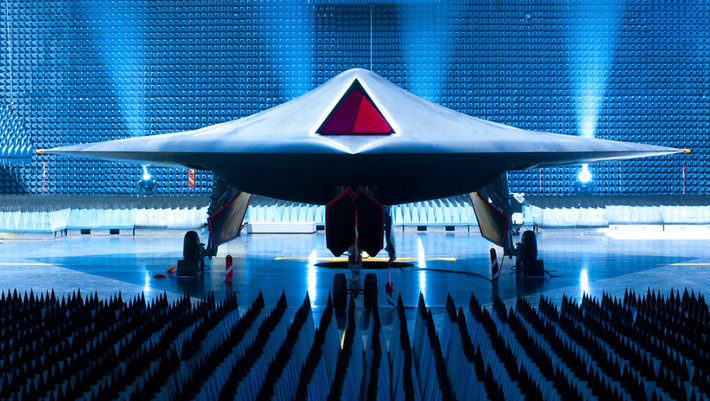
Taranis is a stealthy unmanned combat air vehicle (UCAV) technology demonstrator developed for the United Kingdom by BAE Systems, first flown on 10 August 2013. Named after the Celtic god of thunder, it was built to prove that Britain could design an autonomous, low-observable aircraft capable of long-range strike missions under a human operator's overall control.
Overview
The Taranis programme was announced in December 2006 as part of the UK's Defence Industrial Strategy, with BAE Systems as prime contractor working alongside Rolls-Royce, the Systems division of GE Aviation (formerly Smiths Aerospace), QinetiQ and around 250 other UK suppliers. Funded jointly by the Ministry of Defence and industry at a cost of about £185 million, the aircraft was assembled from 2008 and formally unveiled at BAE Systems' Warton, Lancashire site in July 2010.
The demonstrator was intended to explore the technologies needed for a UK unmanned strike aircraft — low observability, full autonomy, and integration with a ground control station — rather than to become an operational weapon itself. Its findings were meant to inform Ministry of Defence and Royal Air Force decisions on how crewed and uncrewed combat aircraft might operate together in future.
Design and capabilities
Taranis is roughly the size of a BAE Systems Hawk jet trainer: about 12.43 m long with a wingspan of around 10 m and a maximum take-off weight of about 8,000 kg. It is powered by a single Rolls-Royce Adour turbofan producing about 44 kN of thrust, and its flying-wing shape with two internal weapon bays was designed to minimise radar cross-section. The aircraft was built to fly autonomously along a mission plan while remaining under the oversight of a human operator, who could authorise strikes but was not required to fly the aircraft directly.
Operational history
Ground ("power-up") testing began at Warton in 2010, followed by radar cross-section measurements, ground-station integration and unmanned taxi trials in April 2013. Taranis made its first flight at the Woomera Test Range in South Australia on 10 August 2013, lasting about 15 minutes, with later flights extending to around an hour. By December 2015 BAE Systems had completed three phases of flight trials, reporting that the aircraft met its test objectives for handling and speed control. Taranis never entered production or service; instead, the technologies it proved fed into the Anglo-French Future Combat Air System studies of the mid-2010s and later into BAE Systems' work on autonomous "loyal wingman" concepts for the Tempest programme.
Frequently asked questions
Did Taranis ever go into service?
No. It was always a technology demonstrator; testing concluded in 2015 and its lessons fed into later UK combat-air programmes rather than into an operational aircraft.
How big is Taranis?
About 12.43 m long with a roughly 10 m wingspan and a maximum take-off weight of about 8,000 kg — approximately the size of a BAE Systems Hawk jet trainer.
When did Taranis first fly?
10 August 2013, at the Woomera Test Range in South Australia.
How much did the Taranis programme cost?
About £185 million, funded jointly by the UK Ministry of Defence and industry partners.
Who built Taranis?
BAE Systems as prime contractor, with Rolls-Royce, GE Aviation Systems and QinetiQ as principal partners, plus about 250 other UK suppliers.