Aerial Persistence
Israel Aerospace Industries · Israel · also known as Heron, IAI Heron, IAI Heron 1, Machatz-1
Aerial Persistence is Israel Aerospace Industries' marketing term for its Heron family of medium-altitude, long-endurance (MALE) unmanned aerial systems, built for extended, multi-sensor intelligence, surveillance and reconnaissance (ISR) missions.
Overview
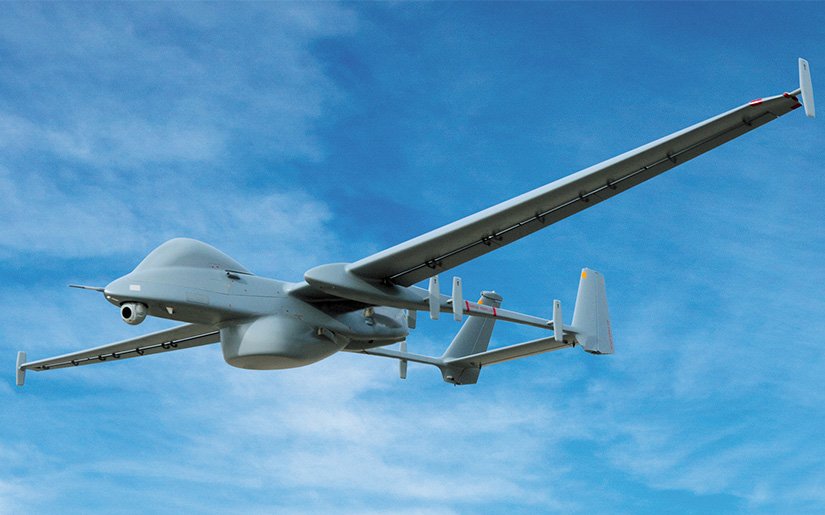
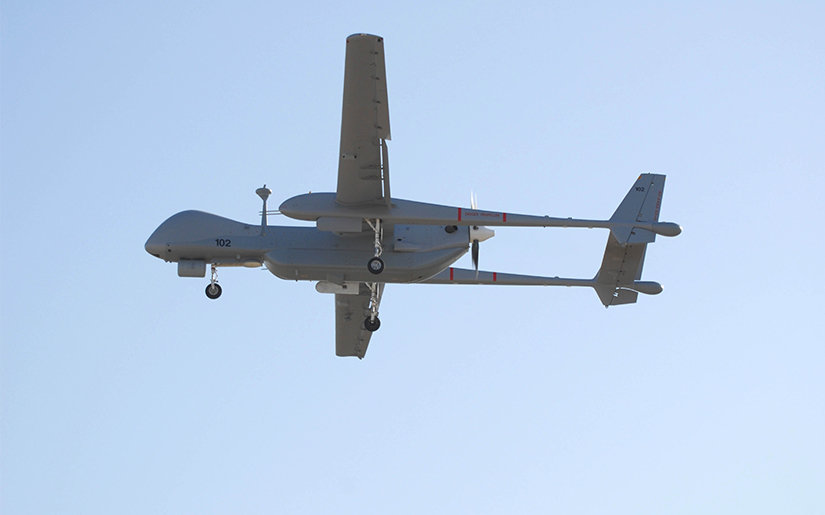
"Aerial Persistence" is not a standalone aircraft model — it is the phrase IAI's Malat division uses on its product pages to describe the sustained, multi-sensor ISR capability of the Heron unmanned aerial system line. The Heron first flew in 1994 and became operational with the Israeli Air Force in 2007; it has since been adopted by more than a dozen air forces worldwide. It is a fixed-wing MALE UAS with a twin-boom fuselage and a rear-mounted pusher propeller, designed to carry multiple sensor payloads on long-duration missions at medium altitude.
Design and capabilities
The Heron airframe is 8.5 m long with a 16.6 m wingspan. IAI's current product page lists a maximum take-off weight of 1,270 kg and a payload capacity of up to 470 kg, distributed across several mission payload stations that can be flown simultaneously. Typical sensor fits include electro-optical/infrared (EO/IR) turrets, synthetic aperture radar, signals-intelligence packages and laser designators. The aircraft communicates over line-of-sight datalinks and, via satellite relay, well beyond line of sight, allowing intelligence to be shared with remote users in near-real time. IAI states the type can remain airborne for up to 45 hours per sortie, with a service ceiling above 35,000 ft (about 10,668 m). The original Heron 1 airframe is powered by a single Rotax 914 turbocharged piston engine of about 115 hp (85 kW), per Wikipedia.
Operational history
The Heron first flew in 1994 and reached operational status with the Israeli Air Force in 2007. It has since been acquired or leased by air forces and government agencies including those of India, Turkey, Germany, Canada, Australia, Brazil and Azerbaijan, among others, for border surveillance, maritime patrol and long-endurance reconnaissance duties. Related aircraft developed under the same Malat programme lineage include the larger, turboprop-powered Heron TP (also designated IAI Eitan) and the European-assembled EADS/Airbus Harfang, based on the Heron airframe.
Frequently asked questions
Is "Aerial Persistence" a separate aircraft from the Heron?
No. It is IAI's marketing name for the Heron UAS family's sustained, multi-sensor ISR capability, not a distinct airframe or model.
What class of aircraft is the Heron?
It is a fixed-wing, medium-altitude, long-endurance (MALE) unmanned aerial system.
How long can the Heron stay airborne?
IAI lists a maximum endurance of up to 45 hours per sortie, depending on payload and mission profile.
What sensors does it carry?
Typical payloads include EO/IR cameras, synthetic aperture radar, and signals-intelligence packages, with capacity to fly several payloads together.
Who operates the Heron?
Operators include the Israeli Air Force and air forces or agencies in India, Turkey, Germany, Canada, Australia, Brazil and Azerbaijan, among others.
Does the Heron carry weapons?
No. It is an intelligence, surveillance and reconnaissance platform and is not configured to carry or launch munitions.