Anka
Turkish Aerospace Industries · Türkiye · Updated
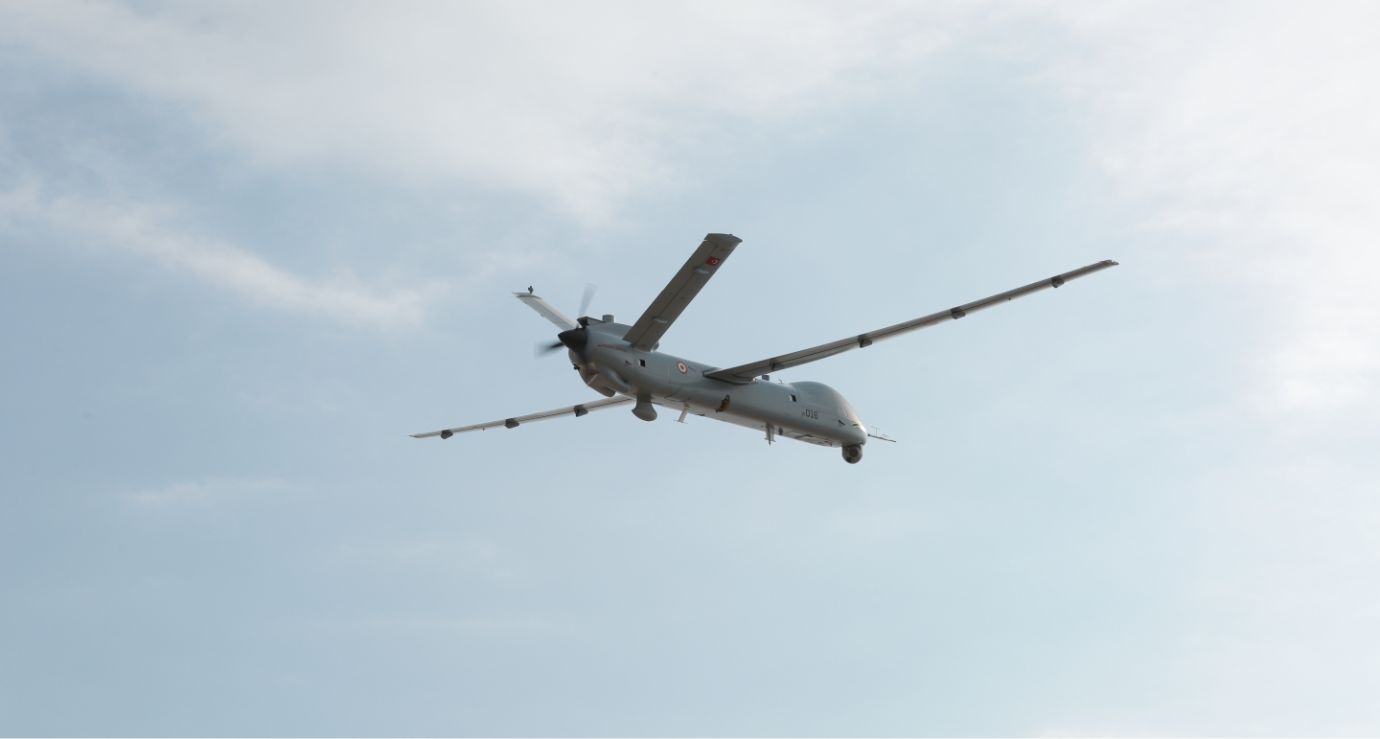
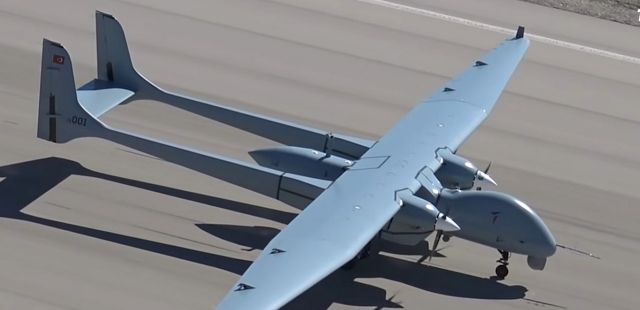
Anka is a medium-altitude long-endurance (MALE) unmanned aerial vehicle developed by Turkish Aerospace Industries of Turkey, first flown on December 30, 2010. It was Turkey's first domestically designed and built MALE-class system and forms the basis for the later, larger ANKA-AKSUNGUR.
Overview
The Anka programme originated from a December 2004 contract between the Turkish Undersecretariat for Defence Industries and Turkish Aerospace Industries (TAI) to develop a nationally produced MALE unmanned aircraft for reconnaissance and surveillance. The design passed its preliminary design review in May 2008 and was unveiled publicly at the Farnborough International Airshow in July 2010, following a hangar rollout ceremony that month. The prototype completed its first flight on December 30, 2010, and the type went on to demonstrate an 18-plus-hour endurance flight during Turkish Air Force acceptance testing in January 2013.
A contract for serial production of ten aircraft was signed in October 2013, leading to the Anka-S variant, which adds a satellite communications antenna and a domestically produced flight control computer. A Block-B version integrating synthetic aperture / inverse synthetic aperture radar (SAR/ISAR) and ground moving target indication (GMTI) sensors followed in 2014-2015 and was shown at the ILA Berlin and Farnborough airshows in 2014. Turkish Aerospace states the Anka fleet has since accumulated more than 400,000 flight hours.
Anka has also been sold abroad. Turkish Aerospace and Turkish government announcements identify Tunisia, Kazakhstan, Kyrgyzstan, Chad, Algeria, Indonesia, Malaysia and Uzbekistan as export customers or contracted buyers of Anka or Anka-S variants.
Design and capabilities
Anka has a length of 8.6 m, a wingspan of 17.5 m and a maximum take-off weight of 1,700 kg, giving it a payload capacity of more than 350 kg. It is powered by a single piston engine — either an imported Thielert Centurion 2.0S or the domestically produced TEI-PD170 diesel engine on later aircraft — turning a three-bladed propeller and burning diesel or JP-8 jet fuel. Turkish Aerospace lists an endurance of up to 30 hours, a service ceiling of 30,000 ft (9,144 m) and a maximum speed of about 217 km/h.
The aircraft carries an encrypted digital datalink rated by the manufacturer at more than 250 km line-of-sight range, extendable beyond line of sight to over 2,500 km through satellite communication on SATCOM-equipped variants. Anka is designed for redundant, largely autonomous operation, with dual flight control computers, an automatic take-off-and-landing system using two independent positioning sources, a retracting landing gear designed to keep sensor payloads unobstructed, and anti-icing systems for all-weather flight. Depending on variant, payload options include EO/IR cameras, SAR/GMTI-ISAR radar, and a COMINT/ELINT/ESM electronic-warfare and jamming suite; armed configurations can carry precision-guided bombs, laser-guided rockets and anti-tank missiles.
Operational history
Anka entered Turkish Armed Forces service following the January 2013 acceptance tests, with the Turkish Air Force, Turkish Naval Forces, Gendarmerie General Command and National Intelligence Organization (which operates a SIGINT-configured Anka-I) all listed as domestic operators. Serial Anka-S production has continued since the 2013 contract award. Export customers include Tunisia, which received Anka-S aircraft under a contract concluded in 2020, and Kyrgyzstan, which took delivery of Anka systems alongside other Turkish unmanned aircraft in 2023. Kazakhstan, Chad, Algeria, Indonesia, Malaysia and Uzbekistan have since placed orders or received aircraft, with Malaysia's Royal Malaysian Air Force scheduled to receive its first Anka-S airframes for maritime surveillance from 2025.
Variants
| Variant | Description |
|---|---|
| Anka-A | Baseline unarmed reconnaissance and surveillance version |
| Anka-B (Block B) | Upgraded sensor package with SAR/ISAR and GMTI radar, integrated from 2014-2015 |
| Anka-S | Serial-production variant with SATCOM antenna and national flight control computer; primary export configuration |
| Anka-I | Signals-intelligence (SIGINT) configuration operated by Turkey's National Intelligence Organization |
| ANKA-AKSUNGUR | Larger, twin-engine derivative developed by Turkish Aerospace using Anka-series avionics and ground control systems, with substantially greater payload and endurance |
Frequently asked questions
When did Anka first fly?
Anka completed its first flight on December 30, 2010, after a public rollout the previous July.
What is Anka's maximum take-off weight?
Anka has a maximum take-off weight of 1,700 kg and can carry a payload of more than 350 kg.
How long can Anka stay airborne?
Turkish Aerospace lists an endurance of up to 30 hours at a service ceiling of 9,144 m (30,000 ft).
Which countries operate Anka?
Turkey is the primary operator; Tunisia, Kazakhstan, Kyrgyzstan, Chad, Algeria, Indonesia, Malaysia and Uzbekistan have contracted for or received Anka or Anka-S aircraft.
How is Anka related to ANKA-AKSUNGUR?
ANKA-AKSUNGUR is a larger, twin-engine MALE UAV that Turkish Aerospace developed from the Anka programme, reusing its avionics architecture and ground control systems on a significantly bigger airframe.
What is Anka's control range?
The manufacturer rates Anka's direct datalink range at more than 250 km, extendable beyond line of sight to over 2,500 km via satellite communication on equipped aircraft.