Black Recon
Teledyne Flir · United States · also known as Black Recon VRS, Black Recon Vehicle Reconnaissance System · Updated
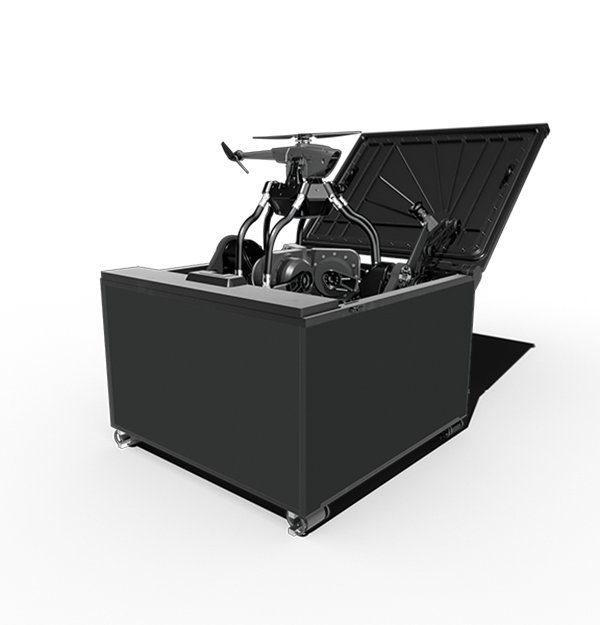
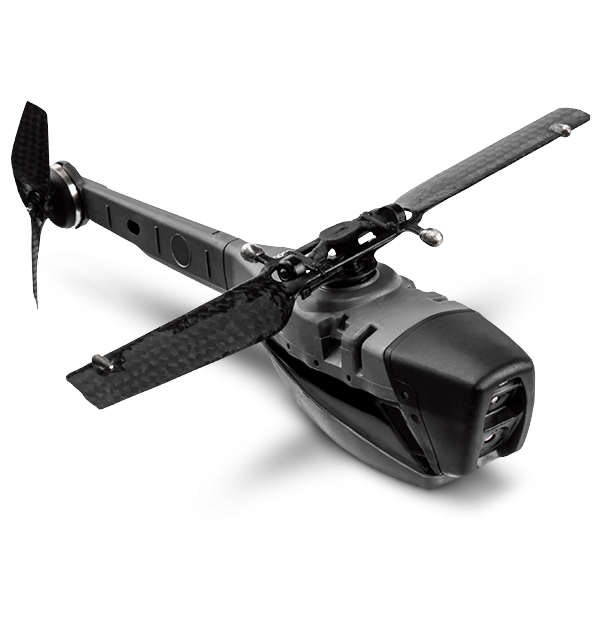
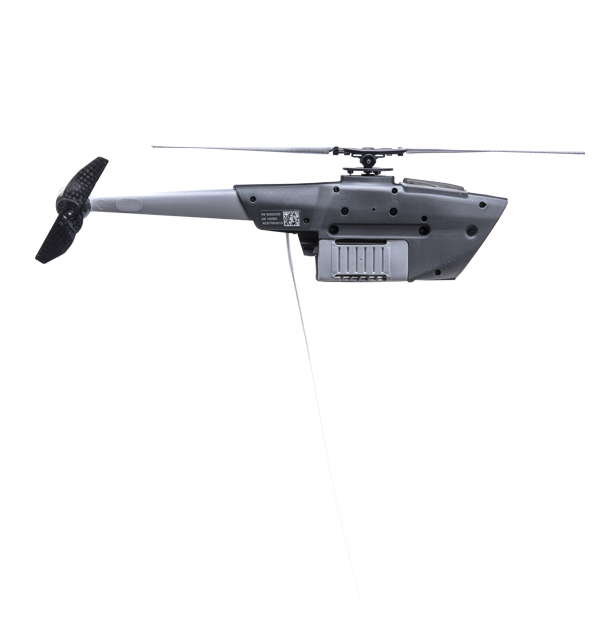
Black Recon is an autonomous micro-drone from Teledyne FLIR Defense of the United States, designed to launch, recover and recharge from a vehicle-mounted unit for continuous reconnaissance ahead of combat vehicles. Teledyne FLIR formally launched the production system at the Eurosatory defence exhibition in June 2026, after showing an earlier concept at DSEI in September 2023.
Overview
Teledyne FLIR's team in Norway began developing Black Recon in 2020 with support from the Norwegian Defence Research Establishment, drawing on the company's experience with the Black Hornet nano-drone and on lessons from Black Hornet's combat use in Ukraine. An early concept built around a Black Hornet 3-derived airframe was shown in 2018, but field trials found that a drone designed for a dismounted soldier was not well suited to vehicle mounting, which led the company to refine the design specifically for combat-vehicle integration. Breaking Defense reports that Black Recon's first flights took place in Norway in the winter before its June 2026 launch, and that Teledyne FLIR has signed contracts with two unnamed European customers, with deliveries expected to begin in 2027; the system had not yet been demonstrated to the US Army as of that report, though trials were expected later in 2026.
The system is built around a launch-and-recovery unit that holds three Black Recon drones at once, mounted on a combat vehicle such as a main battle tank or infantry fighting vehicle. One drone can be airborne while another recharges in the unit, and each returning drone is captured and docked automatically. Teledyne FLIR designed the unit to interface with vehicle electronics over standards including STANAG 4586, STANAG 4609 and MIL-STD-1275E, and rates it to MIL-STD-810H and IP67 for battlefield durability.
Design and capabilities
Army Technology's project data lists each Black Recon drone at about 350 g, with a maximum ground speed of 12 m/s (about 43 km/h) and a faster waypoint-transit mode of up to 24 m/s (about 86 km/h) in favourable wind; Breaking Defense separately reports a company-quoted top speed of around 55 mph (89 km/h) for the same June 2026 launch, a close match once rounding is accounted for, and a slightly higher weight figure of under 450 g. Endurance is rated at more than 45 minutes per flight by Army Technology and Defense News, though Breaking Defense describes flight time of "up to one hour" — differences that likely reflect updated company figures given at different times rather than two different aircraft. The drone's encrypted datalink reaches up to 6 km with beyond-line-of-sight capability, extendable further by relaying through a second airborne Black Recon, and the aircraft has a service ceiling of about 3,600 m (12,000 ft). It is rated for winds up to 14 m/s and rainfall up to 7.6 mm/h, and navigates without GNSS using visual-inertial navigation. Sensor options include a 12 MP or 50 MP electro-optical camera and a 3x zoom thermal imager at 650×512 resolution, plus white illumination lights for close-in work.
Operational history
As of the most recent public reporting, Black Recon has flown in trials in Norway and Teledyne FLIR has signed contracts with two unnamed European defence customers, with deliveries expected to begin in 2027. No operator has been named publicly, and the system had not yet been demonstrated to the US Army.
Frequently asked questions
What is Black Recon used for?
Continuous reconnaissance, surveillance and target acquisition ahead of a moving combat vehicle, launched and recovered automatically without the crew leaving the vehicle.
How many Black Recon drones does one launch unit carry?
Three, cycling so that one can be airborne while another recharges in the unit.
How fast does the Black Recon fly?
Army Technology lists a maximum ground speed of about 12 m/s (43 km/h) and a waypoint-transit mode of up to 24 m/s (86 km/h); Teledyne FLIR has also quoted a top speed of around 55 mph (89 km/h).
When is Black Recon expected to enter service?
Teledyne FLIR has signed contracts with two European customers and expects deliveries to begin in 2027.
Is Black Recon related to Black Hornet?
Yes. Teledyne FLIR built it on know-how from the Black Hornet nano-drone programme, and the Black Recon launch unit is compatible with the Black Hornet 4 personal reconnaissance system.