CAPA-X
Survey Copter · France · also known as U050 Capa-X, Capa-X U050, Survey Copter CAPA-X · Updated
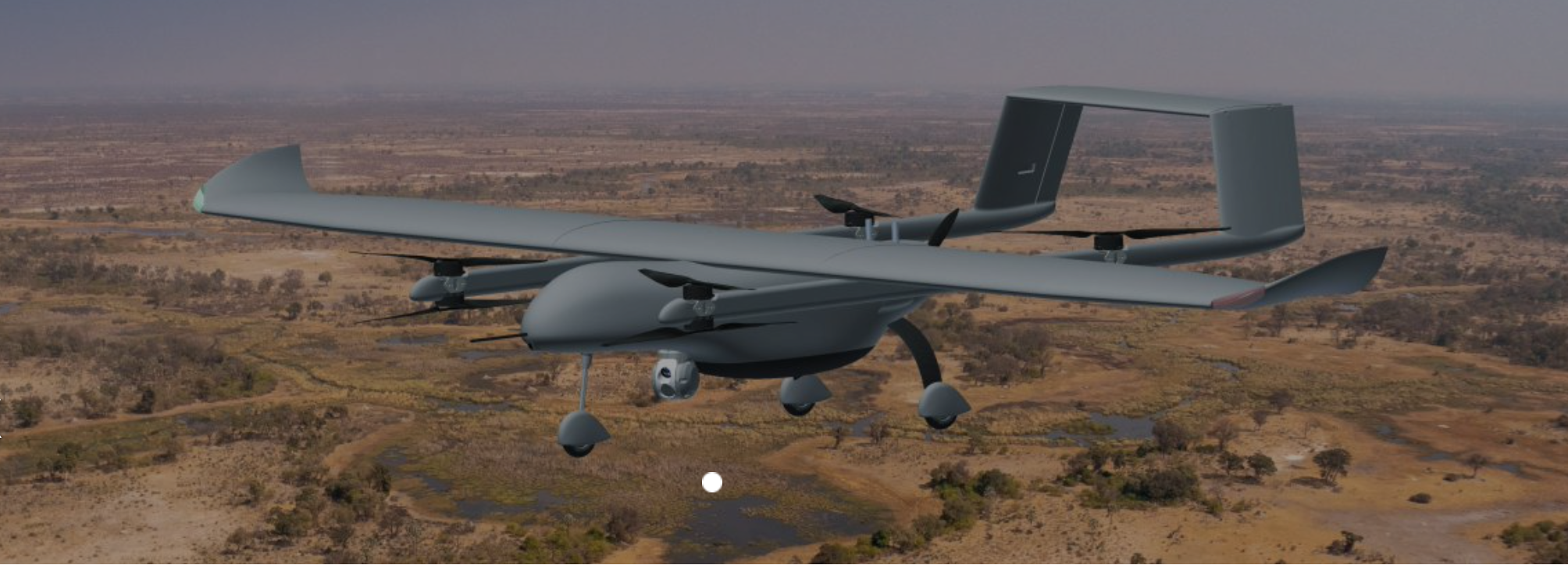
CAPA-X, now marketed by Airbus as the U050 Capa-X, is a modular vertical take-off and landing (VTOL) tactical drone developed by Survey Copter of France, first unveiled in March 2023. It is designed as a scalable, multi-mission uncrewed aircraft system (UAS) for military and parapublic users, built mainly from French, ITAR-free components.
Overview
Survey Copter, a subsidiary of the Airbus group, showed a model of the Capa-X on 28 March 2023 at the SOFINS special-forces trade show in Bordeaux, where Shephard Media reported an aircraft of about 75 kg targeting 8 to 10 hours of autonomous endurance. Survey Copter positioned the design around sovereignty and modularity, assembling it at its plant in Pierrelatte in southern France.
Airbus's current product page markets the aircraft, now designated U050 Capa-X, as a multi-mission tactical UAS for civil, parapublic and military use — including intelligence, surveillance and reconnaissance, border surveillance, search and rescue, and infrastructure inspection — with a modular, plug-and-play payload architecture intended to let the platform take on new roles such as electronic warfare over time.
France's defence procurement agency, the DMAé, acquired an initial Capa-X system at the end of 2025, and Airbus's page reports that it placed an additional order on 10 September 2026 "following the successful evaluation" of that system.
Design and capabilities
Airbus's current specification lists the U050 Capa-X at a maximum take-off weight of 120 kg, up from the roughly 75 kg Survey Copter quoted at the 2023 unveiling — a difference consistent with the aircraft moving from an early demonstrator to its current production configuration. It carries a payload of up to 20 kg, with an under-fuselage cargo bay and the ability to run two or three sensor payloads at once. Airbus quotes an endurance of more than 10 hours, though its own FAQ qualifies this as "up to 10 hours with a 10 kg payload," noting that actual endurance varies with payload and mission profile.
The aircraft takes off and lands vertically, using four electric twin-rotor units, and Airbus describes it as able to operate from an area as small as 10 m by 10 m, independent of a runway or launch equipment, with a deployment time under 20 minutes. Interchangeable short-wing and long-wing fixed-wing airframes are available; the short-wing configuration reaches a maximum speed of 150 km/h, with a maximum operating altitude of 3,000 m. A beyond-line-of-sight datalink is standard, and Airbus says satellite communication for GNSS-denied environments is under examination.
Operational history
The Capa-X remains in early fielding. Airbus's page reports that France's DMAé acquired an initial system at the end of 2025 and placed a further order on 10 September 2026 after evaluating it, intended for the Light Tactical Drone System (SDTL) programme serving both the French Army and Navy. The aircraft is also being developed further under the European Defence Agency's Multi Mission Unmanned Aircraft System (M2UAS) project, which Airbus's page lists as aiming to add capabilities such as electronic warfare and airborne effects.
Frequently asked questions
What is the payload of CAPA-X?
Up to 20 kg, according to Airbus's current U050 Capa-X specification, with an under-fuselage cargo bay and room for two or three sensor payloads at once.
How long can CAPA-X fly?
Airbus quotes an endurance of more than 10 hours, qualified elsewhere on its page as "up to 10 hours with a 10 kg payload" depending on mission profile.
How does CAPA-X take off and land?
Vertically, using four electric twin-rotor units, from an area as small as 10 m by 10 m and without a runway or launch equipment, per Airbus.
Who operates CAPA-X?
France's defence procurement agency, the DMAé, which acquired an initial system at the end of 2025 and ordered more in September 2026 for the French Army and Navy under the SDTL programme.
How fast is CAPA-X?
Up to 150 km/h in its short-wing configuration, with a maximum operating altitude of 3,000 m, according to Airbus.