EADS Barracuda
Airbus · also known as Barracuda UAV · Updated
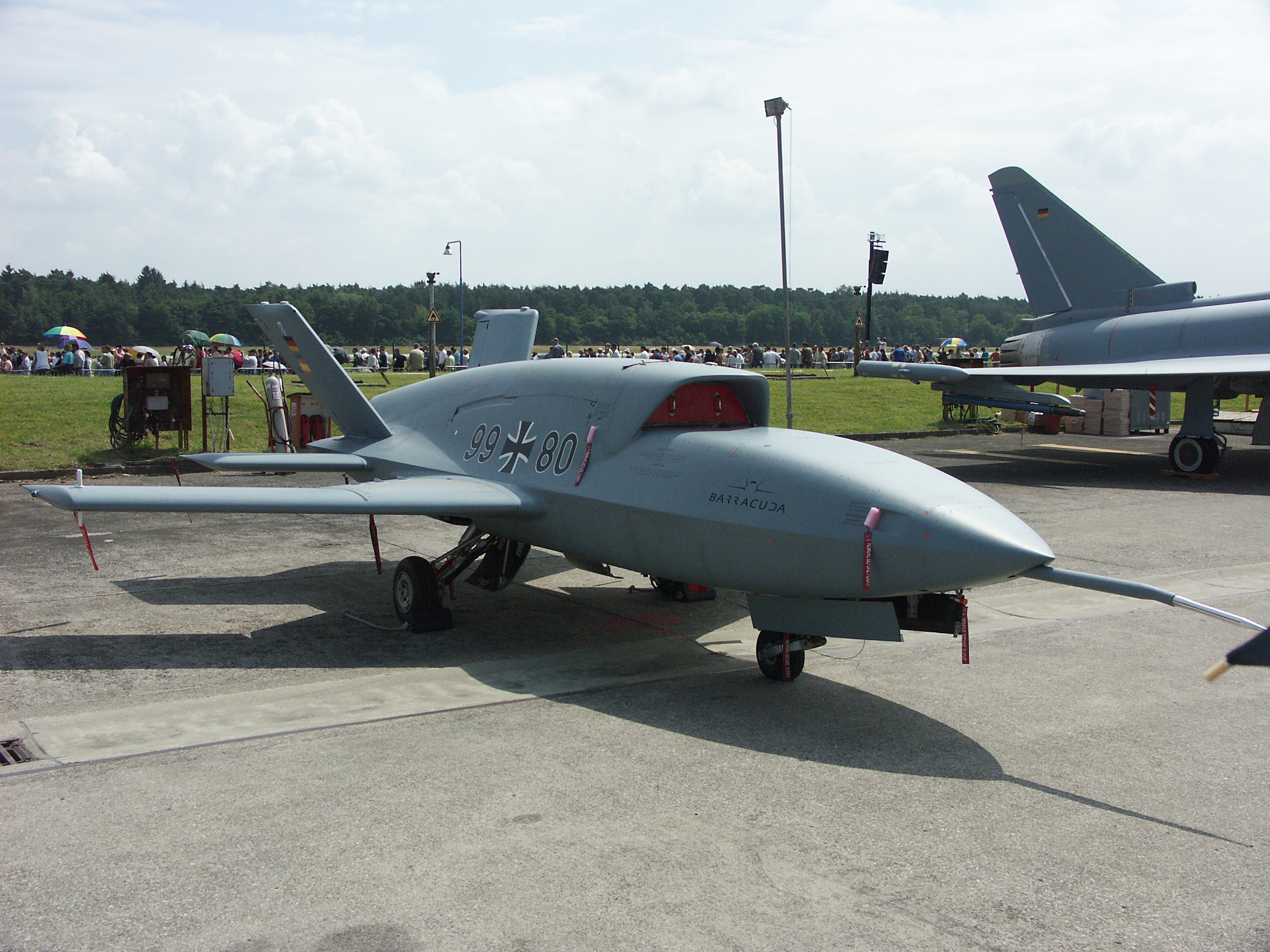
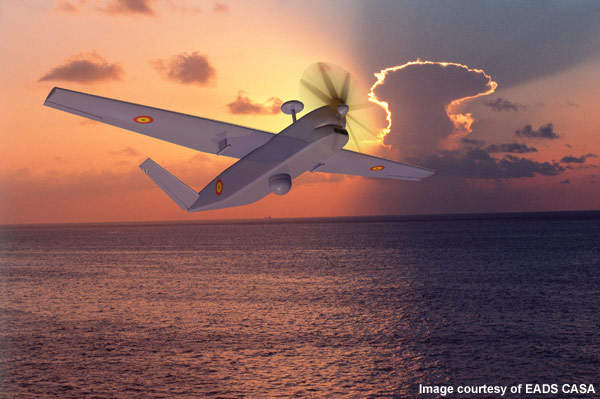
EADS Barracuda was a jet-powered unmanned aerial vehicle technology demonstrator developed by EADS, funded chiefly by Germany and Spain, for reconnaissance, maritime patrol and unmanned combat air vehicle (UCAV) research. It first flew on 2 April 2006 and was retired after six test campaigns, with Airbus later saying its technologies fed into the Eurodrone and the Future Combat Air System.
Overview
EADS began developing Barracuda in secret in 2003, revealing the programme publicly at the Berlin Air Show in 2006. The aircraft's main purpose was to validate technologies for future unmanned platforms rather than to enter production itself, covering reconnaissance and maritime-patrol roles with a design also suited to combat-UAV research. Development was financed largely by Airbus together with several German public bodies, reflecting its status as a joint German-Spanish technology effort rather than a programme of a single national air force.
Design and capabilities
Barracuda's fuselage is carbon fibre; the only major metal structural component is the wing spar, which allows the wings to be removed for transport. The aircraft used mostly commercial off-the-shelf parts and electronic actuators rather than hydraulics, apart from the landing gear, and carried a central payload bay beneath a stealth-oriented outer shape, though Wikipedia notes no radar-signature measurements were reported. Reported sensors included an emitter-location system, synthetic aperture radar and electro-optical sensors.
The aircraft measured 8.25 m long with a 7.22 m wingspan, an empty weight of 2,300 kg and a maximum take-off weight of 3,250 kg, carrying up to 300 kg of payload. A single Pratt & Whitney JT15D turbofan producing 14 kN (3,100 lbf) of thrust gave it a maximum speed of around Mach 0.85 (1,041 km/h), a range of about 200 km, and a service ceiling of roughly 6,100 m (20,000 ft).
Operational history
The first Barracuda prototype crashed at Mar Menor, Spain, on 23 September 2006 while approaching to land at the end of a test flight, pausing the programme until 2008. A second prototype was completed in November 2008 and underwent flight tests at Goose Bay, Canada, in July 2009. Later campaigns tested sense-and-avoid, automatic taxiing, an integrated antenna and automatic target detection in 2010, and autonomous four-dimensional navigation with cooperative flight alongside a second UAV in 2012, the latter funded by the company itself. As of a September 2012 report, EADS was considering further tests in 2014, but the programme did not continue as an active flight-test effort; no production run or named operator followed.
Frequently asked questions
What was EADS Barracuda for?
It was a technology demonstrator for reconnaissance, maritime patrol and unmanned combat air vehicle research, intended to validate systems for future UAV programmes.
Did Barracuda ever enter service?
No. It remained a demonstrator and was retired after six test campaigns.
What happened to the first prototype?
It crashed at Mar Menor, Spain, on 23 September 2006 while approaching to land, pausing the programme until 2008.
What were its key specifications?
An 8.25 m length, 7.22 m wingspan, 3,250 kg maximum take-off weight, a top speed of around Mach 0.85, and a roughly 6,100 m service ceiling.
What became of the programme?
Airbus has said Barracuda's technologies were carried forward into the Eurodrone and the Future Combat Air System.