Coyote
Raytheon · United States · also known as Raytheon Coyote, Coyote UAS, Coyote Block 2, Howler · Updated
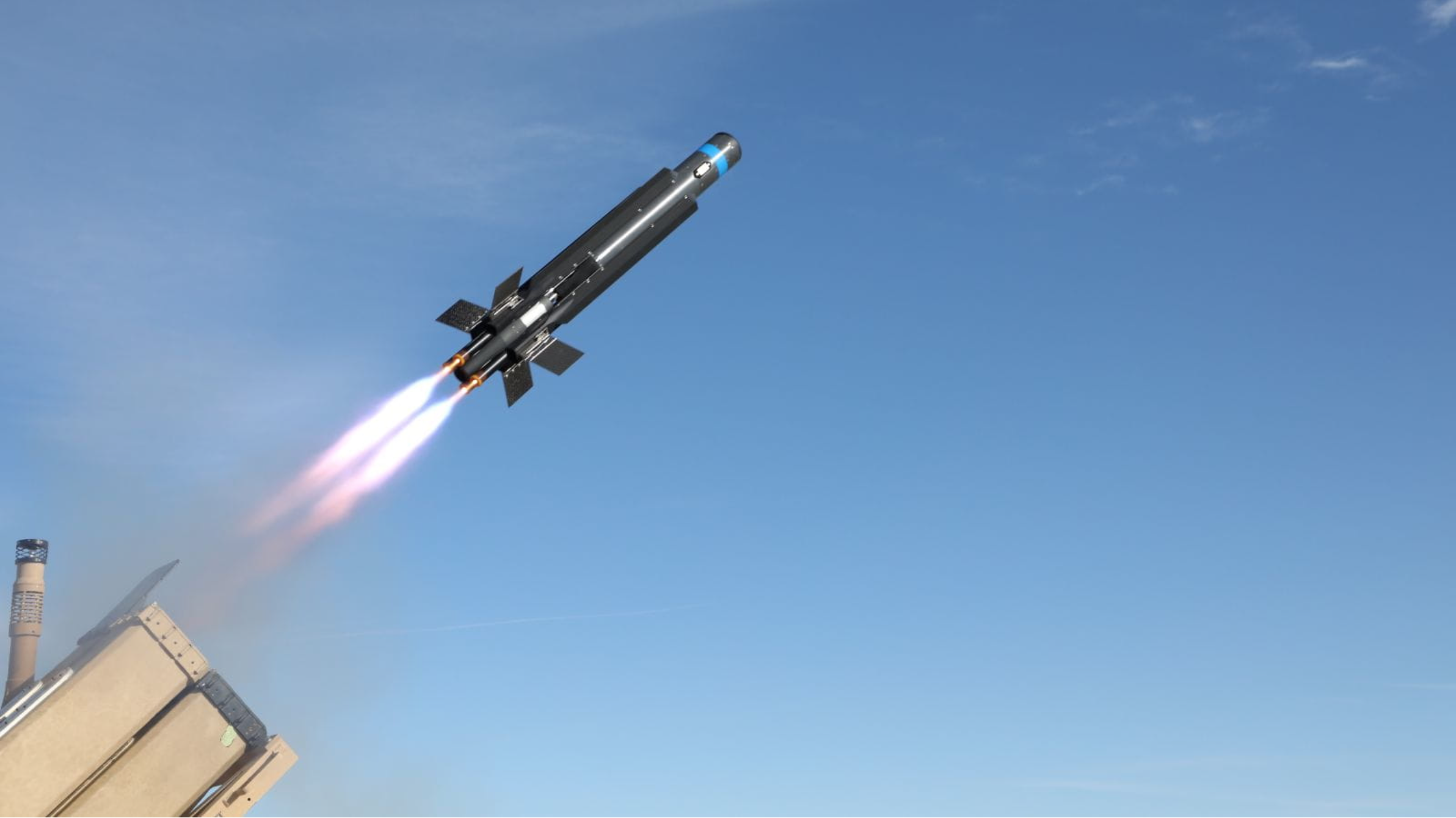
Coyote is a small, tube-launched unmanned aircraft developed by Raytheon (now RTX), first flown in 2007 as an intelligence-gathering and hurricane-research airframe and since expanded into a family of expendable counter-UAS interceptors fielded by the US Army, Navy and Marine Corps.
Overview
The design originated at Advanced Ceramics Research of Tucson, Arizona, under small-business contracts from the Office of Naval Research. BAE Systems acquired the company in 2009; it was later sold back to a former owner as Sensintel, which Raytheon acquired in 2015. The first Coyote flew in 2007, launched from a Beechcraft C-12 Huron, and the early design was built to fit standard sonobuoy launch tubes, with foldout tandem wings that deploy after launch and a battery-powered pusher propeller. The US National Oceanic and Atmospheric Administration (NOAA) adopted it to collect low-altitude weather data, flying it into Hurricane Edouard in 2014 and Hurricane Maria in 2017 from WP-3D Orion "hurricane hunter" aircraft, before that funding ended.
In 2016 Raytheon upgraded the Coyote's data link and entered it in the Office of Naval Research's LOCUST programme, demonstrating a swarm of roughly 30 Coyotes launched from tube batteries that communicated and flew in formation autonomously. That swarming work, together with a parallel US Army interest beginning the same year, marked the shift from an ISR and research airframe toward counter-UAS use.
Design and capabilities
The original Coyote airframe is about 0.91 m long with a 1.5 m wingspan and a take-off weight of roughly 5.9 kg, cruising at about 102 km/h with a dash speed near 130 km/h and an endurance of about an hour, extended to roughly two hours after later data-link upgrades. Army Technology separately gives a shorter 66 cm length for the type; Raytheon has not published an updated figure to resolve the discrepancy. It can operate up to about 9,100 m (30,000 ft) in non-icing conditions and reach roughly 80 km from its launch platform, with communications links reported at 50–70 nautical miles (about 90–130 km) in 2016 testing. It carries interchangeable payloads, including electro-optical/infrared sensors for surveillance and, in later counter-UAS variants, a radio-frequency seeker and warhead.
Raytheon's current counter-UAS variants build on this airframe. Block 2 adds a rocket booster and turbine sustainer motor, pop-out tail control fins and a fragmentation warhead, reaching higher speeds and an engagement range of about 10–15 km; it is paired with Raytheon's Ku-band KuRFS radar, a combination fielded by the US Army as the Howler system. Block 3, also called Coyote Launched Effect Short Range, uses a non-kinetic payload to disable drones without destroying them, allowing the launching unit to recover and reuse the airframe; RTX has also tested it fired from ground vehicles and helicopters, and from four- and eight-cell launchers on US Navy destroyers.
Operational history
NOAA operated the Coyote for hurricane reconnaissance from 2014 until its funding ended after the 2017 season. The US Marine Corps fielded an early counter-UAS Block 1 version in its Ground-Based Air Defense system from 2018, and the US Army awarded Raytheon a counter-UAS contract the same year, pairing the Coyote with the KuRFS radar; the combined system, named Howler, reached initial operational capability with the Army in June 2019. The US Army's Low, Slow, Small Unmanned Aircraft Integrated Defeat System (LIDS) and its mobile and fixed-site variants (M-LIDS and FS-LIDS) use Coyote interceptors alongside radar and electronic-warfare equipment. In November 2022 the US State Department approved a roughly US$1 billion FS-LIDS sale to Qatar that included 200 Coyote Block 2 interceptors, and in January 2024 the US Army awarded Raytheon a further contract for 600 Coyote 2C interceptors. Current and former operators include the US Army, Navy and Marine Corps, and formerly NOAA for weather research.
Frequently asked questions
Is the Coyote a surveillance drone or a weapon?
Both, depending on configuration: the original airframe was built for intelligence, surveillance, reconnaissance and weather research, while current Block 2 and Block 3 variants are built and fielded as expendable or reusable counter-UAS interceptors.
How is the Coyote launched?
It is tube-launched, originally from standard sonobuoy canisters, and can be fired from ground vehicles, aircraft, ships and portable launchers depending on the variant.
What is the Coyote's range and endurance?
The original ISR airframe reaches roughly 80 km from its launch platform with about an hour of endurance (later extended to around two hours); the Block 2 counter-UAS variant has a shorter engagement range of about 10–15 km against aerial targets.
Who uses the Coyote?
The US Army, Navy and Marine Corps field Coyote counter-UAS systems; NOAA formerly operated it for hurricane research, and Qatar has an approved purchase of the Block 2 interceptor.