Argus XL ADA C-UAS
Teledyne Flir · United States · also known as Argus XL · Updated
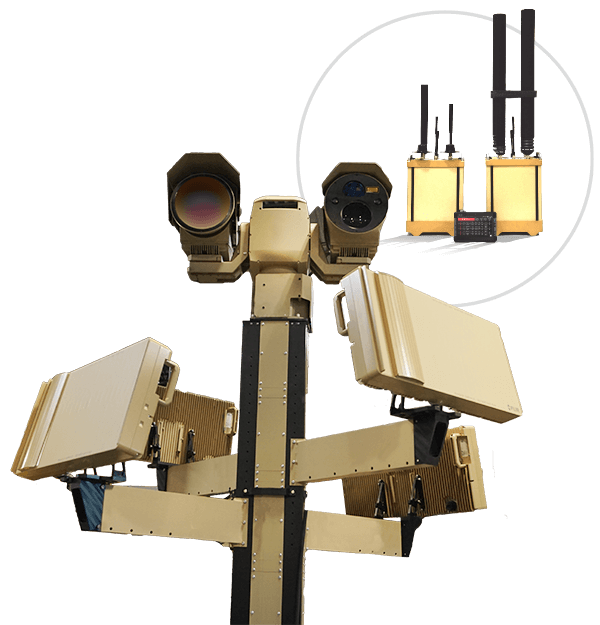
Argus XL ADA C-UAS is a fixed-site, ground-based detection system from Teledyne FLIR of the United States that adds Air Domain Awareness and Counter-UAS (C-UAS) capability to the company's Argus ISR sensor line. It is not itself an aircraft: it is a modular radar, electro-optical/infrared and RF sensor platform built to detect, classify and track drones approaching a protected site.
Overview
Teledyne FLIR Defense markets Argus XL as a perimeter-security product for remote locations, urban areas and critical infrastructure, built around its Cameleon V5 command-and-control software, which fuses data from radar, EO/IR and optional third-party RF sensors into a single operating picture. The manufacturer says its modular design lets a site deploy a single sensor or a cluster of sensors for redundancy and wider coverage, with azimuth coverage of 360° and what it describes as positive target identification at tactically significant ranges; the manufacturer gives no numeric detection-range figure.
The Defense Post reported in July 2026 that AeroVironment had ordered Teledyne FLIR sensors, including Argus XL, to equip its Titan Multi-Sensor (Titan MS) counter-drone system under JIATF-401's Domestic Shield Program, a three-year, $500 million effort to protect US military installations and critical infrastructure. In that architecture, Argus XL supplies the primary detection layer — radar, EO/IR imaging and command-and-control software — while Titan MS integrates third-party RF sensors and drone-defeat technology around it; a Teledyne executive was quoted saying "operators can't defeat what they can't find."
Design and capabilities
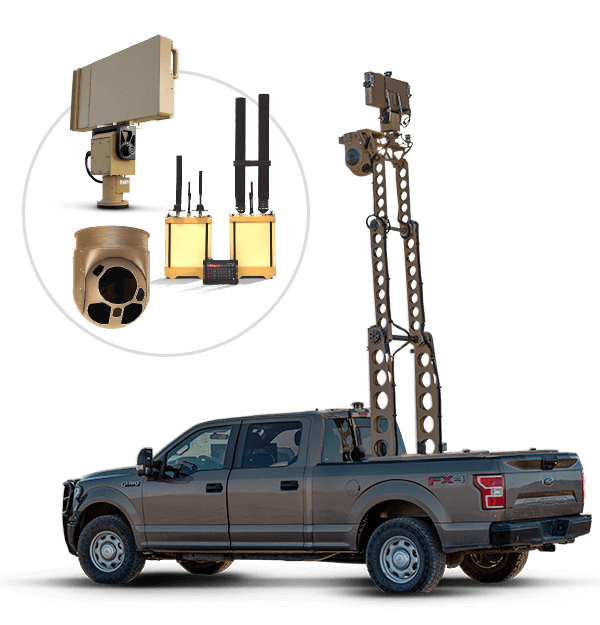
Argus XL combines a radar, an EO/IR camera and a third-party RF sensor in a single modular housing, intended to detect and track multiple aerial threats simultaneously, including small and micro drones, in poor weather and around the clock. Teledyne FLIR states the system is easy to train on, deploy, operate and maintain, and promotes it as having a low initial and lifetime cost per kilometre of secured perimeter compared with competing solutions; the manufacturer publishes no sensor-level specifications such as radar range or camera resolution.
Use cases
Teledyne FLIR positions Argus XL for persistent perimeter detection at remote sites, urban areas and critical infrastructure, and as the detection layer within AeroVironment's Titan MS counter-drone system supplied to the US Air Force under the Domestic Shield Program. A related mobile sibling product, the LVSS ADA C-UAS, adds vehicle-mounted radar and RF detection for relocatable deployments.
Frequently asked questions
Is Argus XL ADA C-UAS a drone?
No — it is a fixed-site ground sensor system that detects and tracks drones, combining radar, EO/IR imaging and RF sensors rather than flying itself.
What sensors does Argus XL use?
A radar, an EO/IR camera, and an optional third-party RF sensor, fused through Teledyne FLIR's Cameleon V5 command-and-control software.
Who uses Argus XL?
The US Air Force, which uses Argus XL as the detection layer of AeroVironment's Titan MS counter-drone system under the JIATF-401 Domestic Shield Program, per a July 2026 report.
What is the detection range of Argus XL?
Teledyne FLIR does not publish a numeric detection range, describing only "positive target identification at tactically significant ranges."