
FCC to vote on opening 50 MHz of cellular spectrum to drone flights
2026-10-14
The US Federal Communications Commission will vote on 29 October 2026 on final rules that would let uncrewed aircraft operate in the 800 MHz Cellular band, a block of spectrum they have been barred from for decades. Chairman Brendan Carr announced the item on 7 October 2026; the fact sheet followed a day later. If adopted, the Report and Order would open 50 megahertz of licensed, nationwide, low-band spectrum to drone use.
What the order would change
The restriction sits in section 22.925 of the FCC's rules, which prohibits airborne operation of Cellular Radiotelephone Service devices. DroneXL dates the policy to 1984 and its codification to 1991; the FCC's own fact sheet calls it a "decades-old" airborne use restriction. It was written for mobile handsets carried aloft in airliners, which from altitude can reach many ground cell sites at once and load the network below.
The draft order would do three things. It would modify section 22.925 so that the prohibition no longer applies to uncrewed aircraft and uncrewed aircraft systems. It would add a primary mobile footnote allocation for UAS operations in the band to the US Table of Frequency Allocations. And it would keep the existing provision barring airline passengers from operating their mobile devices in airborne aircraft — the change is for drones only.
The band in question is the paired 824–849 MHz and 869–894 MHz Cellular spectrum, according to DroneXL's reading of the draft. The Commission's stated reasoning is that modern wireless networks use advanced techniques to stop uncrewed aircraft from interfering with terrestrial service, so the blanket restriction is no longer necessary as applied to UAS. DroneXL reports that the draft would take effect 30 days after publication in the Federal Register.
Why it matters for operators
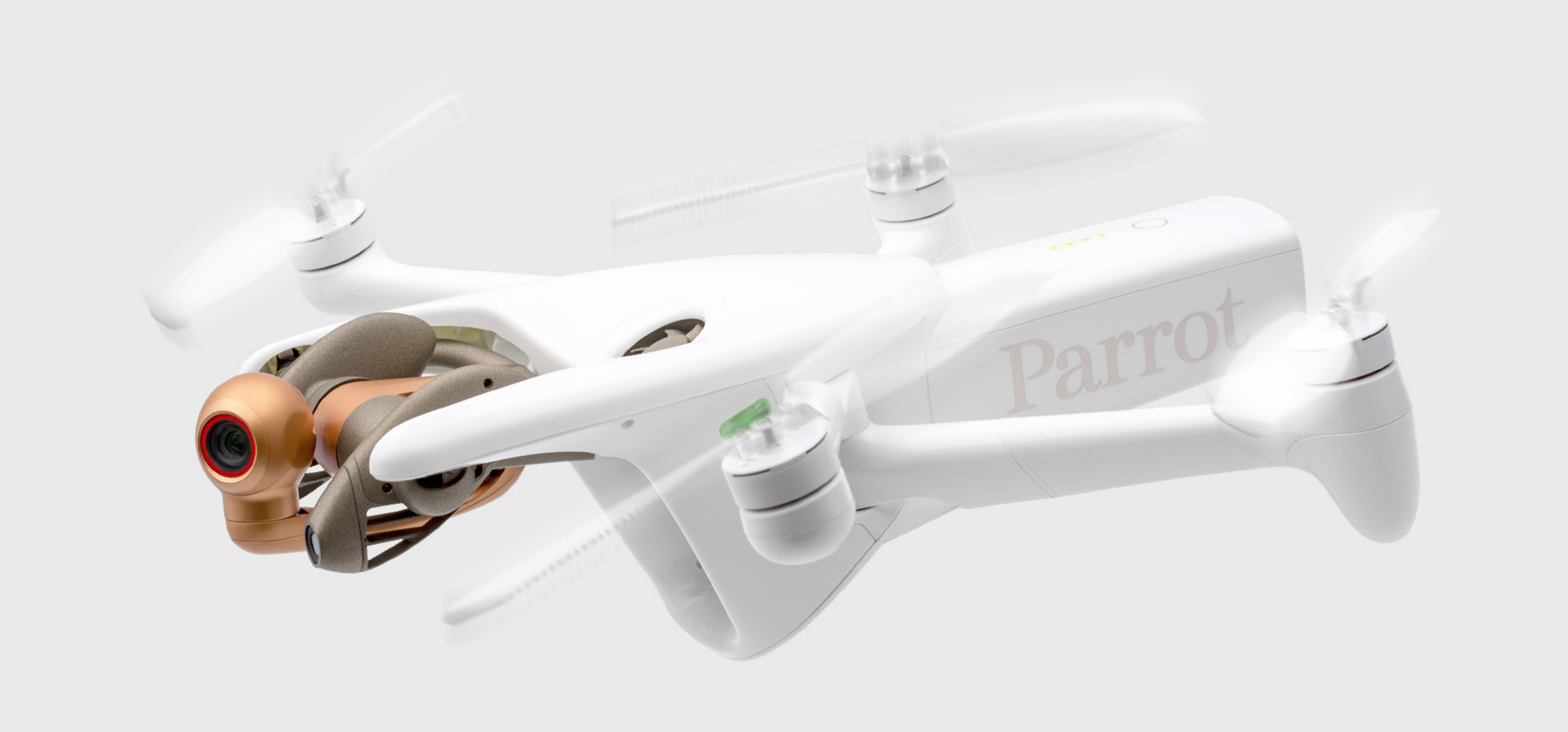
Beyond-visual-line-of-sight work on a commercial network is already common practice where the rules allow it. The FCC's April 2026 public notice observed that commercial drones and advanced operators use licensed LTE and 5G networks "especially for non-safety-critical payload data or in areas where FCC rules do not restrict airborne use of those bands". Parrot's ANAFI AI was built around exactly that idea, with a cellular modem alongside its Wi-Fi link.
Low-band spectrum propagates further and penetrates obstacles better than the mid-band and unlicensed channels most drones rely on, which is what makes 50 megahertz of it attractive for long-range command and control. DRONELIFE notes that the extra capacity would widen the communications options available for BVLOS operations. The FCC's proceeding names precision agriculture, utility and pipeline inspection, search and rescue, wildfire monitoring and last-mile delivery as the operations in view — the kind of routine, repeatable flying that delivery aircraft such as the Zipline Platform 2 and public-safety fleets from makers like Skydio depend on.
DroneXL reports that AT&T, Verizon, T-Mobile and the trade group CTIA supported the change in the record, with engineering input from Ericsson and Qualcomm citing 3GPP Release 15 features for drone identification, height reporting and interference management, and that no commenter opposed it. Zipline and one individual filer asked for reduced power or an altitude cap; the draft declines both in favour of removing the restriction outright for uncrewed aircraft.
How the proceeding got here
The question is not new. The Commission opened a UAS spectrum rulemaking in 2023 (WT Docket No. 22-323) and its 2024 decision left the flexible-use band issues unresolved. On 1 April 2026 the Wireless Telecommunications Bureau and the Office of Engineering and Technology issued public notice DA 26-314, which refreshed the record and asked directly whether remaining airborne restrictions "in bands like 800 MHz Cellular" should be removed or relaxed. Comments closed on 1 May and reply comments on 18 May 2026. The October item carries GN Docket No. 26-74 alongside WT Docket Nos. 22-323 and 24-629.
That same notice sets out how much is still unsettled. Part 96 bars airborne use of CBRS spectrum. The Table of Frequency Allocations prohibits aeronautical mobile use in all or part of the 1670–1675 MHz, 1.4 GHz, 2.3 GHz and 3.7 GHz bands. And the dedicated drone control band at 5030–5091 MHz, for which the FCC adopted Part 88 rules in August 2024, is still running on an interim access mechanism covering 20 megahertz (5040–5060 MHz) through FAA coordination and FCC registration.
What the order would not do
Spectrum rules are not flight rules. An operator with access to the 800 MHz band would still need FAA authorisation for the flight itself, and the long-delayed Part 108 BVLOS rule remains unpublished. The order also leaves the FCC's December 2025 Covered List designation untouched, so it does not change which aircraft can be authorised for sale in the United States — a separate thread covered in our piece on what the Covered List has done to US drone availability.
Two satellite and mobile spectrum proposals share the 29 October agenda. Agenda items can be amended or withdrawn before a meeting, and the drone item is a draft until the Commission votes.
Frequently asked questions
Does this mean my drone can use a normal SIM card to fly?
Not by itself. The order would remove a regulatory barrier in one band; using it still requires an aircraft with a cellular radio, service from a carrier licensed in that band, and FAA authorisation for the operation.
Is the 800 MHz band the same as the dedicated drone band?
No. The 5030–5091 MHz band was allocated internationally for UAS control links and has its own FCC service rules under Part 88. The 800 MHz Cellular band is ordinary commercial carrier spectrum.
Will passengers be able to use phones on aircraft?
No. The fact sheet states that the provision prohibiting airline passengers from operating mobile devices in airborne aircraft is retained.
When would the rules take effect?
DroneXL reports the draft provides for the rules to take effect 30 days after publication in the Federal Register, which follows adoption rather than the vote announcement.
Sources
- FCC – Fact Sheet: Unleashing American Drone Dominance; Spectrum Rules and Policies for the Operation of Unmanned Aircraft Systems; Facilitating Opportunities for Advanced Air Mobility (Report and Order, GN Docket No. 26-74; WT Docket Nos. 22-323, 24-629)
- FCC – Chairman Carr Proposes Transformation in Connectivity (news release, 7 October 2026)
- FCC – Public Notice DA 26-314, FCC Seeks Comment on Unleashing American Drone Dominance (1 April 2026)
- DRONELIFE – "Hammer Down": FCC Moves to Open 50 MHz of Spectrum for Drones
- DroneXL – FCC Oct. 29 Vote Ends 35-Year Ban on Drones in 800 MHz Cellular Band