Navig8
4Front Robotics · Canada · also known as Navig8 Electric, Navig8-E09, Navig8-E16 · Updated
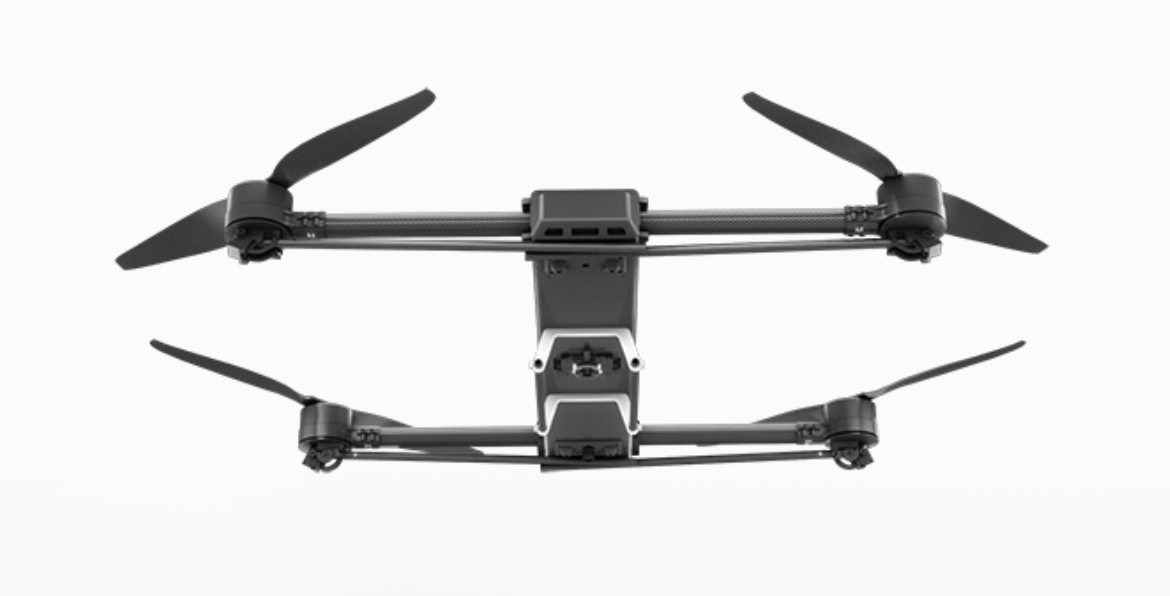
Navig8 is a family of twin ducted-fan vertical take-off and landing (VTOL) drones built by 4Front Robotics of Canada, designed to fly inside spaces that are impassable to helicopters or larger aircraft. The electric variants covered here — Navig8-E09 and Navig8-E16 — are built for confined interiors and close-proximity infrastructure work, alongside a pair of gas-engine siblings (Navig8-32 and Navig8-56) aimed at larger open-area and pipeline missions.
Overview
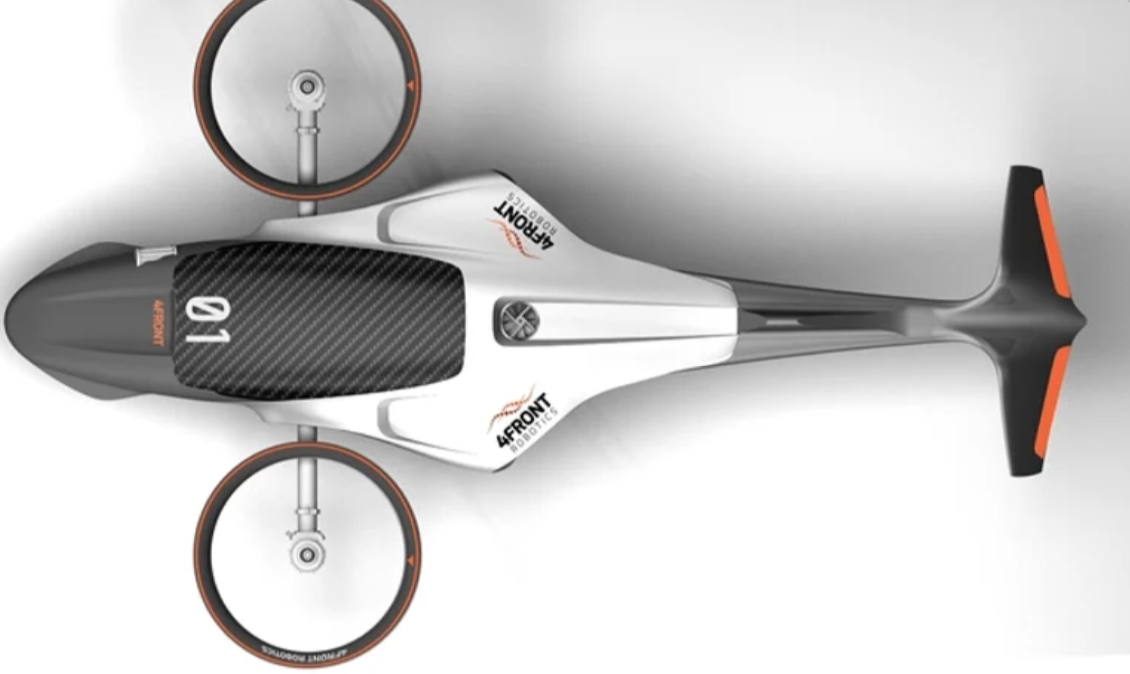
4Front Robotics, founded in 2012 and based in Calgary, Alberta, designed the Navig8 family around a single goal: manoeuvring and hovering reliably inside confined, complex environments such as building interiors, mine shafts and the space beneath a forest canopy, where rotorcraft with exposed rotors struggle. All Navig8 variants share the same twin-ducted-fan layout flanking a central fuselage and the ability to hover and land at a non-zero pitch attitude, letting the aircraft work close to walls, ceilings and other obstacles.
4Front offers four Navig8 models built on this shared platform: the gas-engine Navig8-32 and Navig8-56 for open-area work such as pipeline inspection as well as confined spaces, and the smaller, battery-electric Navig8-E09 and Navig8-E16 for indoor use or operation close to sensitive infrastructure such as power lines and bridges.
Design and capabilities
4Front Robotics' product page describes the electric Navig8 as using variable-pitch, ducted propellers and a proprietary zero-lift tail rotor for control, which the company says gives it greater payload capacity and longer flight times than comparably sized UAVs, along with enhanced "knife-edge" manoeuvring — flying and hovering at a steep pitch angle — compared with its gas-powered siblings. The company states the design can take off and land on slopes of 25 to 45 degrees, and that the shrouded props tilt individually about inclined axes for pitch and yaw control. 4Front does not publish numeric performance figures such as weight, payload capacity, endurance or speed for the electric Navig8 on its current website.
Use cases
4Front markets the electric Navig8 for operations inside buildings, warehouses and mines, and for inspection close to critical infrastructure such as power lines and bridges — roles where the ducted-fan layout's obstacle tolerance and slope-landing ability are particular advantages over open-rotor multirotors. The gas-powered Navig8 Gas variants target similar confined-space work alongside open-area missions such as pipeline inspection.
Frequently asked questions
What makes Navig8 different from a typical multirotor?
Its twin ducted-fan layout and zero-lift tail rotor let it hover and land at a steep, non-zero pitch angle and operate close to obstacles, which 4Front Robotics says suits confined interiors that exposed-rotor aircraft cannot safely enter.
What is the difference between the gas and electric Navig8 models?
The gas-engine Navig8-32 and Navig8-56 are aimed at open areas as well as confined spaces, such as pipeline inspection; the electric Navig8-E09 and Navig8-E16 are built for indoor use and close-proximity infrastructure work, with 4Front describing enhanced knife-edge manoeuvring versus the gas versions.
On what terrain can Navig8 take off and land?
4Front Robotics states the design can take off and land on slopes of 25 to 45 degrees.
Who makes Navig8?
4Front Robotics, a Canadian unmanned-vehicle-systems company founded in 2012 and based in Calgary, Alberta.
Are Navig8's performance specifications public?
4Front Robotics' current website does not publish numeric figures such as weight, payload, endurance or speed for the electric Navig8 variants.