Guardian
BRINC · United States · also known as BRINC Guardian · Updated
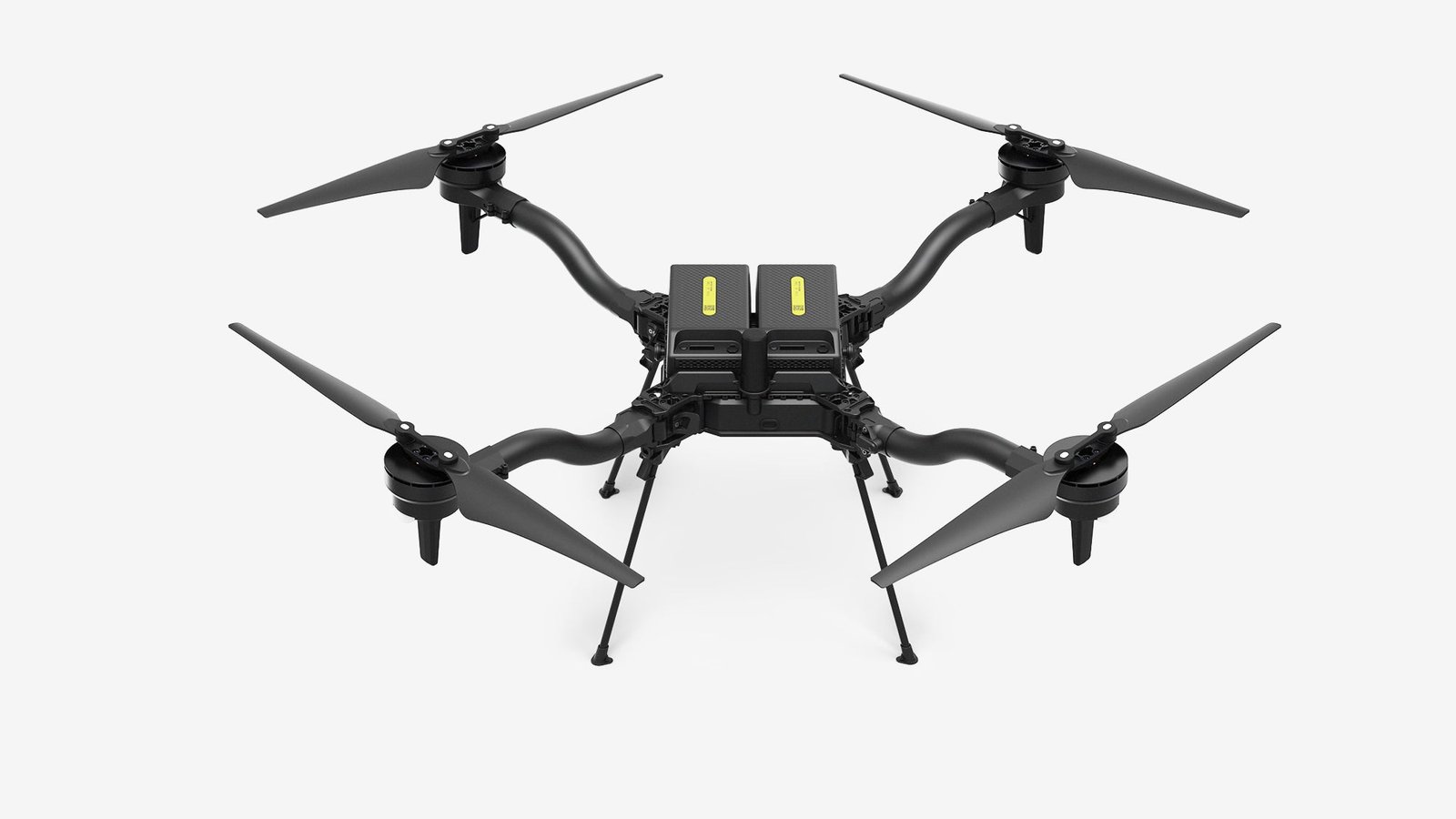
Guardian is a Drone as First Responder (DFR) aircraft developed by BRINC of the United States, unveiled in Seattle on 24 March 2026. BRINC calls it the world's first satellite-connected drone, paired with a robotic charging and payload-loading dock called the Guardian Station for continuous outdoor public-safety operations.
Overview
Guardian extends BRINC's public-safety product line from its original indoor tactical drones into long-endurance outdoor response, aimed at police, fire and emergency-medical agencies running dock-based DFR programmes. BRINC positions it against existing DFR aircraft on endurance and coverage, stating the system can respond to calls up to eight miles from its dock — more than double the roughly three-mile radius the company attributes to current systems — and that the Guardian Station's automated battery swap removes the 25-minute minimum recharge downtime of existing DFR fleets. Motorola Solutions, BRINC's exclusive North American public-safety reseller for its DFR technology, is expected to distribute Guardian alongside the company's other aircraft.
Design and capabilities
BRINC states a maximum weight of about 44 lb (19.96 kg), a flight time of about 62 minutes per charge, a top speed of about 60 mph (96.6 km/h), and a 10 lb (4.54 kg) payload capacity, with an IP55 rating against dust and water. It carries dual 4K visual cameras with 640x total zoom (40x optical), dual HD thermal cameras with 64x total zoom, a laser rangefinder accurate to within 2 ft and effective to about 4,900 ft, and a 1,000-lumen SkyBeam spotlight. BRINC's product page separately describes the aircraft's operational range as effectively unlimited given its satellite link, a broader framing than the eight-mile response radius quoted in the company's launch announcement.
Connectivity runs over triple-redundant links — local mesh radio, dual-SIM 5G/LTE, and an integrated satellite connectivity panel — backed by an ADS-B receiver for air-traffic awareness. Obstacle avoidance combines automotive-grade radar, four visual cameras and downward LiDAR, with dual RTK GNSS stated to give 2 cm positional accuracy. The airframe uses carbon-fibre arms and a molded magnesium, Kevlar-reinforced fuselage, with an integrated parachute, an anti-collision strobe, and a 130 dBA siren and loudspeaker.
The companion Guardian Station dock robotically swaps batteries and reloads mission-specific payloads — such as defibrillators, flotation devices or naloxone — from a climate-controlled, 20-slot store, intended to keep a Guardian airborne on successive missions without human intervention.
Use cases
BRINC markets Guardian for outdoor public-safety missions: patrol and first-response dispatch, search and rescue, and firefighting support, including waypoint and mapping flights that integrate with BRINC's LiveOps software and third-party dispatch systems.
Frequently asked questions
How long does the Guardian fly?
BRINC states about 62 minutes of flight time per charge.
How is the Guardian always ready to fly?
Its companion Guardian Station dock robotically swaps batteries and reloads payloads, which BRINC says enables continuous, 24/7 readiness without a human on site.
What can the Guardian carry?
Up to 10 lb (4.54 kg), including payloads such as defibrillators, flotation devices or naloxone that the Guardian Station loads automatically.
When was the Guardian announced?
BRINC unveiled it in Seattle on 24 March 2026; the company has not given a ship date or named launch customers.
Who makes the Guardian?
BRINC, a US public-safety drone maker based in Seattle, Washington.