Eurodrone
Airbus · Germany · also known as European MALE RPAS, MALE RPAS · Updated
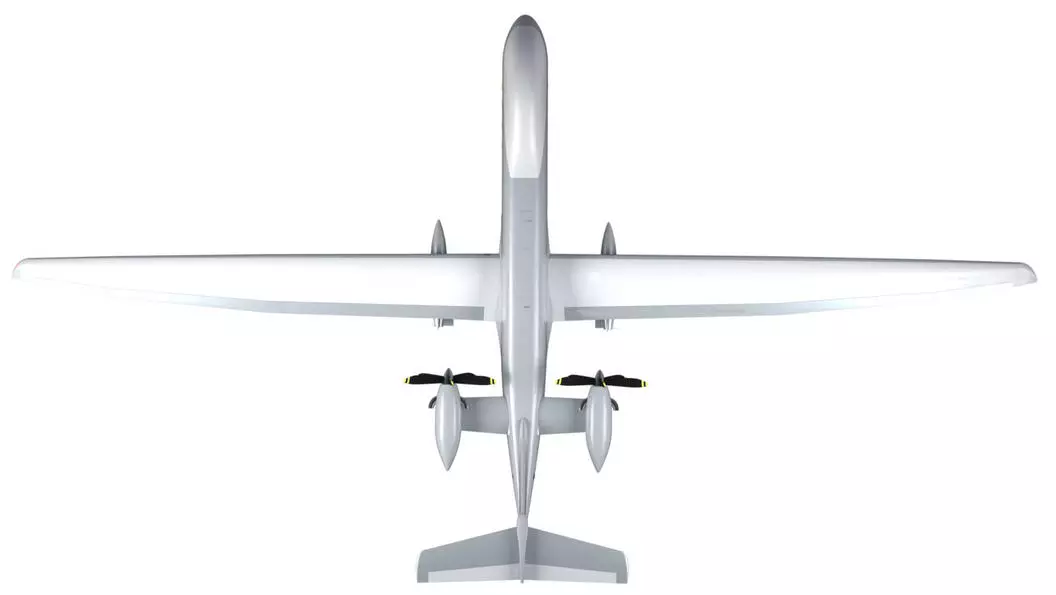
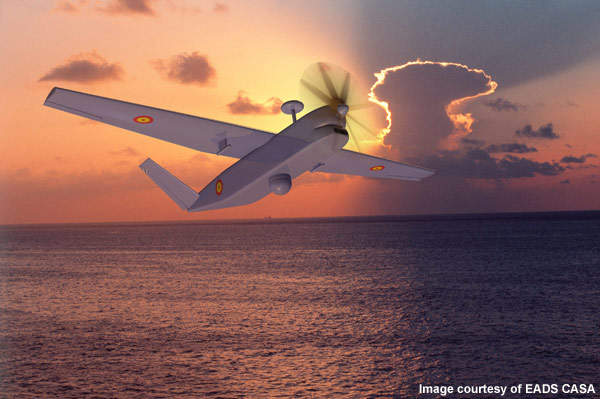
Eurodrone, formally the European Medium Altitude Long Endurance Remotely Piloted Aircraft System (MALE RPAS), is a twin-turboprop military drone under joint development by Airbus, Dassault Aviation and Leonardo for the armed forces of Germany, France, Italy and Spain. It is designed to be the first unmanned aircraft engineered from the outset to fly routinely in non-segregated civil airspace.
Overview
Eurodrone grew out of a 2015 study launched by France, Germany and Italy (Spain joined soon after) to reduce European dependence on non-European MALE drones such as the General Atomics Reaper. The programme is managed by OCCAR, the European joint armaments organisation, with Germany as lead nation. Airbus Defence and Space (Germany) is industrial prime contractor, with Dassault Aviation (France) and Leonardo (Italy) as major partners; final assembly and the ground control station are built at Airbus's Manching site in Germany, with fuselage integration in Getafe, Spain.
The four partner nations have ordered a combined 20 systems (about 60 aircraft): Germany 7 systems, Italy 5, and France and Spain 4 each. Japan and India have since joined the programme as observer states. OCCAR approved the development and production contract in 2022, and the prototype's first flight is expected by 2027, with initial deliveries planned for 2028.
Design and capabilities
Eurodrone is a twin-engine, high-wing aircraft roughly 16 m long with a 26 m wingspan, powered by two General Electric Catalyst turboprops rather than the single piston or turboprop engine typical of earlier MALE drones — a configuration chosen partly for the redundancy needed to fly safely over populated areas. Maximum take-off weight is about 11,000 kg, of which up to 2,300 kg can be mission payload, excluding fuel. Airbus states the aircraft is designed for an endurance of up to 40 hours and a cruise speed of around 500 km/h, with a service ceiling of about 12,000 m.
The airframe is built to carry a modular mix of intelligence, surveillance and reconnaissance (ISR) sensors — electro-optical/infrared turrets, synthetic aperture radar and signals-intelligence payloads — on above- and below-wing hardpoints, and is designed with de-icing and a certifiable detect-and-avoid system so it can operate alongside civil air traffic rather than only in segregated military airspace, unlike most existing MALE UAVs.
Operational history
As of 2026 Eurodrone remains in development and has not yet flown; there is no operational history to report. Once fielded, it is intended to replace or supplement existing MALE types operated by the four partner air forces, including leased and purchased Reaper drones in French and German service.
Frequently asked questions
What is the range of the Eurodrone?
Airbus has not published a maximum range figure; the aircraft is designed for missions of up to about 40 hours of endurance.
How much can the Eurodrone carry?
Up to 2,300 kg of mission payload, excluding fuel, out of a maximum take-off weight of about 11,000 kg.
Which countries are building the Eurodrone?
Germany, France, Italy and Spain are funding and will operate the aircraft; Japan and India have joined the programme as observer states.
When will the Eurodrone enter service?
The prototype's first flight is expected by 2027, with initial deliveries to the partner air forces planned for 2028.
Who makes the Eurodrone?
A consortium of Airbus Defence and Space (Germany, industrial prime), Dassault Aviation (France) and Leonardo (Italy), managed by the OCCAR armaments organisation.