KUS-VH
Korean Air Aerospace Division · South Korea · also known as KUS-VH 500MD, Korean Unmanned Little Bird · Updated
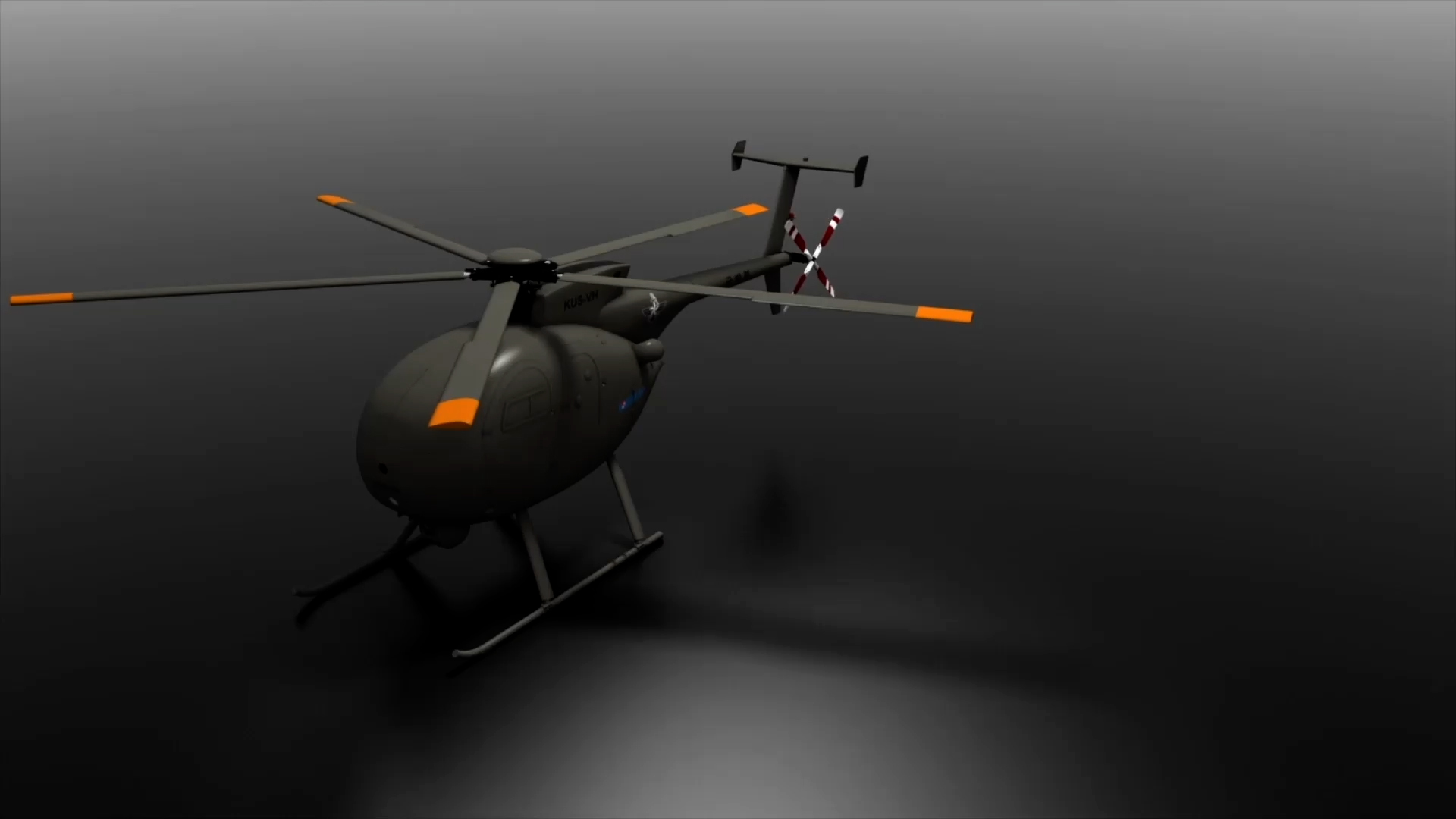
KUS-VH is an unmanned conversion of the MD 500 light helicopter, developed by South Korea's Korean Air Aerospace Division and first flown in an optionally piloted configuration on 30 July 2019. Korean Air designed it as an uncrewed "Little Bird"-type platform for high-risk civilian and military missions, drawing on a cooperation agreement with Boeing.
Overview
Korean Air first displayed the KUS-VH concept, based on retired South Korean Army MD 500 airframes, at the Seoul ADEX exhibition in October 2015, where a mock-up was shown carrying two Hellfire missiles, a 70 mm rocket pod and an electro-optical/infrared sensor. Boeing supported the programme for about two years under an offset-obligation arrangement the company called Project 25, aimed at helping Korean Air's Aerospace Division understand what is involved in building an optionally piloted vehicle; Boeing's own unmanned H-6U Little Bird served as a reference design. The converted helicopter made its first flight on 30 July 2019 at a Korea Aerospace Research Institute facility in Goheung, fitted with a flight-control computer, a tactical-grade integrated navigation system, a propulsion controller and an electro-mechanical rotor actuator. Korean Air has said it aims to meet civilian and military customer requirements in South Korea and is also targeting export sales, and has suggested unmanned versions of other retired types such as the UH-1H, UH-60 and F-5 could follow.
Design and capabilities
Korean Air rates the KUS-VH's payload capacity at 440 kg and its endurance at up to six hours. The company has not published the aircraft's dimensions, weight, speed or altitude ceiling. Earlier, pre-conversion concept material from 2015 described a design intended to carry Hellfire missiles and unguided rocket pods alongside an EO/IR sensor turret, though Korean Air has not confirmed whether the flying prototype carries armament.
Operational history
The KUS-VH remains in development rather than operational service. It has flown as a demonstrator since July 2019, and Korean Air has said it aims to meet South Korean civilian and military operator requirements, without giving a confirmed in-service date.
Frequently asked questions
What aircraft is the KUS-VH based on?
It is an unmanned conversion of the MD 500 light helicopter, using retired South Korean Army airframes.
When did the KUS-VH first fly?
It made its first flight on 30 July 2019 at a Korea Aerospace Research Institute facility in Goheung, South Korea.
How much can the KUS-VH carry, and for how long?
Korean Air rates its payload at 440 kg and its endurance at up to six hours.
Is the KUS-VH armed?
A 2015 concept model displayed Hellfire missiles and a rocket pod, but Korean Air has not confirmed armament on the flying prototype.
Who developed the KUS-VH?
Korean Air's Aerospace Division, with support from Boeing under a cooperation arrangement the company called Project 25.