Lumberjack
Northrop Grumman · United States · Updated
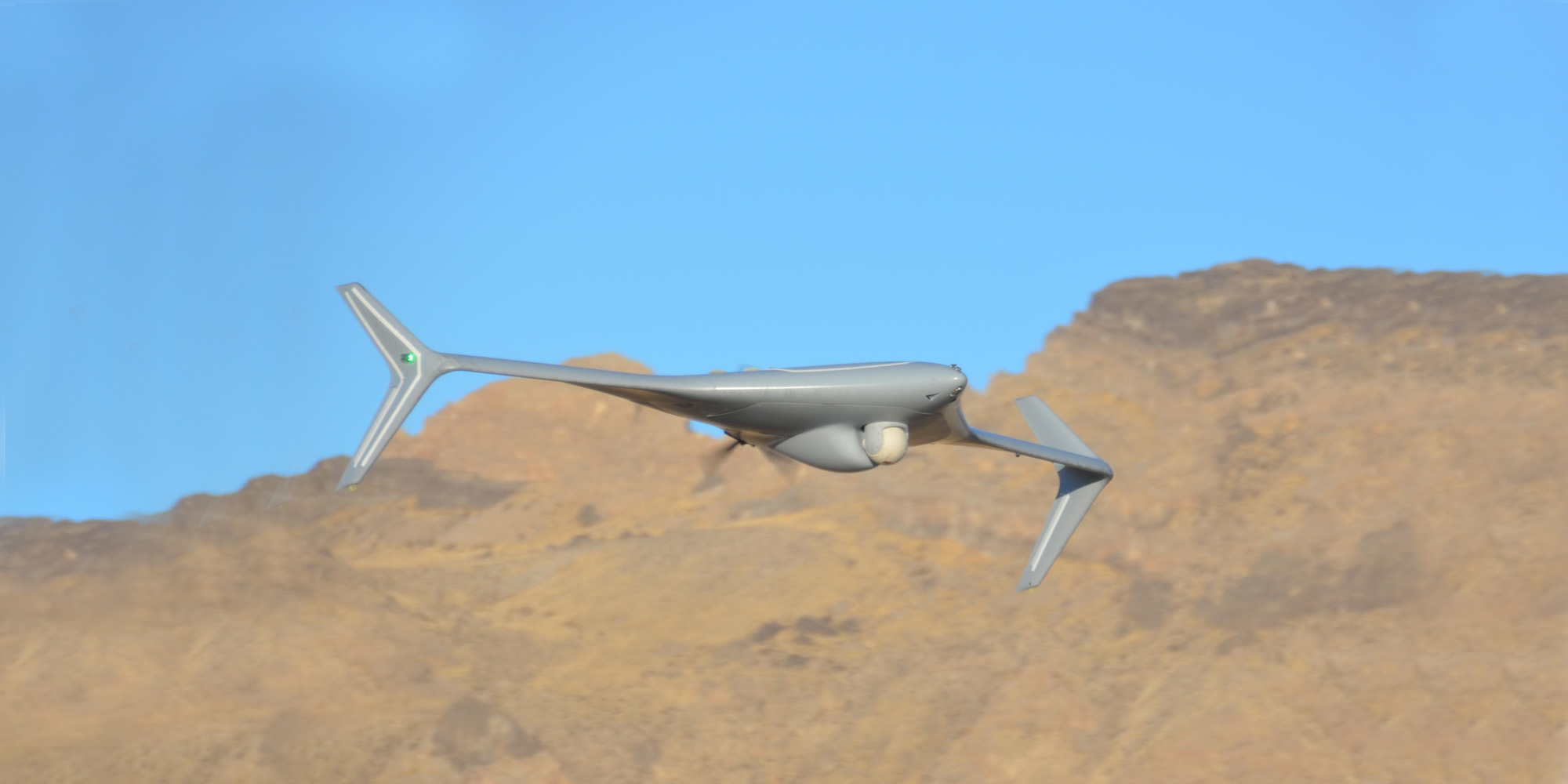
Lumberjack is a jet-powered, air- or ground-launched one-way attack and electronic-warfare aircraft developed by Northrop Grumman, sized about the same as the GBU-39 Small Diameter Bomb so that several can fit inside an aircraft's existing weapons bays or launch tubes.
Overview
Northrop Grumman is developing Lumberjack with Empirical Systems Aerospace (ESAero) as its air-vehicle co-development partner and Palantir Technologies providing rapid software integration for third-party sensors and control schemes. The company has said the programme went from concept to first flight in about 14 months, placing first flight around mid-to-late 2024, with test flights and demonstrations continuing into 2025 in conjunction with the Pentagon's Office of the Under Secretary of Defense for Research and Engineering. Northrop Grumman first showed Lumberjack publicly at the Modern Day Marine exposition in Washington, D.C. in late April 2025, and displayed it again at the Association of the United States Army conference in October 2025, where programme director Michael Bastin described it as an "operational attritable UAS." As of late 2025 the company was still seeking a customer to move the programme beyond experimental development.
Design and capabilities
According to Northrop Grumman's own datasheet, Lumberjack has a gross weight of about 131.5 kg (290 lb) and measures roughly 1.8 m long and 0.36 m across, with a lighter transport weight — without fuel or payload — of around 36 kg (79 lb). It is classified by the US military as a Group 3 unmanned aircraft system. The aircraft carries a modular centre payload compartment sized similarly to a 250-lb-class Small Diameter Bomb warhead, which can hold kinetic or non-kinetic submunitions, electronic-warfare equipment, or intelligence, surveillance and reconnaissance sensors and processors. Northrop Grumman states it can fly a range of several hundred miles, or trade that range for several hours of loitering time over a target area, and that the design incorporates alternative positioning, navigation and timing (magnetic navigation and quantum sensing) for GPS-denied environments. It can be launched from the air, from an electric rail launcher intended for Navy ships, or from a field-deployable pneumatic ground launcher, and Northrop Grumman has said it costs roughly $75,000 to $100,000 per unit depending on payload.
Operational history
Lumberjack remains in company-funded experimental development and has not been ordered or fielded by any confirmed military customer. Northrop Grumman has discussed the type as a candidate payload for other uncrewed platforms and has demonstrated multiple launch methods, but as of this writing it has no publicly announced buyer.
Frequently asked questions
How big is the Lumberjack drone?
About 1.8 m long and 0.36 m wide, with a gross weight of roughly 131.5 kg — comparable in size to a Small Diameter Bomb.
What does the Lumberjack cost?
Northrop Grumman has quoted a per-unit cost of roughly $75,000 to $100,000, varying with payload.
Who operates the Lumberjack?
No operator yet — it remains in experimental development, and Northrop Grumman is seeking a customer.
What can the Lumberjack carry?
A modular payload compartment sized like a 250-lb-class Small Diameter Bomb warhead, able to hold submunitions, electronic-warfare gear, or ISR sensors.
Who makes the Lumberjack?
Northrop Grumman, developing it with Empirical Systems Aerospace (ESAero) and Palantir Technologies.