Fire Scout (MQ-8B)
Northrop Grumman · United States · also known as MQ-8B Fire Scout, RQ-8B · Updated
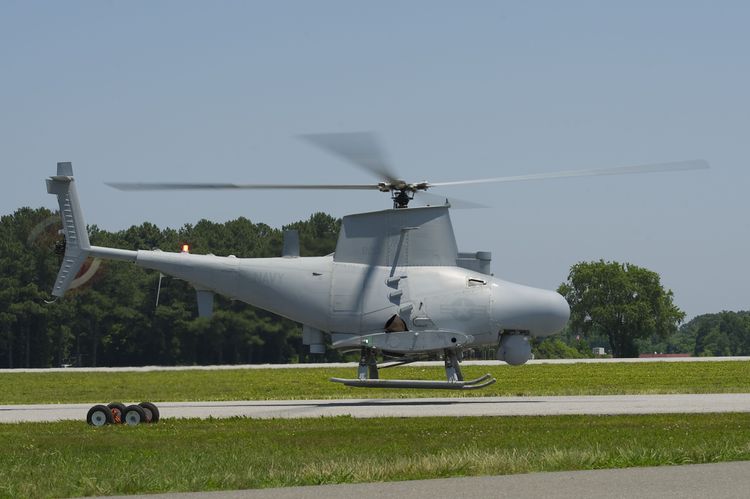
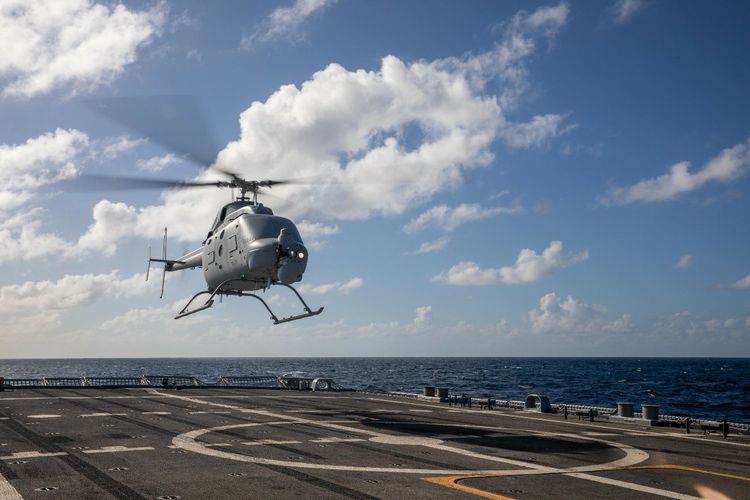
MQ-8B Fire Scout is an unmanned helicopter built by Northrop Grumman of the United States, first flown on 18 December 2006 and flown by the US Navy for maritime reconnaissance until its retirement in October 2022. It is based on the Schweizer 333 light helicopter airframe and was designed to take off and land autonomously on ships at sea.
Overview
The MQ-8B first flew at Naval Air Station Patuxent River, Maryland, on 18 December 2006, and the US Navy went on to deploy it aboard frigates and Littoral Combat Ships for over 13 years. Northrop Grumman says the type logged more than 16,600 flight hours over 6,200 sorties, including deployments to Afghanistan supporting counter-improvised-explosive-device operations alongside its shipboard maritime role. The Navy retired the MQ-8B fleet in October 2022, transitioning to the larger MQ-8C Fire Scout, which is built on the commercial Bell 407 airframe and carries more than triple the payload over more than double the range and endurance.
Design and capabilities
The MQ-8B is 7.3 m long with a 8.4 m rotor diameter and a maximum take-off weight of 1,430 kg, carrying a payload of up to 272 kg. A single Rolls-Royce 250 turboshaft engine rated at 420 hp drives the aircraft to a maximum speed of about 213 km/h (115 kn) and a cruise speed of around 204 km/h (110 kn). Wikipedia records a combat radius of about 110 nautical miles (204 km) with more than five hours on station, a typical endurance of 8 hours, and a service ceiling of 6,100 m (20,000 ft). The Navy later integrated a multi-mode maritime radar onto the MQ-8B and tested the Advanced Precision Kill Weapon System on the airframe, and demonstrated the aircraft operating concurrently with crewed aircraft at sea.
Operational history
The US Navy was the MQ-8B's sole operator, flying it from frigates and Littoral Combat Ships on maritime intelligence, surveillance and reconnaissance missions, as well as from land bases in Afghanistan. After 13 years of service the Navy retired the MQ-8B fleet in October 2022, standardising on the larger MQ-8C Fire Scout for continued shipboard unmanned helicopter operations.
Frequently asked questions
When did the MQ-8B Fire Scout first fly?
On 18 December 2006, at Naval Air Station Patuxent River, Maryland.
Is the MQ-8B Fire Scout still in service?
No. The US Navy retired its MQ-8B fleet in October 2022 after 13 years, moving to the larger MQ-8C Fire Scout.
What is the difference between the MQ-8B and MQ-8C Fire Scout?
The MQ-8C uses the larger Bell 407 commercial helicopter airframe with the MQ-8B's avionics, more than doubling range and endurance and more than tripling payload capacity compared with the MQ-8B's Schweizer 333-based airframe.
How far can the MQ-8B Fire Scout fly?
Wikipedia records a combat radius of about 110 nautical miles (204 km) with more than five hours on station; typical endurance is around 8 hours.
Who operated the MQ-8B Fire Scout?
The US Navy, deploying it aboard frigates and Littoral Combat Ships and, during the Afghanistan war, from land bases.