X2D
Skydio · United States · also known as Skydio X2D, Skydio X2, X2, X2E, RQ-28A, RQ28A, RQ-28 · Updated
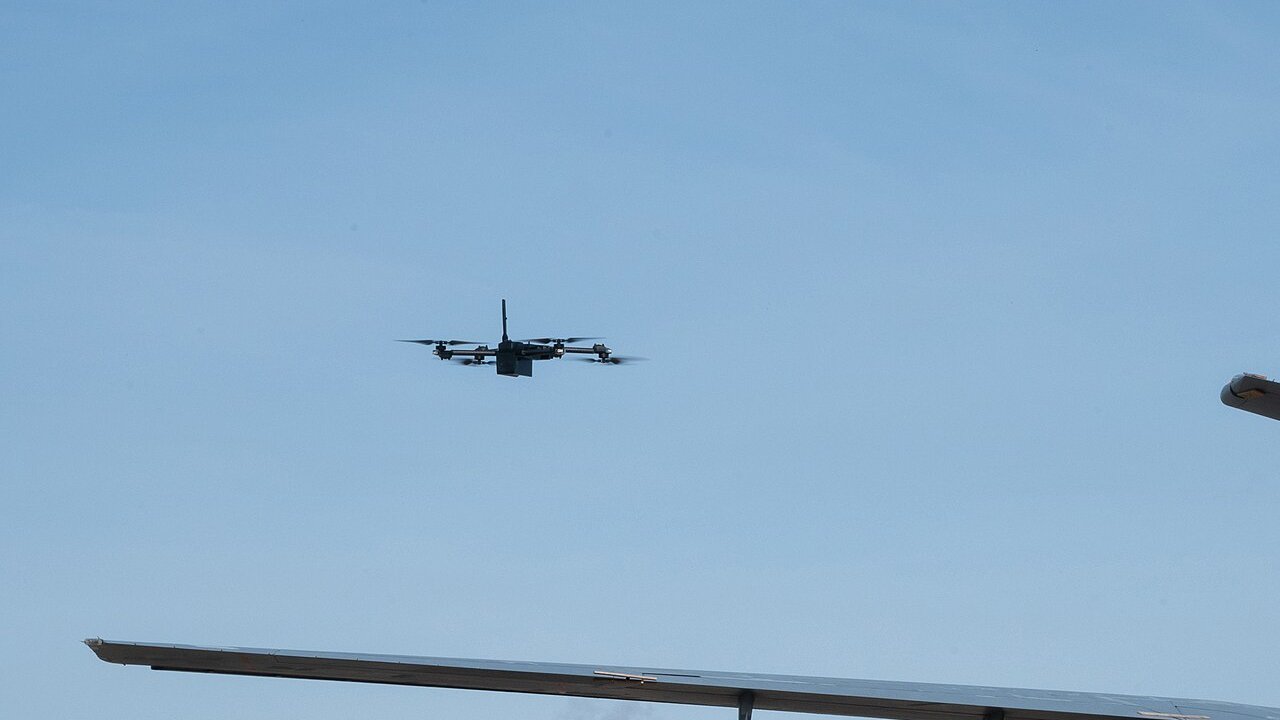
X2D is a folding small reconnaissance quadcopter developed by Skydio of the United States, introduced in July 2020 and fielded by the US Army as the RQ-28A. It is the defence version of Skydio's X2 family, the company's third-generation aircraft and its first built for military and enterprise customers.
Overview
Skydio announced the X2 in 2020 as a drone for military and corporate use, adding folding arms, a thermal camera and a touchscreen controller to the obstacle-avoidance autonomy of its earlier consumer aircraft. In August 2020 the Defense Innovation Unit selected Skydio as a trusted supplier under its Blue sUAS project, and the X2D became the first Skydio aircraft on the Department of Defense's Blue UAS list. An enterprise version, the X2E, was sold to civil customers.
In February 2022 Skydio won Tranche 1 of the US Army's Short Range Reconnaissance (SRR) programme with a version of the X2D modified to the Army's requirements, designated RQ-28A. Wikipedia reports a first-year value of $20.2 million and a total of $99.8 million over five years. The War Zone reported that 30 RQ-28As were delivered to the Small UAS Master Trainer Schoolhouse at Fort Benning in September 2022, that fielding to the 3rd Battalion, 75th Ranger Regiment was complete in early November 2022, and that 1,080 aircraft had been purchased for delivery during low-rate initial production through the second quarter of fiscal 2025. The Army fields the RQ-28A with a government-furnished controller rather than Skydio's own. The SRR Tranche 2 award went to another supplier in November 2024.
Its successor in Skydio's line is the X10, whose defence version, the X10D, joined the Blue UAS list in May 2024.
Design and capabilities
The X2D folds to 11.9 × 5.5 × 3.6 in for carriage and unfolds to about 26.1 × 22.4 × 8.3 in; Wikipedia, citing the X2D operator manual, gives a length of 0.569 m, a width of 0.663 m and a maximum take-off weight of 1.525 kg. Army Technology gives smaller body dimensions (0.38 × 0.30 m), which appear to exclude the propellers; the specifications here use the operator-manual figures. Endurance is up to 35 minutes, maximum speed 50 km/h, and service ceiling 3,414 m above sea level. It is rated to operate from −10 °C to 43 °C.
Six navigation cameras provide 360° obstacle avoidance and real-time mapping. The gimbal carries a 12 MP, 4K colour camera and a Teledyne FLIR Boson 320 × 256 thermal imager, with digital zoom on both. The War Zone gives the datalink range as up to 6 km over a 5 GHz link, depending on the environment; Army Technology quotes up to 10 km line of sight with external controller antennas. Custom payloads of up to 150 g are supported.
Operational history
The RQ-28A is issued at platoon level in the US Army for short-range reconnaissance. As of September 2024 as many as 22,000 Skydio drones were reported in US military use across models. Other publicly reported users of the X2 family include the Indian Army, which ordered nearly 700 aircraft in late 2024 with components localised by AeroArc, the New Zealand Army, and the Ukrainian volunteer group Aerorozvidka.
Variants
- X2 — base family, introduced 2020.
- X2D — defence version with improved wireless capabilities and customer-specific configurations.
- X2E — enterprise version for civil customers.
- RQ-28A — US Army SRR version of the X2D.
Frequently asked questions
What is the RQ-28A?
The US Army's designation for its Short Range Reconnaissance version of the Skydio X2D, selected in February 2022 and fielded from September 2022.
How long can the Skydio X2D fly?
Up to 35 minutes per battery.
What is the range of the Skydio X2D?
Reported datalink range is up to 6 km over a 5 GHz link, depending on the environment, with up to 10 km line of sight quoted using external controller antennas.
How much does the Skydio X2D weigh?
Its maximum take-off weight is about 1.5 kg (just over 3 lb) including battery.
What replaced the Skydio X2D?
Skydio's next-generation aircraft is the X10, with the X10D as its defence version.