VIRTUS
STARK · Germany · also known as OWE-V, OWE-V Virtus, STARK OWE-V · Updated
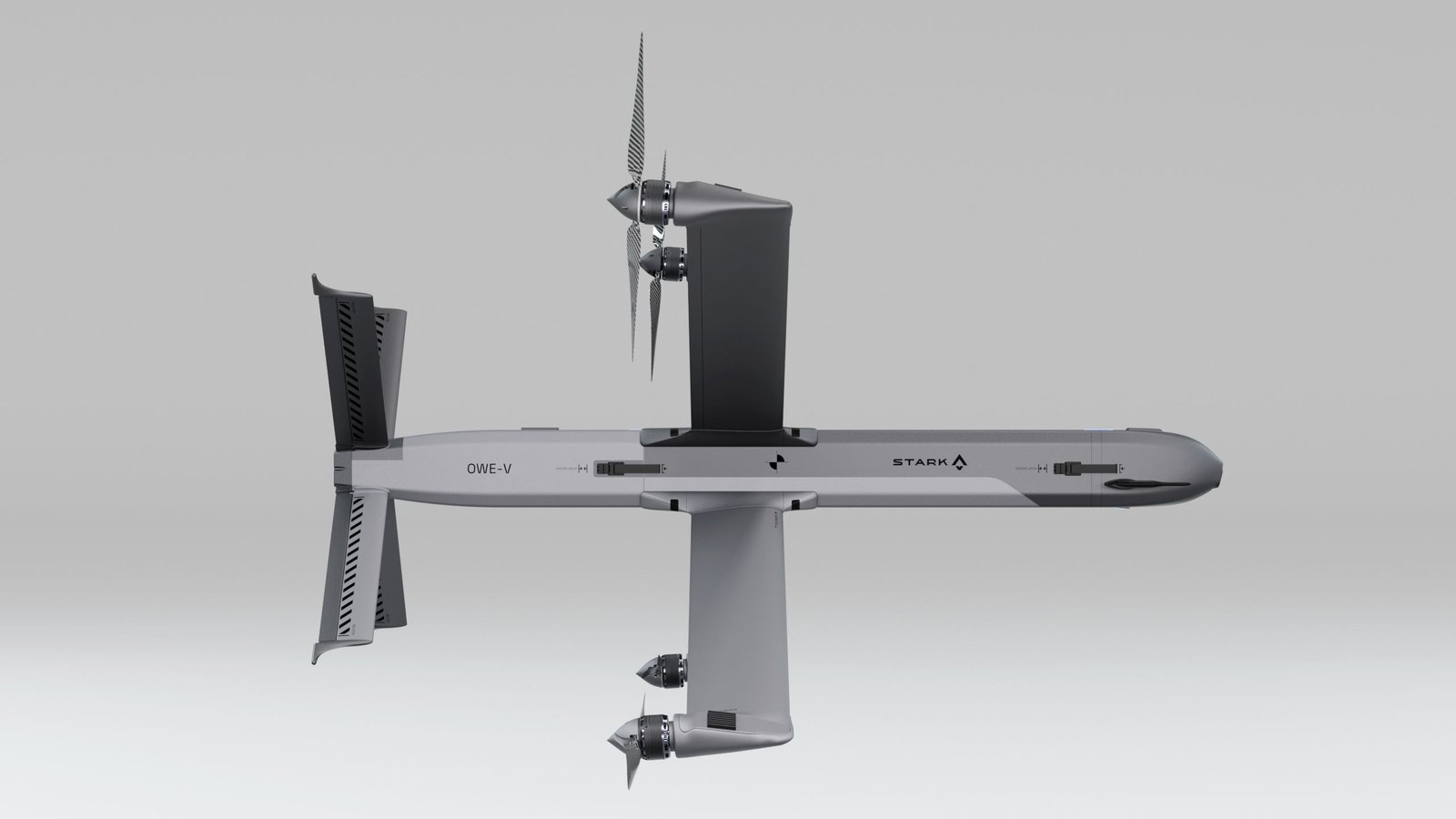
VIRTUS is a vertical take-off and landing (VTOL) loitering munition developed by STARK of Germany, first shown publicly in April 2025. STARK's own system page writes the name "VIRTUS" and labels it in its specification table "VIRTUS OWE-V," using the designation OWE-V (One Way Effector – Vertical) elsewhere on the site.
Overview
STARK revealed VIRTUS on 14 April 2025, describing it as a battery-electric, vertical-take-off loitering munition designed to launch from static or mobile platforms without a catapult, launch tube or pad. Army Recognition reported that the design drew on feedback from the Ukrainian armed forces and responds to requirements that emerged after Russia's 2022 invasion of Ukraine; STARK has not officially confirmed that VIRTUS has been used in Ukraine.
VIRTUS is one of two systems — alongside Helsing's HX-2 — selected to equip the German Bundeswehr with loitering munitions, part of a wider German rearmament effort. STARK presents VIRTUS as its flagship one-way effector and says the airframe is built for rapid iteration through a modular design.
Reported figures for the aircraft have shifted between its April 2025 unveiling and STARK's current product page: Army Recognition's 2025 coverage and Wikipedia both give an endurance of up to 60 minutes and a combat radius of about 100 km, while STARK's site, as of this review, quotes a flight time of 75 minutes and a range of more than 130 km. The specifications below use STARK's current figures; both sets of numbers describe the same production design.
Design and capabilities
VIRTUS takes off and lands vertically and cruises at about 120 km/h, reaching up to 250 km/h in its terminal attack dive, according to both STARK and Army Recognition. It carries a modular payload of up to 5 kg, which STARK and Army Recognition describe as configurable for anti-personnel, anti-armour or electronic-warfare roles; STARK's page additionally states the munition can penetrate up to 800 mm of high-hardness armour. STARK's page gives a service ceiling of 2,000 m (6,560 ft) and says the aircraft can go from storage to launch in under 10 minutes, with Army Recognition reporting a similar five-minute setup time in its 2025 coverage.
Navigation is autonomous and designed for GPS-denied or contested environments, and Army Recognition reports a "Return-and-Land" function that lets the aircraft come back and land if no target is found or an engagement is called off, allowing the airframe to be reused. VIRTUS is controlled through STARK's Minerva command-and-control software, which the manufacturer says lets a single operator coordinate multiple drones for swarm or saturation missions, including alongside a separate ISR drone.
Operational history
Army Recognition reports that Germany's Ministry of Defence selected STARK, alongside Helsing, to supply the Bundeswehr with loitering munitions as part of a rearmament programme, with STARK named to deliver the first kamikaze drones under that effort. The company targets NATO member states more broadly, with Ukraine named as a particular focus, and operates sites in Berlin, Munich and Kyiv.
Frequently asked questions
What is the range of VIRTUS?
STARK's current product page quotes a range of more than 130 km; earlier 2025 reporting and Wikipedia describe a roughly 100 km combat radius.
How long can VIRTUS fly?
STARK's current page quotes a flight time of 75 minutes; Army Recognition's 2025 coverage and Wikipedia both reported up to 60 minutes at the time of its unveiling.
How fast does VIRTUS fly?
It cruises at about 120 km/h and reaches up to 250 km/h in its terminal attack dive, per STARK and Army Recognition.
What payload does VIRTUS carry?
A modular payload of up to 5 kg, configurable for anti-personnel, anti-armour or electronic-warfare missions.
Who operates VIRTUS?
Germany's Bundeswehr has selected STARK, alongside Helsing, to supply loitering munitions; STARK also targets other NATO member states.
How does VIRTUS launch?
It takes off and lands vertically and needs no catapult, launch tube or pad, with STARK stating a deployment time under 10 minutes from storage.