
EU Trusted Drone Label narrows to 12 criteria and stays voluntary
2026-11-18
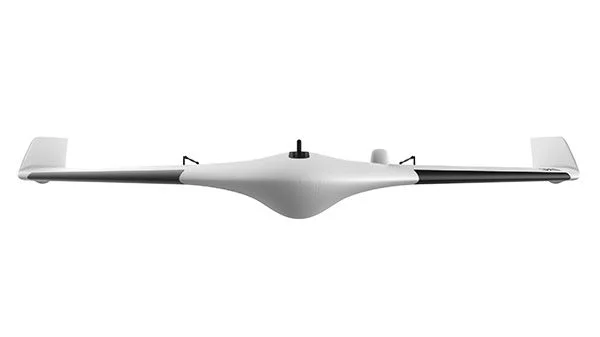
A European Commission support study has cut 71 candidate security requirements down to twelve, setting out what a voluntary European Trusted Drone Label would actually test. The first findings were presented on 10 November 2026 at the EU Drone Summit in Brussels, which drew more than 400 participants from the drone sector, EU Member States and the EU institutions. The study runs until January 2027, when its final recommendations go to the Commission. No manufacturer can apply for the label yet.
What the label would check
The European Trusted Drone Label (ETDL) is a product-security assessment of a declared configuration: the aircraft, its ground control station, the command-and-control link and the components a manufacturer declares compatible with it. It is not a licence for the person flying — Dronewatch Europe, which read the study, notes that it certifies neither operator competence nor individual missions.
Ten of the twelve criteria are technical and two cover supply-chain transparency. They fall into six areas: software and firmware security; identification and activity logging, including Remote ID and sensor logs; navigation resilience, meaning the aircraft keeps behaving predictably when positioning, navigation and timing inputs fail or become unreliable; command-and-control security; data protection; and supply-chain transparency through software and hardware bills of materials. The study recommends starting with a single baseline rather than several graded security levels.
The Commission's own account of the summit names the same ground more plainly: resistance to malicious interference, cybersecurity, operator control over data, and keeping the operator in command at all times.
Assessment would fall to accredited conformity assessment bodies rather than manufacturer self-declaration, and would work at type level — one assessment per product type, not per airframe. Stakeholders estimated four to eight weeks of work per product. A validity period of roughly two to three years and a public register of labelled products are proposed, both preliminary.
Voluntary, and open to non-EU manufacturers
The label would start out voluntary, with public procurement as the lever for adoption: buyers would ask for it rather than a regulation forcing it. The study recommends placing the scheme under the European cybersecurity certification framework established by the EU Cybersecurity Act, with DG CNECT initiating it, ENISA administering it and EASA supplying drone-specific expertise.
Country of origin is not one of the twelve criteria, and a manufacturer outside the EU is not automatically excluded. That is the clearest difference from the approach taken in the United States, where the FCC's Covered List turns on who made the equipment rather than on what the equipment does — the thread covered in our piece on what the Covered List has done to US drone availability. On the EU proposal as drafted, a signed-firmware, authenticated-Remote-ID product from DJI would be eligible on the same terms as a European one.
The trade body UAV DACH, the European Association for Unmanned Aviation, objected to exactly that on 17 November. Its chairman of the executive board, Dr Gerald Wissel, said it is "unacceptable that the European Trusted Drone Label in its current form leaves the door wide open for non-European manufacturers, particularly from China", and the association asked Commission President Ursula von der Leyen to restore a requirement that at least 75% of a drone's components come from the EU. It is also seeking binding European content rules in public procurement and an EU funding programme for uncrewed aircraft systems of at least €5 billion. The Commission has announced no decision on origin criteria. European makers in the directory — Parrot, maker of the ANAFI Ai, alongside Quantum Systems and Delair — are the constituency that case is made for.
Why Brussels is doing this now
The label is one strand of a wider reset. The Commission's drone security policy page lists an "EU trusted" drone label "to identify secure equipment on the market" alongside a Drone Security Package in 2026. The summit's second day carried the progress review of Drone Strategy 2.0, adopted in November 2022 and presented by Apostolos Tzitzikostas, Commissioner for Sustainable Transport and Tourism: the original vision still holds, and the shortfall is in implementation.
That review drew on a Drone Leaders' Group report the Commission published on 5 November 2026. Dronewatch Europe reports the group's finding that the single market "exists largely on paper": an operator authorised in one Member State can face fresh assessments in another, with waits of more than a year; U-space deployment is slow and unpredictable; risk assessments are read inconsistently; and authorities lack resources. One delivery operator suspended its European operations over the gap between EU rules and national implementation.
Tzitzikostas answered with an implementation roadmap aimed at regulatory barriers, beyond-visual-line-of-sight operations and industrial strength. The Commission's written summary says 2027; Dronewatch reports spring 2027. The accounts differ on the season, not the year.
What happens next
The support study concludes in January 2027. Institutional responsibilities, assessment procedures, validity rules, fees and the test methods for three requirements — authenticated Remote ID and two navigation criteria — are still open, and the European Parliament is to keep funding the implementation phase. For a pilot there is nothing to act on today; for anyone selling into European public procurement, the twelve criteria are the first sight of what will be asked for.
Frequently asked questions
Can I buy a drone with this label today?
No. It is a proposal. The support study concludes in January 2027, and the Commission has not decided who administers the label or how products are assessed, so no manufacturer can apply.
Would it ban Chinese drones from the EU?
Not as drafted. Origin of manufacture is not among the twelve criteria and a non-EU manufacturer is not automatically excluded. UAV DACH is campaigning for a European content requirement to be added.
Is this the same as the C-class marking on my drone?
No. The ETDL as described in the study assesses the cybersecurity of a product configuration — firmware, identification, navigation resilience, the control link, data handling and the bill of materials. The EU's existing class marks address a different question.
Sources
- European Commission (DG MOVE) – EU Drone Summit charts the course for a competitive, innovative and secure European drone market
- Dronewatch Europe – European Trusted Drone Label takes shape with 12 proposed security requirements
- Dronewatch Europe – EU admits drone strategy has fallen short, promises new implementation roadmap
- DroneXL – UAV DACH says EU drone label drops 75% European content rule
- European Commission (DG CNECT) – Drone security: Action Plan on Drone and Counter Drone Security