ANKA-AKSUNGUR
Turkish Aerospace Industries · Türkiye · Updated
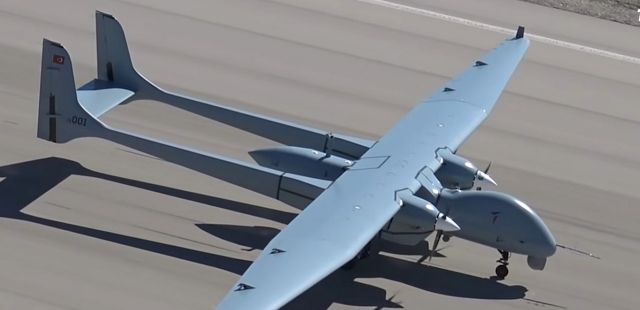
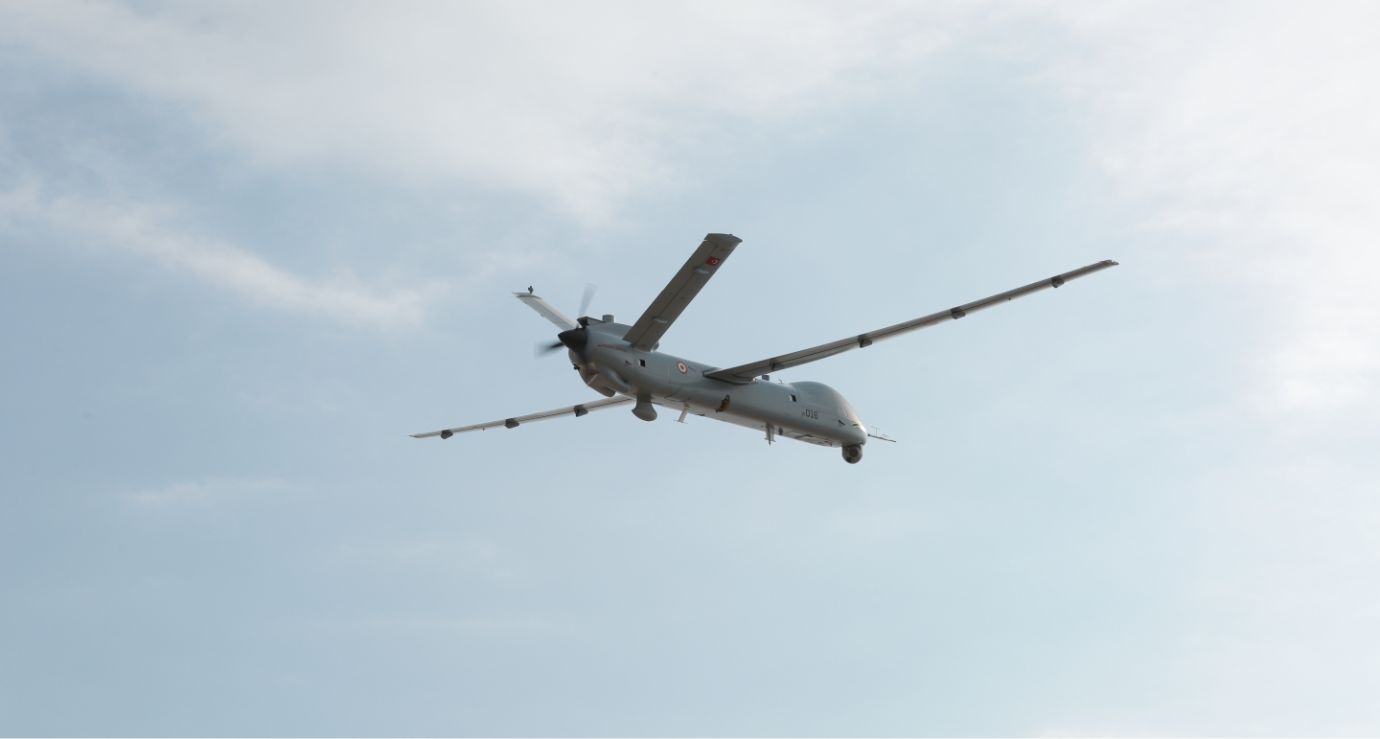
ANKA-AKSUNGUR is a twin-engine medium-altitude long-endurance (MALE) unmanned aerial vehicle developed by Turkish Aerospace Industries of Turkey, first flown on March 20, 2019. It is a larger derivative of the earlier Anka programme, built for heavier sensor and weapons payloads and longer-range maritime and overland missions.
Overview
Turkish Aerospace developed Aksungur to extend the payload capacity and endurance of the original Anka family, reusing Anka-series avionics architecture and ground control systems on a new, larger airframe, wing and landing gear. The aircraft was publicly unveiled at the IDEF defence exhibition in Istanbul in April 2019 and made its first flight on March 20, 2019, a flight lasting roughly four hours. Turkish Aerospace has described the design-to-first-flight period as approximately 18 months.
Aksungur entered Turkish Naval Forces service on October 20, 2021, and has since been fielded by additional Turkish military and security organizations. Turkish Aerospace states the aircraft has been used for maritime surveillance, anti-submarine warfare trials, and long-endurance intelligence, surveillance and reconnaissance (ISR) missions. As the largest UAV in the Anka family, it sits above the original Anka and Anka-S in size, payload and endurance while sharing much of their underlying systems architecture.
Design and capabilities
Aksungur has a length of 12.5 m and a wingspan of about 24 m, with a maximum take-off weight of 3,300 kg and a payload capacity that Turkish Aerospace lists as more than 750 kg. It is powered by two TEI-PD170 turbocharged diesel engines, each turning a three-bladed constant-speed propeller and able to run on diesel or jet fuel, giving the aircraft redundancy that a single-engine design lacks. Turkish Aerospace rates endurance at up to 50 hours and service ceiling at 40,000 ft (12,192 m); reported cruise speeds vary by source and mission profile, so no single maximum-speed figure is stated here.
The airframe carries six wing-mounted hardpoints (three per wing), rated in industry reporting at up to 500 kg, 300 kg and 150 kg per station, allowing a mix of sensor pods and weapons to be carried simultaneously. Available payloads include EO/IR camera turrets, SAR/GMTI-ISAR radar, and COMINT/ELINT/ESM signals-intelligence and electronic-warfare equipment, alongside maritime patrol sensors. Aksungur variants configured for strike missions can carry air-to-ground precision-guided munitions and laser-guided rockets. As with Anka, the aircraft uses an encrypted digital datalink for control, rated by the manufacturer at more than 250 km line of sight, extendable via satellite communication to beyond 5,000 km, and supports autonomous take-off and landing.
Operational history
Aksungur has been in Turkish military service since its October 2021 introduction with the Turkish Naval Forces, and is also operated by the Turkish Air Force and Turkey's General Directorate of Security. Turkish Aerospace and Turkish government sources describe export interest from countries needing surveillance coverage over large, sparsely monitored areas; Kyrgyzstan announced receipt of Aksungur aircraft, alongside Anka systems, from Turkey in January 2023. Specifications published by the manufacturer confirm the type can be configured to carry air-to-ground munitions as part of its strike-capable variant, describing a capability rather than a record of any specific engagement.
Variants
Turkish Aerospace markets Aksungur primarily as a single airframe with configurable mission payloads rather than a set of named sub-variants, offering ISR-only and strike-capable weapons configurations through modular hardpoints rather than distinct model designations. It is formally the largest and highest-payload member of the Anka family, developed as a derivative of the original single-engine Anka, from which it inherits its avionics and control-station architecture while more than doubling maximum take-off weight and payload.
Frequently asked questions
When did Aksungur first fly?
Aksungur made its first flight on March 20, 2019, roughly 18 months after the start of its design.
How is Aksungur different from Anka?
Aksungur is a larger, twin-engine derivative of Anka with a 3,300 kg maximum take-off weight versus Anka's 1,700 kg, and a payload capacity of more than 750 kg versus Anka's 350 kg.
How long can Aksungur stay airborne?
Turkish Aerospace lists an endurance of up to 50 hours at a service ceiling of 12,192 m (40,000 ft).
What powers Aksungur?
Aksungur uses two TEI-PD170 turbocharged diesel engines, giving it engine redundancy that the single-engine Anka does not have.
Can Aksungur carry weapons?
Yes; strike-capable configurations use six wing hardpoints to carry air-to-ground precision-guided munitions and laser-guided rockets alongside its ISR sensors.
Which countries operate Aksungur?
Turkey's Naval Forces, Air Force and General Directorate of Security operate Aksungur, and Kyrgyzstan received Aksungur aircraft from Turkey in 2023.