Apid 60
CybAero · Sweden · also known as APID 60, CybAero APID 60 · Updated
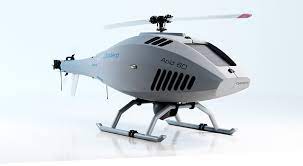
Apid 60 is a vertical take-off and landing (VTOL) unmanned helicopter developed by CybAero of Sweden, first flown in an undisclosed year as an enhanced derivative of the company's earlier Apid 55 demonstrator. It was built for autonomous operation from small vessels and unprepared sites, and was marketed for coastguard, customs, maritime-surveillance and defence missions.
Overview
CybAero, founded in 2003 in Linköping, Sweden, developed a family of single-main-rotor unmanned helicopters under the APID name, tracing its technology back to research begun in 1992 by the Swedish Defence Research Agency (FOI) and Linköping University. The Apid 55 made Sweden's first public autonomous UAV flight in Stockholm in January 2008; the Apid 60 followed as a scaled-up, higher-speed derivative of that airframe, intended primarily for maritime and ship-based operation. In 2015 CybAero introduced the "APID ONE" product family — with Defence, Rescue and Ranger variants — describing it as built on more than 20 years of development that included the Apid 60 programme.
Between 2014 and 2016, Sweden's Defence Materiel Administration (FMV) and the Swedish Navy evaluated the aircraft from a Visby-class corvette, and in 2015 CybAero was granted a Swedish export licence to sell 70 Apid unmanned air vehicles to China's Aviation Industry Corporation (AVIC), alongside a separate, smaller order from a Chinese customs authority. CybAero filed for bankruptcy in June 2018 after Sweden's Inspectorate of Strategic Products reversed export clearance for the AVIC-bound system over security-policy concerns, compounding chronic funding shortfalls and repeated changes of chief executive. The company's official domain no longer resolves, and no successor entity has continued production of the Apid 60 or APID ONE lines.
Design and capabilities
The Apid 60 uses a conventional single-main-rotor-and-tail-rotor helicopter layout, sharing its basic airframe dimensions with the Apid 55: an overall length of about 4 m and a main rotor diameter of about 3.3 m. Maximum take-off weight is given as 160 kg, with a payload capacity cited at roughly 50 kg for the maritime-configured aircraft evaluated by the Swedish Navy; some earlier CybAero literature associated with the same shared airframe cites a payload closer to 55 kg, and sources are not fully consistent on this figure. Later production aircraft were fitted with a Rotron RT600 rotary (Wankel) engine, offered in gasoline and heavy-fuel variants, selected by CybAero in 2014 for its power and reliability characteristics.
The aircraft is designed for fully autonomous take-off, cruise and landing, including recovery aboard moving vessels using a precision-landing beacon system. Endurance is stated at up to 6 hours, with an operating range of up to 200 km over an encrypted digital datalink. Service ceiling is given as 3,000 m and top speed as 110 km/h, with a cruise speed of roughly 90 km/h. The airframe was designed to carry interchangeable sensor payloads, including electro-optical/infrared cameras, laser scanners, ground and maritime surveillance radar, and other mission-specific equipment, and CybAero marketed the type for customs, coastguard, agricultural, energy and search-and-rescue applications in addition to naval use.
Operational history
The Apid 60's most thoroughly documented naval trials took place aboard the Swedish corvette HMS Karlstad, where FMV, the Swedish Navy and CybAero ran more than a year of ship-based testing that concluded in May 2016 with fully autonomous take-off-and-landing cycles at vessel speeds up to 25 knots and wind speeds up to 15 m/s. In parallel, CybAero pursued export sales to China: a smaller Chinese customs order underwent factory acceptance testing in 2015, and in July 2015 CybAero received a Swedish export licence for 70 Apid unmanned air vehicles destined for AVIC. That AVIC-bound export licence was subsequently revoked by Swedish authorities on security-policy grounds, a decision cited by CybAero's board as a direct factor in the company's June 2018 bankruptcy filing. No source reviewed documents an operational, in-service fielding of the Apid 60 by a named military or government operator following these events.
Variants
The Apid 60 was developed from the smaller Apid 55 test-bed helicopter and was itself superseded in CybAero's catalogue by the APID ONE family (Defence, Rescue and Ranger variants), announced in 2015 as a refined evolution of the same airframe and control architecture.
Frequently asked questions
What company built the Apid 60?
The Apid 60 was built by CybAero AB, a Swedish unmanned-helicopter manufacturer based in Linköping that filed for bankruptcy in June 2018.
What is the maximum take-off weight of the Apid 60?
Trade-press sources give a maximum take-off weight of 160 kg for the Apid 60 airframe, though some secondary figures differ slightly.
How far can the Apid 60 fly?
The Apid 60 is documented with an operating range of up to 200 km over its digital datalink and an endurance of up to 6 hours.
Can the Apid 60 land on ships?
Yes. Between 2014 and 2016 it was demonstrated performing fully autonomous take-offs and landings aboard the Swedish corvette HMS Karlstad at speeds up to 25 knots.
Is the Apid 60 still in production?
No confirmed production is documented after CybAero's 2018 bankruptcy, and the manufacturer's own website is no longer reachable.
What engine does the Apid 60 use?
Later aircraft used a Rotron RT600 rotary (Wankel) engine, available in gasoline and heavy-fuel versions, selected by CybAero in 2014.
SourcesChecked
- CybAero
- Sweden's largest military drone maker files for bankruptcy
- APID-55 VTOL Miniature UAV
- CybAero Selects Rotron Engine for Apid 60 Unmanned Helicopter
- Swedish FMV to test CybAero VTOL UAS
- CybAero receives authorisation for UAV delivery to China
- CybAero Tests APID One Unmanned Helicopter on Swedish Navy Warship