AR6
Tekever Autonomous Systems · Portugal · Updated
AR6 is a heavy-lift autonomous aerial system family developed by Tekever Autonomous Systems, unveiled at the Farnborough International Airshow on 21 July 2026. It is designed to carry 200 kg of cargo over 500 km for both civil and military customers, extending the numbering of Tekever's existing AR4 and AR5 reconnaissance aircraft into a new, much larger logistics class.
Overview
Tekever unveiled the AR6 at Farnborough in July 2026 as its first entry into the heavy-lift logistics UAV market, moving beyond the intelligence, surveillance and reconnaissance role of its earlier AR-series aircraft. The company positions the AR6 as a UK sovereign capability, designed and manufactured in the UK with British small and medium-sized enterprise partners, with production due to start at Tekever's Swindon manufacturing hub by the end of 2026. On the military side, Tekever is pitching the AR6 family at the British Army's Project Nyx, a programme to pair a highly autonomous uncrewed system with the crewed AH-64E Apache attack helicopter; Tekever was among companies shortlisted for Project Nyx in May 2026.
Tekever frames the AR6 against electric vertical-take-off-and-landing (eVTOL) cargo drones, which the company says typically carry up to 100 kg over 1–5 km, against the AR6's stated target of 200 kg over 500 km. Following the AR6 reveal, Tekever announced on 1 September 2026 that it had acquired the Scottish company Flowcopter, bringing Flowcopter's digital-displacement hydraulic transmission technology, used in the AR6's power train, under Tekever's control.
Design and capabilities
The AR6 is a four-rotor vertical-take-off-and-landing aircraft. Rather than the battery-electric motors used by most multirotor cargo drones, it is driven by an internal combustion engine connected to a digital-displacement hydraulic pump, which in turn powers four hydraulic rotor motors — a power train Tekever says delivers the range and payload gains over electric VTOL designs. The company states the AR6 is designed to operate in both very hot and very cold environments with reduced maintenance and sustainment requirements, though it has not published dimensions, maximum take-off weight, endurance or speed figures.
Tekever describes two variants. The civil AR6 is intended for logistics, offshore support, medical transport, search and rescue, and disaster relief. The military variant adds the company's "Mission Autonomy" software, which Tekever says draws on its operational experience in Ukraine, enabling GNSS-independent navigation, swarm operation, crewed–uncrewed teaming, and features intended to improve survivability in contested environments; intended military roles include contested logistics such as ship-to-shore resupply, forward logistics, and combat casualty evacuation.
Use cases
On the civil side, Tekever markets the AR6 for long-range cargo logistics, offshore platform support, medical supply transport, search and rescue, and disaster relief, where its stated 200 kg / 500 km capability exceeds that of typical electric cargo multirotors. On the military side, Tekever is targeting Project Nyx and similar crewed–uncrewed teaming and forward-logistics requirements for the British Army.
Variants
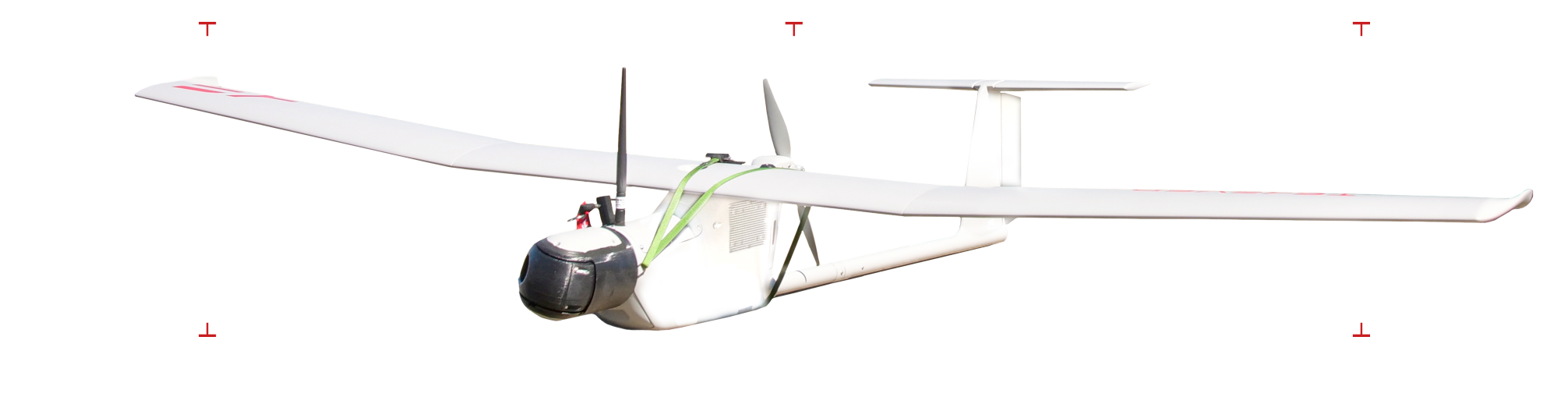
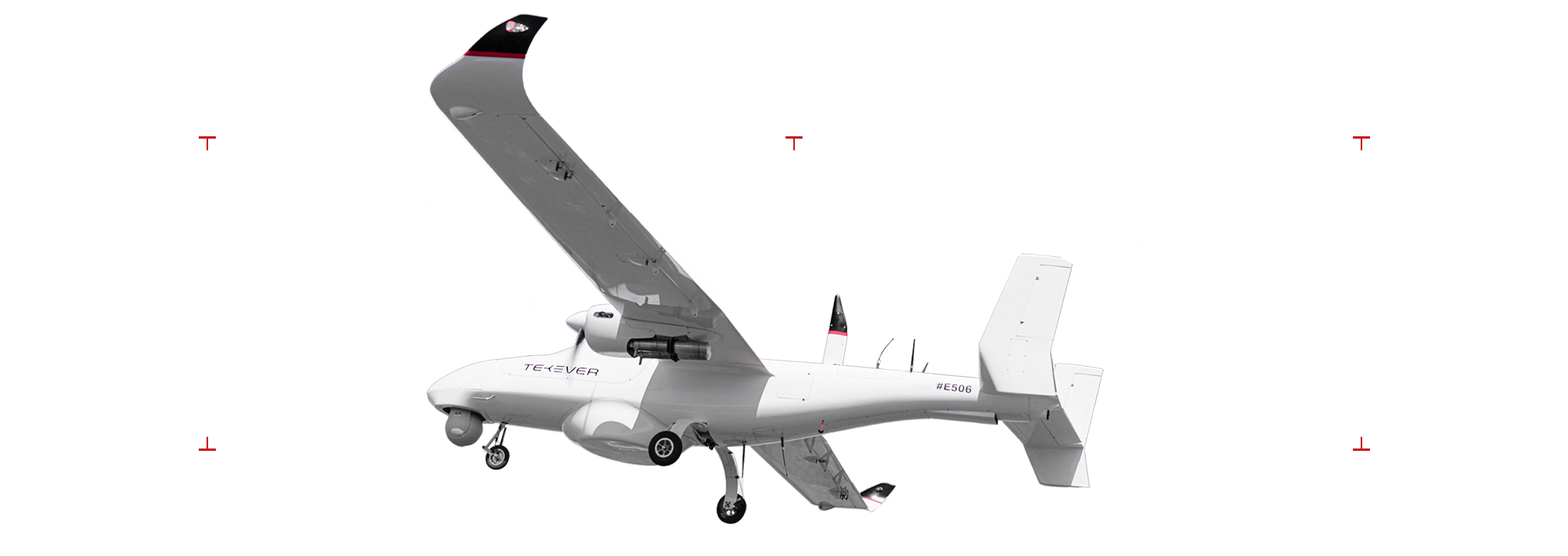
As of the Farnborough reveal, Tekever had shown a prototype/scale demonstrator of the AR6 rather than a production aircraft, described as the first of a planned AR6 family. The AR6 name continues the numbering of Tekever's smaller fixed-wing AR4 and AR5 reconnaissance aircraft, though it is a different airframe class (quadcopter heavy lift versus fixed-wing ISR) built for a different mission.
Frequently asked questions
What payload can the AR6 carry?
Tekever states a target payload of 200 kg.
What is the AR6's range?
The company states a range of up to 500 km.
What powers the AR6?
An internal combustion engine driving a digital-displacement hydraulic power train and four hydraulic rotor motors, rather than the battery-electric motors used in most cargo multirotors.
Is the AR6 in service?
No. It was unveiled as a prototype/demonstrator at Farnborough in July 2026, with production planned to start at Tekever's Swindon facility by the end of 2026.
What is the AR6 used for?
Civil logistics, offshore support, medical transport, search and rescue and disaster relief, and, in a military variant, forward logistics, casualty evacuation and crewed–uncrewed teaming, including the UK's Project Nyx.
Who makes the AR6?
Tekever Autonomous Systems, which also builds the smaller AR4 and AR5 reconnaissance aircraft.
SourcesChecked
- TEKEVER Unveils AR6, a New Family of Autonomous Systems for Heavy Lift — Tekever
- Tekever launches UK-built AR6 heavy-lift UAV for long-range military logistics and support missions — Army Recognition
- FIA 2026: Tekever targets British Army's Project Nyx with hydraulic-powered AR6 drone — Shephard Media