CREX-B
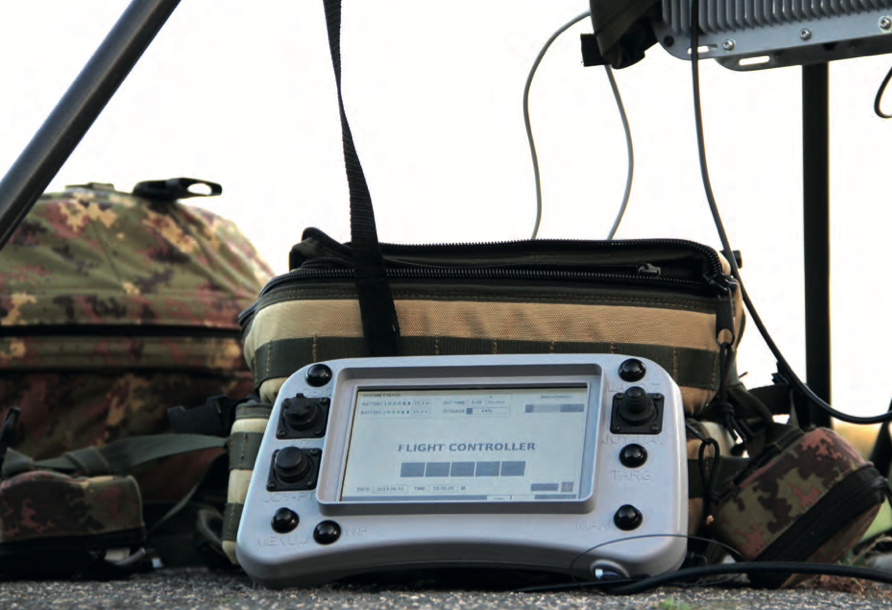
CREX-B is a backpackable micro uncrewed aerial system developed by Leonardo of Italy, first flown in an undisclosed year. It is a small, electrically powered fixed-wing aircraft built for short-range reconnaissance by special operations and tactical forces, providing "over the hill" and "around the corner" situational awareness to small dismounted units.
Overview
CREX-B belongs to Leonardo's family of tactical micro-UAS products, marketed through the company's Aeronautics division as a low-cost, man-portable reconnaissance tool for special and tactical forces. Leonardo's own product literature describes it as "a very affordable micro UAS" intended for units that need organic, short-range aerial reconnaissance without depending on larger, centrally controlled systems.
Leonardo positions CREX-B as a field-expedient system: the manufacturer states it can be assembled without special tools in under 10 minutes and is "backpackable" by a single operator, who can also hand-launch it from confined or enclosed spaces. Public manufacturer literature on the type does not disclose a first-flight date, formal introduction-to-service year, or specific national customers, and no independent trade-press reporting confirming an in-service user was identified.
Design and capabilities
CREX-B is a small fixed-wing aircraft with a wingspan of 1.7 m and a fuselage length of 0.45 m, and a maximum take-off weight below 2.1 kg. It is powered by a single electric motor driving one propeller, giving a maximum airspeed of 110 km/h and a cruise speed of 36 km/h. The manufacturer rates maximum endurance at approximately 75 minutes at maximum take-off weight and sea level, with a typical operating altitude band of 30-500 m above ground level and a service ceiling of 3,100 m above sea level. The airframe is rated to operate in steady-state winds up to 46.8 km/h.
Sensor payload options include a day/night electro-optical gimbal built around a 1/4-inch CCD sensor with roughly 530 TV lines of resolution, 10x optical zoom and a 4.6-46 degree field of view, and an infrared gimbal using an uncooled vanadium-oxide microbolometer with 320x240 resolution, a 60 Hz frame rate and 2x digital zoom. Command and sensor data are exchanged over a frequency-hopping spread-spectrum (FHSS) datalink with data encryption, rated by the manufacturer to a maximum line-of-sight range of 10 km.
Launch is by hand from a single operator, including from enclosed spaces, and the aircraft is recovered by a short landing rather than parachute or net recovery.
Operational history
Leonardo markets CREX-B as a currently available catalogue product for special operations and tactical forces, distributed through the company's Aeronautics division. Public sources reviewed do not document a confirmed first flight date, a formal in-service date, or specific national or organizational operators for CREX-B, and no independent trade-press reporting confirming operational deployment was identified as of the most recent research.
Frequently asked questions
How much does CREX-B weigh?
CREX-B has a maximum take-off weight of less than 2.1 kg, per Leonardo's published specifications.
How long can CREX-B fly?
The manufacturer rates maximum endurance at approximately 75 minutes at maximum take-off weight and sea level.
What is CREX-B's operating range?
Leonardo specifies a maximum line-of-sight datalink range of 10 km.
Is CREX-B a fixed-wing or rotary aircraft?
CREX-B is a fixed-wing aircraft; Leonardo's own product title describes it as a "Micro Electric Fixed-Wing Unmanned Aerial System."
How is CREX-B launched and recovered?
It is hand-launched by a single operator, including from enclosed spaces, and recovered by a short landing rather than net or parachute recovery.
Who operates CREX-B?
No specific national or organizational operators are publicly confirmed as of the most recent research; Leonardo markets it as available to special operations and tactical forces generally.