Proteus
Leonardo · Italy · also known as Leonardo Proteus, RWUAS Phase 3A Technology Demonstrator · Updated
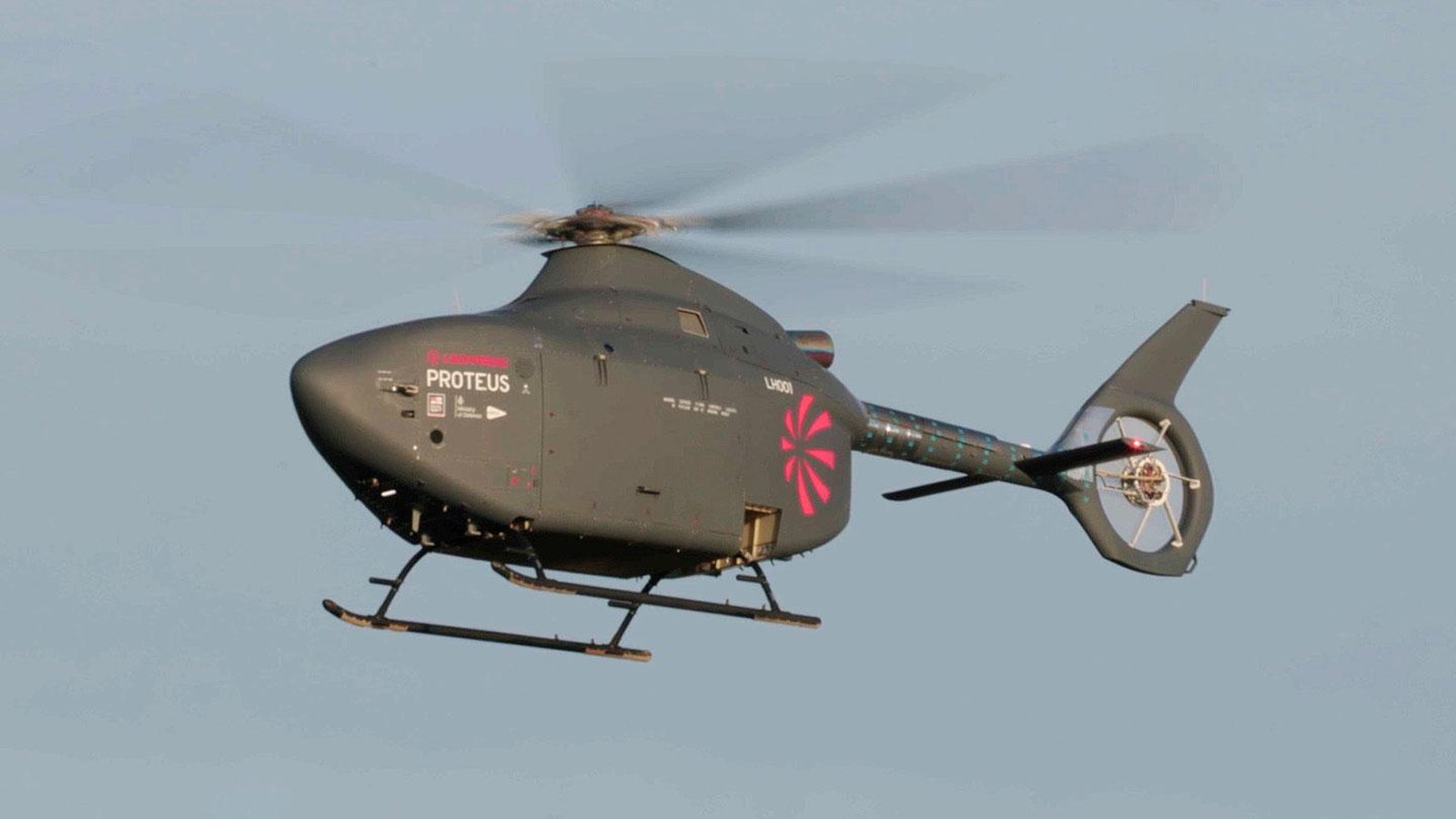
Proteus is a rotary-wing uncrewed aircraft system technology demonstrator developed by Leonardo for the UK Royal Navy, which made its first flight at Predannack Airfield in Cornwall on 16 January 2026.
Overview
Leonardo began work on Proteus after the UK Ministry of Defence awarded the company a four-year, GBP60 million (about USD82 million) contract in 2022 for the Rotary Wing Uncrewed Air System (RWUAS) Phase 3A technology demonstrator programme, funded through the Royal Navy's Anti-Submarine Warfare (ASW) Spearhead initiative. The programme supports the Royal Navy's Maritime Aviation Transformation Strategy (MATX), which aims to combine crewed and uncrewed aircraft into a hybrid air wing able to deliver maritime aviation effects with fewer personnel. To control cost and schedule, Leonardo drew on components and systems from across its helicopter range, including its civil AW09 light helicopter, and built the demonstrator at its Yeovil, UK, helicopter plant.
Leonardo unveiled the finished Proteus airframe design in January 2025 and displayed the full-scale demonstrator, carrying the serial LH001, at the Farnborough International Airshow in July 2025, before completing engine, systems and rotor ground tests at Yeovil later that year. The aircraft made its first flight, comprising two short test flights, on 16 January 2026 at Predannack Airfield — the UK's National Drone Hub in Cornwall — which the Royal Navy and Ministry of Defence described as the first flight of a crewless helicopter it has operated.
Design and capabilities
Leonardo and UK defence press describe Proteus as a roughly three-tonne-class rotorcraft, built around a single main rotor and tail rotor and sharing systems and components with the company's civil AW09 light helicopter. The airframe has a modular payload bay and skid landing gear rather than wheels, and Leonardo states the aircraft operates without a pilot or remote operator aboard or in a control cabin; the company's UK helicopter division has said the programme is on a path toward full autonomy, distinguishing it from optionally piloted or remotely flown types. Press coverage of the January 2025 design reveal put payload capacity at over one tonne, carried in interchangeable mission modules so Proteus can be reconfigured for different roles rather than being limited to one fixed sensor fit. Leonardo has said Proteus is intended to inform future uncrewed rotorcraft programmes and is not currently planned for full-rate production.
Operational history
Proteus remains a technology demonstrator rather than an in-service type. Its sponsor is the Royal Navy, working through the Defence Equipment & Support (DE&S) Future Capability Innovation team alongside Leonardo's Future Programmes Group. Following the January 2026 first flight at Predannack Airfield, the Royal Navy said further flight trials would mature autonomous mission capability intended to support anti-submarine warfare, airborne early warning, surveillance and resupply roles as part of a future hybrid air wing operating alongside crewed types.
Frequently asked questions
What is Leonardo Proteus?
Proteus is a rotary-wing uncrewed aircraft demonstrator built by Leonardo for the UK Royal Navy's Rotary Wing Uncrewed Air System (RWUAS) Phase 3A programme.
When did Proteus first fly?
Proteus made its first flight on 16 January 2026 at Predannack Airfield in Cornwall, completing two short test flights.
How heavy is Proteus?
Leonardo and UK defence press describe Proteus as a roughly three-tonne-class aircraft.
How much can Proteus carry?
Press coverage of Leonardo's design reveal put payload capacity at over one tonne, carried in interchangeable mission modules.
Is Proteus remotely piloted?
No. Leonardo states Proteus operates without an onboard or remote pilot in the cabin and is being developed toward full autonomy.
Will Proteus enter production?
Leonardo has said Proteus is not currently planned for full-rate production; its role is to inform future uncrewed rotorcraft programmes.