Nomad 100
Lockheed Martin · United States · also known as Sikorsky Nomad 100, Sikorsky Nomad™ 100, Nomad · Updated
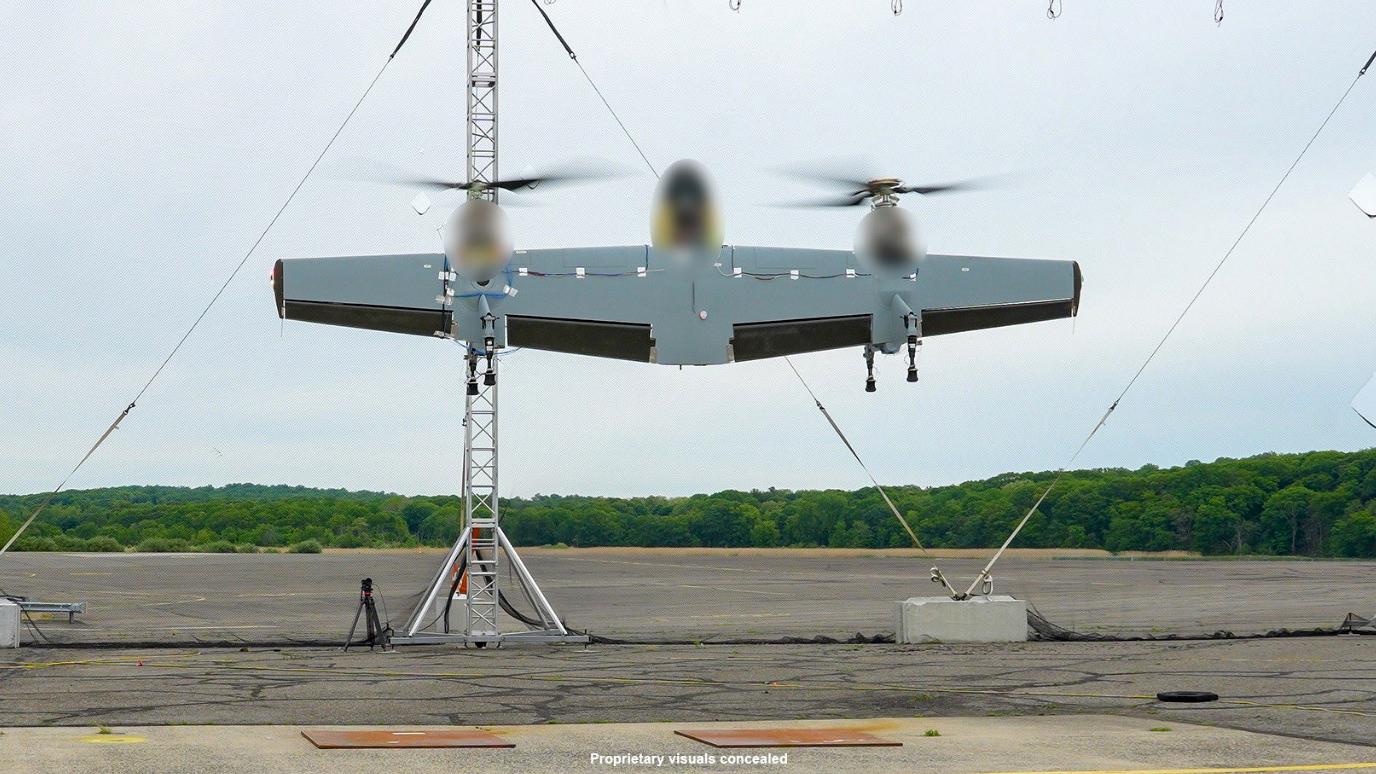
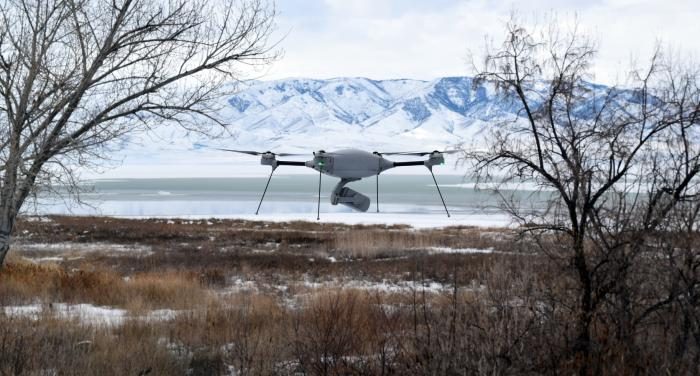
Nomad 100 is a rotor-blown-wing vertical take-off and landing (VTOL) uncrewed aircraft developed by Sikorsky, a Lockheed Martin company, of the United States, introduced on 6 October 2025. It takes off, hovers and lands like a helicopter on twin wing-mounted proprotors, then transitions to cruise on a fixed wing for long endurance, and is the Group 3, 18 ft (5.5 m) wingspan member of Sikorsky's new Nomad family of runway-independent drones.
Overview
Sikorsky unveiled the Nomad family on 6 October 2025 in Stratford, Connecticut, ahead of that year's AUSA symposium, presenting it as a scalable line running from the Group 3 Nomad 100 up through planned Group 4 and Group 5 variants with a footprint Sikorsky compares to its own S-70 Black Hawk helicopter. The smaller Nomad 50, a 10.3 ft (3.1 m) wingspan, all-electric subscale demonstrator previously known as RBW-5, flew in March 2025 and was one of the designs down-selected for DARPA's ANCILLARY VTOL X-plane programme, which DARPA has since paused; TWZ and Sikorsky both describe it as the smallest member of the same family as the Nomad 100, and it has no separate catalog entry. All Nomad variants are controlled through Sikorsky's MATRIX autonomy software, developed with DARPA and previously flight-tested on a UH-60 Black Hawk, and are intended to interoperate with the US Army's Universal UAS Controller and the US Marine Corps' MAGTF Agile Network Gateway Link.
Sikorsky said in July 2026 that the Nomad 100 had completed an initial ground- and flight-test phase under DARPA's Early VTOL Aircraft Demonstration (EVADE) programme, which selected Sikorsky's MATRIX technology as the autonomy solution for all five EVADE platforms; the company did not disclose an exact first-flight date. Sikorsky said it would next run an intensive flight-test campaign at a government facility to exercise a range of multirole Nomad 100 missions.
Design and capabilities
The Nomad family uses a tail-sitting airframe with twin proprotors mounted on a long, straight wing and conventional tailfins: the aircraft takes off and lands vertically like a helicopter, then tilts into forward flight to cruise on the wing, blowing rotor downwash over it for lift — the "rotor-blown-wing" configuration that gives the family its name. Smaller variants, including the Nomad 100, use a hybrid-electric powertrain; Sikorsky says larger, future Group 4/5 variants would use a conventional drivetrain instead. The company designed the power modules for remove-and-replace field maintenance.
The Nomad 100 has an 18 ft (5.5 m) wingspan and sits in the US military's Group 3 UAS weight class (56–1,320 lb/25–599 kg); Sikorsky has not published a specific take-off weight, payload, endurance, range or speed for the aircraft. Payload figures reported in trade press for the Nomad family conflict: Janes attributes a roughly 500 lb payload to the Group 3 class the Nomad 100 belongs to, while TWZ attributes the same approximate 500 lb figure — enough for four Hellfire missiles or two Small Diameter Bombs — to a larger, not-yet-built Group 4 variant. Neither figure is confirmed here as a Nomad 100 spec. Sikorsky compares the Nomad 100's intended role to the US Army's RQ-7 Shadow, flown at brigade level for reconnaissance.
Operational history
As of its July 2026 flight-test update, the Nomad 100 remained in government flight testing under DARPA's EVADE programme, with no production contract or named military operator disclosed. Sikorsky has said it is in discussions with "a couple of customers" about the larger, planned Group 4 Nomad variant, which had passed a preliminary design review but had no contract as of October 2025.
Variants
- Nomad 50 (first flown March 2025) – all-electric, 10.3 ft wingspan subscale demonstrator, previously designated RBW-5; down-selected for DARPA's paused ANCILLARY programme.
- Nomad 100 (Group 3, 2025–) – hybrid-electric, 18 ft wingspan; in flight testing under DARPA's EVADE programme.
- Nomad Group 4/5 (planned) – larger, conventional-drivetrain variants Sikorsky compares in size to the MQ-1C Gray Eagle and, for the largest, to its own S-70 Black Hawk; past preliminary design review as of October 2025, with no contract announced.
Frequently asked questions
How big is the Sikorsky Nomad 100?
It has an 18 ft (5.5 m) wingspan and falls in the US military's Group 3 UAS class (56–1,320 lb). Sikorsky has not published its take-off weight.
Has the Nomad 100 flown?
Sikorsky said in July 2026 that the Nomad 100 had completed an initial ground- and flight-test phase under DARPA's EVADE programme, without giving an exact first-flight date.
What is the difference between the Nomad 50 and Nomad 100?
The Nomad 50 is a smaller, all-electric, 10.3 ft wingspan subscale demonstrator that flew in March 2025; the Nomad 100 is the larger, hybrid-electric, 18 ft wingspan Group 3 variant now in flight testing.
What missions is the Nomad 100 designed for?
Sikorsky lists intelligence, surveillance and reconnaissance, contested logistics resupply, light attack, search and rescue, maritime patrol and persistent communications.
Who operates the Nomad 100?
No operator has been disclosed; as of mid-2026 it remained in government flight testing under DARPA's EVADE programme without a production contract.
SourcesChecked
- Nomad – Lockheed Martin
- Lockheed Martin Sikorsky Introduces Nomad Family of Long-Endurance, Runway-Independent Drones
- Sikorsky Unveils Nomad Family Of Scalable VTOL Drones – TWZ
- AUSA 2025: Sikorsky details its forthcoming Nomad rotor-blown wing UAS family – Janes
- Sikorsky Nomad 100 Completes Initial Flight Test Phase for DARPA's EVADE Program