XRQ-73
Northrop Grumman · United States · also known as SHEPARD X-plane · Updated
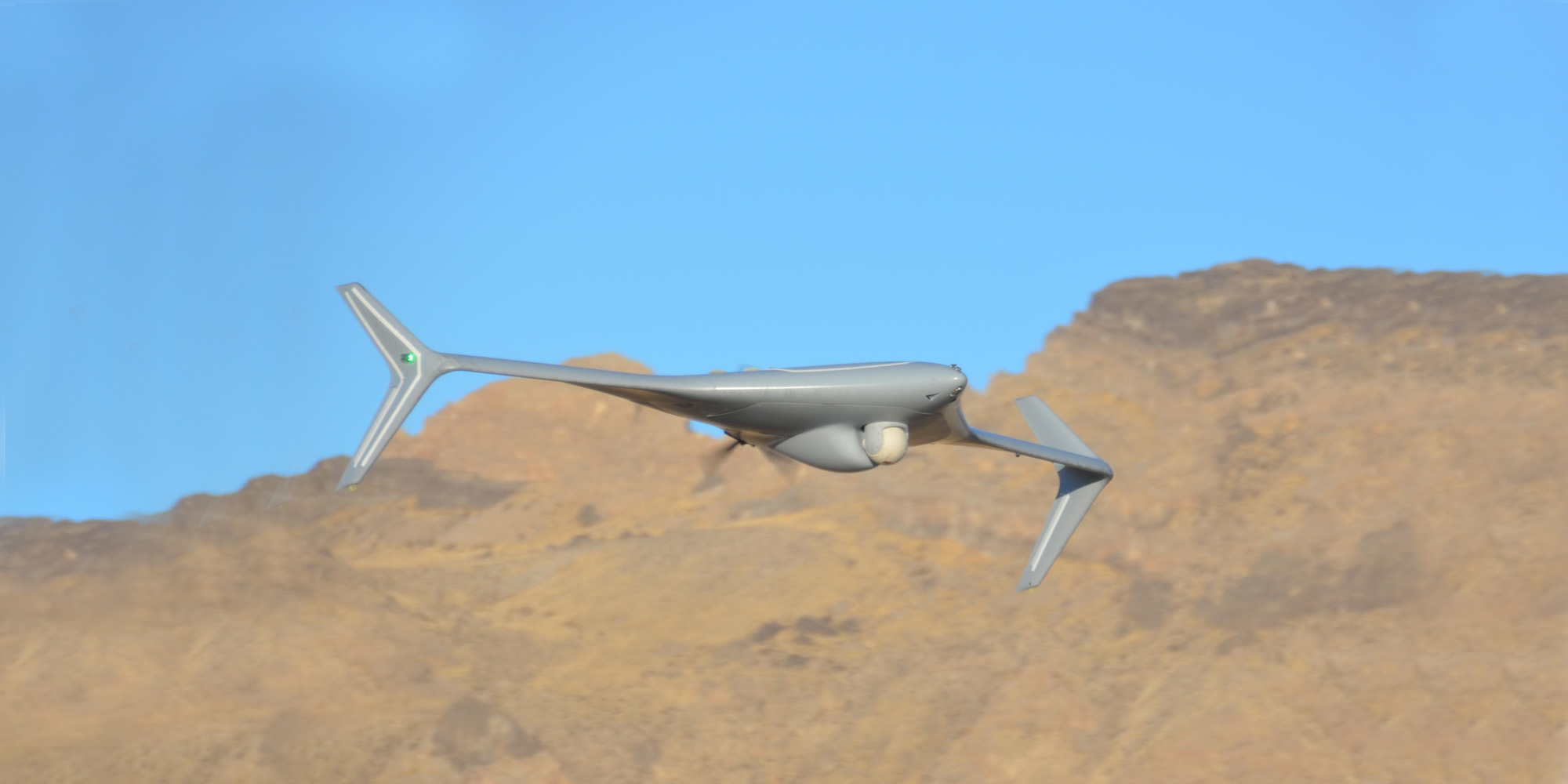
XRQ-73 is a series hybrid-electric flying-wing experimental aircraft built by Northrop Grumman for DARPA, first flown at Edwards Air Force Base, California, in April 2026. It is the flight demonstrator for DARPA's Series Hybrid Electric Propulsion AiRcraft Demonstration (SHEPARD) programme, which is intended to prove hybrid-electric propulsion for a fieldable uncrewed aircraft.
Overview
DARPA's Tactical Technology Office runs SHEPARD as an "X-Prime" project, a construct meant to mature a missionised aircraft design quickly by reducing system-level integration risk, with the Air Force Research Laboratory and the Office of Naval Research as partners. Northrop Grumman is the prime contractor, with its subsidiary Scaled Composites, along with Cornerstone Research Group, Brayton Energy, PC Krause and Associates, and EaglePicher Technologies, named by DARPA as major suppliers. DARPA assigned the aircraft the official X-plane designation XRQ-73 in June 2024, and the programme builds on the series hybrid-electric architecture and component technologies developed for the AFRL/IARPA Great Horned Owl project, an earlier Scaled Composites design known by the designation XRQ-72A.
DARPA originally targeted a first flight within 20 months of the programme's X-plane designation, which would have put it in 2024, but the flight did not take place until April 2026. DARPA's public announcement of the flight, made on 6 May 2026, did not explain the delay, and outside reporting has not confirmed its cause.
Design and capabilities
XRQ-73 is a tailless flying wing, visually resembling a small-scale version of Northrop Grumman's B-2 bomber, with a vertical stabiliser mounted on each wing near, but not at, the wingtip. TWZ's analysis of release imagery notes two large dorsal intakes at the fuselage centreline, a smaller auxiliary dorsal intake, and two rectangular intakes near the nose, alongside a large faceted fairing under the fuselage that outside analysts believe is a sensor bay, though DARPA has not described the aircraft's payload. Northrop Grumman gives the aircraft's weight as about 1,250 lb (567 kg), placing it in the US military's Group 3 UAS category; DARPA has not released the aircraft's wingspan, length, endurance, range, top speed or operating altitude. The aircraft uses a series hybrid-electric propulsion architecture, in which a gas turbine generates electricity to drive the aircraft's propulsion, which DARPA describes as ultra-quiet.
DARPA states that the architecture is intended to demonstrate fuel efficiency, reduced emissions and operational flexibility compared with a conventionally powered aircraft of the same class, and that it could enable new types of mission systems and effects once matured into a fielded design.
Use cases
SHEPARD is a technology-maturation programme rather than a production effort, and DARPA has not named an operator or acquisition programme for XRQ-73. Programme manager Lt. Col. Clark McGehee has said the hybrid-electric architecture demonstrated by the aircraft could support new mission systems and delivered effects, suggesting an eventual intelligence, surveillance and reconnaissance role consistent with the "RQ" reconnaissance-drone prefix in its designation, though DARPA has not confirmed a specific mission.
Frequently asked questions
What is the XRQ-73?
A hybrid-electric flying-wing experimental aircraft built by Northrop Grumman for DARPA's SHEPARD programme, first flown in April 2026.
How much does the XRQ-73 weigh?
About 1,250 lb (567 kg), which places it in the US military's Group 3 UAS weight class, according to Northrop Grumman.
What powers the XRQ-73?
A series hybrid-electric system in which a gas turbine generates electricity for the aircraft's propulsion, according to DARPA.
When did the XRQ-73 first fly?
In April 2026, at Edwards Air Force Base, California; DARPA announced the flight on 6 May 2026.
What aircraft did the XRQ-73 build on?
The AFRL/IARPA Great Horned Owl demonstrator, an earlier Scaled Composites hybrid-electric design, according to DARPA.