Zephyr
Airbus · United Kingdom · Air Mobility · also known as Airbus Zephyr, Zephyr 8, QinetiQ Zephyr · Updated
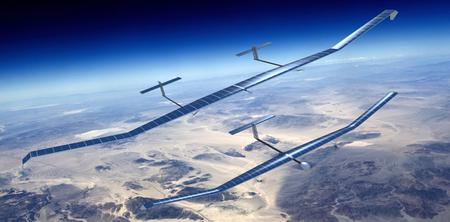
Zephyr is a solar-electric, high-altitude pseudo-satellite (HAPS) developed by Airbus of the United Kingdom, first flown in prototype form in 2003. Rather than a conventional reconnaissance drone, Zephyr is designed to fly for weeks at a time in the stratosphere, recharging its batteries from solar cells during the day so it can act as a persistent communications relay or surveillance platform in place of a satellite.
Overview
The programme began under QinetiQ, the commercial arm spun out of the UK's defence research establishment, which flew a series of early Zephyr prototypes (Zephyr 3 through Zephyr 6) between the early 2000s and 2006. In March 2013, QinetiQ sold the project to EADS Astrium, which became Airbus Defence and Space. Airbus has since developed the current Zephyr 8 (also marketed as Zephyr S), a lighter, larger-span aircraft intended for extended stratospheric operation.
Zephyr's purpose is to provide "high-altitude platform station" services: persistent imagery, communications relay or connectivity coverage over a fixed area for weeks or months, at a fraction of the cost of a satellite. In January 2023 Airbus rebranded its HAPS connectivity business as Aalto HAPS Ltd.
Design and capabilities
The Zephyr 8/S airframe has a wingspan of 25 m and an all-up weight of around 65 kg, of which roughly 40% is battery mass. Thin, flexible gallium-arsenide solar cells cover the wing and recharge lithium-ion batteries during the day so the aircraft can keep flying through the night. The aircraft carries a payload of up to about 5 kg — for example a small communications relay or an electro-optical sensor capable of imaging a 20 × 30 km area on the ground — and can operate at altitudes up to roughly 23,200 m, above commercial air traffic and most weather.
Because Zephyr is not rated for a fixed endurance the way a conventional UAV is, its performance is usually described through flight records rather than a single certified figure. Under Fédération Aéronautique Internationale (FAI) rules, a Zephyr 7 set the recognised endurance record on 23 July 2010, flying for 336 hours (14 days) at up to 21,562 m. Later, non-FAI-sanctioned flights of the newer Zephyr 8/S design have stayed aloft far longer — 25 days 23 hours in 2018, and 64 days in the summer of 2022, before that aircraft was lost to an engine failure in high-altitude turbulence.
Operational history
The UK Ministry of Defence bought two Zephyr 8 aircraft in February 2016 and a third in August 2016, and remains the programme's named military operator. Airbus has continued flight trials from the US Army's Yuma Proving Ground and other sites while developing Zephyr as a commercial connectivity platform; a Japanese-led consortium committed US$100 million in June 2024 toward an Asia-Pacific service targeted for 2026.
Frequently asked questions
What is the range of the Zephyr drone?
Zephyr does not have a conventional range figure; it is designed to loiter over one area for weeks. Its certified FAI endurance record is 336 hours (14 days), and an uncertified 2022 flight lasted 64 days.
How high does the Zephyr fly?
Up to about 23,200 m (76,100 ft), in the stratosphere above controlled airspace and weather.
How is the Zephyr powered?
By thin, flexible solar cells covering its wing, which recharge onboard lithium-ion batteries so the aircraft can keep flying through the night.
Who operates the Zephyr?
The UK Ministry of Defence has owned Zephyr 8 aircraft since 2016; Airbus also flies the type for its own trials and for prospective commercial connectivity customers.
Who makes the Zephyr?
Airbus Defence and Space, which acquired the programme from QinetiQ in 2013. The aircraft was originally developed by QinetiQ, a UK defence research spin-off.