
Beijing bans drone ownership from 15 November and offers owners a buyback
2026-09-14 · updated 2026-09-22
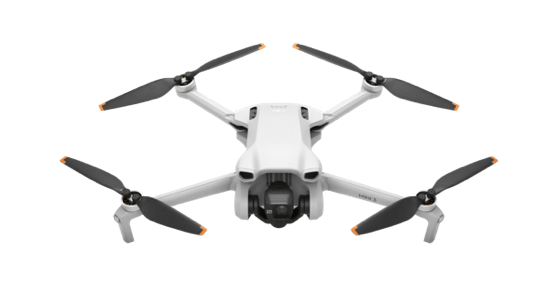
Beijing has extended its drone restrictions from selling to owning: from 15 November 2026, possessing or storing a drone or its key components anywhere inside the city becomes illegal. The revised municipal regulation was announced on Sunday 13 September and applies across Beijing's entire administrative area. Residents and companies have roughly two months to sell their aircraft at a government buyback point, scrap them, or send them to an address outside the city.
What the revised rule says
The May 2026 regulation that took effect on 1 May already made Beijing one of the most tightly controlled urban airspaces in the world. It banned the sale or lease of drones and of 17 designated "core components" to individuals and organisations without public security approval, prohibited bringing new aircraft or components into the city by courier, freight or personal travel, and required existing owners to complete real-name registration with public security authorities. Storage was capped at three aircraft, or ten core components, per location inside the Sixth Ring Road — an area of roughly 2,288 km². Recreational flight anywhere in the city required prior approval.
The revision approved this month takes that storage cap to zero. Owners who registered their aircraft before the earlier deadline and were permitted to keep up to three are no longer exempt. DroneXL reports that the ban covers the same 17 component categories as the sales rule, so a spare flight controller or a set of motors is treated the same way as a complete aircraft.
Enforcement is by confiscation and fines, applied to individuals and companies alike. Article 8 of the revised regulation sets the amounts: for keeping a drone or core components, CNY 500–5,000 for an individual and CNY 5,000–50,000 for an organisation; for an unapproved flight, confiscation of the aircraft plus CNY 1,000–10,000. The regulation takes effect on 15 November 2026 (Article 12).
The buyback and the other ways out
The city government's notice of 13 September lists four ways to dispose of an aircraft before 15 November: sell it at a designated buyback point, scrap and recycle it, send it by post to an address outside the city, or carry it out of Beijing yourself. Drones remain legal outside the city under China's national real-name registration system; the rules stop at the city boundary, not at the country's.
The subsidies step down on 1 November. A buyback sale made up to 31 October earns a subsidy of 30% of the sale price, capped at CNY 3,000 per aircraft; from 1 to 14 November it is 15%, capped at CNY 1,500. Scrapping earns CNY 200 per aircraft up to 31 October and CNY 100 after. Posting an aircraft out of the city by EMS is free of charge after verification. The subsidies apply only to aircraft held by individuals whose details have already been verified by the public security authorities.
Updated 22 September 2026: an earlier version of this article said the subsidy schedule and the penalties had not been published and listed three disposal routes. The official notice and the regulation's text give all three; the figures above are taken from them.
The Beijing measures are municipal. For the national rules that govern drones in the rest of mainland China — real-name registration, operator licences, controlled airspace and penalties — see the drone laws page for China.
What it means for the wider drone market
Beijing is a single city, not a national market, and China's drone industry is built elsewhere — principally in Shenzhen, where DJI is headquartered. But the city is a reference point for regulators in the rest of the country, and DroneDJ noted in April that the sales ban alone was significant for manufacturers because a capital-city precedent invites imitation. Consumer lines such as the DJI Mini series and the DJI Mavic series are the aircraft most affected in practice: they are the ones ordinary residents own, and the sub-250 g weight class that is treated leniently in most jurisdictions receives no special treatment here.
For readers outside China the significance is the model rather than the market. Beijing has now demonstrated a complete regulatory stack — registration, sales control, import control at the city boundary, storage limits and finally a possession ban with a disposal mechanism attached. Cities elsewhere that are considering drone restrictions in response to sightings over airports and infrastructure have generally stopped at flight rules. This is the first case of a major capital regulating the object rather than the activity.
Frequently asked questions
Does the ban apply to commercial and industrial drones?
The rule as reported covers drones and key components held within Beijing's administrative area, with fines applying to companies as well as individuals. Operations run with public security approval sit outside the general prohibition, but the published reporting does not set out the approval categories in detail.
Can a visitor bring a drone into Beijing?
No. Bringing drones or core components into the city — by courier, freight or in personal baggage — was already prohibited under the May 2026 rules, and the September revision does not loosen that.
Is flying a drone still legal elsewhere in China?
Yes. Drones registered under the national real-name system remain legal outside Beijing's administrative boundary. The measures described here are municipal.
What happens to an aircraft that is not disposed of by 15 November?
It becomes non-compliant. Keeping it is punishable by a fine of CNY 500–5,000 for an individual or CNY 5,000–50,000 for an organisation, and flying it without approval by confiscation plus CNY 1,000–10,000.
Does this affect drones sold outside China?
Not directly. It is a municipal possession rule, not an export or manufacturing measure. Chinese makers' export exposure is governed by separate national export controls and by importing countries' own rules.
Sources
- Beijing Municipal Government – disposal routes and subsidies for drones held in Beijing (Chinese)
- Beijing Municipal Government – revised regulation on unmanned aircraft, full text (Chinese)
- DroneXL – Beijing bans owning a drone, then offers to buy yours back
- Politico (Associated Press) – Beijing bans drone possession in the city after earlier moves to tighten rules
- DRONELIFE – Beijing's drone ban goes into effect today: a new model for urban UAV control
- DroneDJ – Beijing's drone ban creates a massive problem for DJI