
US drone tariffs are now in force: what changed on 3 September 2026 and what it means for buyers
2026-09-09
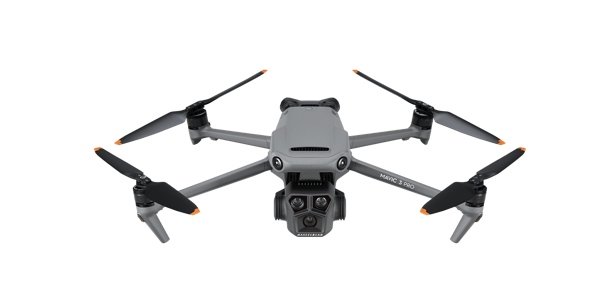
The biggest drone story of the week is not a new aircraft — it is a customs form. At 12:01 a.m. Eastern time on 3 September 2026, new United States import duties on unmanned aircraft took effect under a Section 232 proclamation signed on 13 August. For the first time, the price of a drone entering the US depends on how heavy it is, whether it carries a thermal camera, and where its critical components were made. This explainer sets out what the rules say, who is affected, and why the number on the shelf has not changed yet.
What the tariffs actually say
The proclamation sorts imported drones into tiers. Aircraft with a maximum take-off weight above 25 kg (about 55 lb) face a 100% ad valorem duty. Any drone or component with integrated thermal imaging also faces 100%, regardless of weight. Lighter drones — the consumer and prosumer class that covers almost everything in our Drone and UAV directory under 25 kg — are charged 25%. A further 25% duty on a schedule of drone components (motors, electronic speed controllers, lithium-ion batteries, docking stations) is deferred until 9 February 2027.
Allied producers get a ceiling rather than the headline rate: drones from Japan, South Korea, Taiwan, Switzerland, Liechtenstein and the European Union are capped at 15% including the existing duty, and the United Kingdom at 10% — but only where "substantially all critical components and technology" originate in the United States, the United Kingdom or one of the eligible economies. Aircraft already on the Pentagon's Blue UAS Cleared List or the FCC's conditional approval list as of 2 September also get a reprieve until February 2027.
The stated rationale is supply-chain dependence: even US-assembled drones, the proclamation notes, rely on foreign motors, speed controllers, batteries and docks.
Why shelf prices have not jumped 25% overnight
The duty is assessed at import — when goods are "entered for consumption, or withdrawn from warehouse for consumption" — not at the checkout. Stock that was already sitting in US warehouses on 2 September carries no new duty and can keep selling at the old price. Whether a retailer's next restock costs 25% more, and how much of that is passed on rather than absorbed, is a commercial decision that will play out over weeks. A useful early data point: on Labor Day the DJI Mini 3 was still being discounted to US$315 on Amazon, US$104 below list, the same weekend the tariffs began.
The practical consequence for buyers is a two-speed market. Popular sub-250 g and sub-25 kg consumer models such as DJI's Mavic series will drift up gradually as pre-tariff inventory runs out. Thermal-equipped enterprise aircraft — the tools of fire departments, search-and-rescue teams and utility inspectors — are exposed immediately, because there is little pre-tariff stock and, as several public-safety agencies pointed out this week, no domestic drop-in replacement at the same price.
The wider regulatory picture
The tariffs landed in the same week as two other signals. At the Commercial UAV Expo in Las Vegas (1–3 September) a survey of 885 operators found that 45.8% had frozen fleet purchasing decisions until the regulatory picture clears — both the tariffs and the FAA's pending Part 108 rule for routine beyond-visual-line-of-sight flight. And in the parallel FCC proceeding (docket 26-189) that would restrict new foreign drone models from receiving radio authorisation, the public comment file had reached roughly 3,770 filings against the proposal versus 16 in favour; DJI's own 26-page filing argues that no security agency endorsed the "military-grade" category definitions the proposal relies on. The company is separately challenging its FCC listing in federal court.
Outside the United States the direction of travel is the opposite. Canada's amended Part IX rules now allow sheltered and extended-visual-line-of-sight operations by advanced pilots, Europe's U-space corridors are converting to full commercial sectors in France, Germany and the Nordics, and the UK CAA is rolling out SORA 2.5 to speed infrastructure-inspection approvals. Manufacturers in China, meanwhile, are visibly redirecting export effort towards Southeast Asia, South America and Central Asia, while Japan, South Korea and Taiwan position themselves as the "trusted" alternative suppliers the US tariff tiers now reward.
What to watch next
- Restock pricing in October. The first post-tariff shipments of consumer drones will show how much of the 25% reaches the customer.
- 9 February 2027. Component duties begin and the Blue UAS / FCC-list grace period ends — the date that matters for enterprise fleets.
- FCC docket 26-189 and Part 108. Together they decide whether the US market is defined by what can be imported or by what can be flown.
- Allied-origin models. Aircraft from Japanese, Korean, Taiwanese and European makers in our makers directory are the ones the 10–15% caps were written for; expect their US distribution to expand.
Frequently asked questions
Does the tariff apply to a drone I buy from a US retailer?
Not directly. The duty is paid by the importer when the aircraft enters the country. Retailers decide how much to pass on; drones that were already in the US before 3 September carry no new duty.
Are sub-250 g drones exempt?
No. There is no weight exemption at the bottom of the scale; drones up to 25 kg pay 25% unless they qualify for an allied-origin cap. The 100% rate starts above 25 kg or with a thermal camera at any weight.
Which countries get the lower rate?
Japan, South Korea, Taiwan, Switzerland, Liechtenstein and EU member states are capped at 15%; the United Kingdom at 10%. The cap applies only if substantially all critical components and technology come from the US, the UK or one of those economies.
Is this the same as the FCC "drone ban"?
No. The tariffs are a trade measure that makes imports more expensive. FCC docket 26-189 is a separate proceeding about whether new foreign drone models can receive the radio authorisation needed to be sold at all. Both are moving in parallel.
Sources
- AeroTime – US tariffs of up to 100% on imported drones take effect
- DroneXL – Drone tariffs hit September 3: why prices won't jump 25% overnight
- UAV Coach – New drone tariffs: what commercial pilots need to know
- KR Droneworks – What happened in the drone universe, week ending 6 September 2026
- DroneXL – DJI news, September 2026 (FCC docket 26-189 comment tally; Commercial UAV Expo survey)
- Commercial UAV News – Expo preview, avalanche drones, delivery regulation