Bayraktar Mini UAV
Baykar Tech · Türkiye · also known as Bayraktar Mini, Bayraktar Mini IHA, Bayraktar A, Bayraktar B · Updated

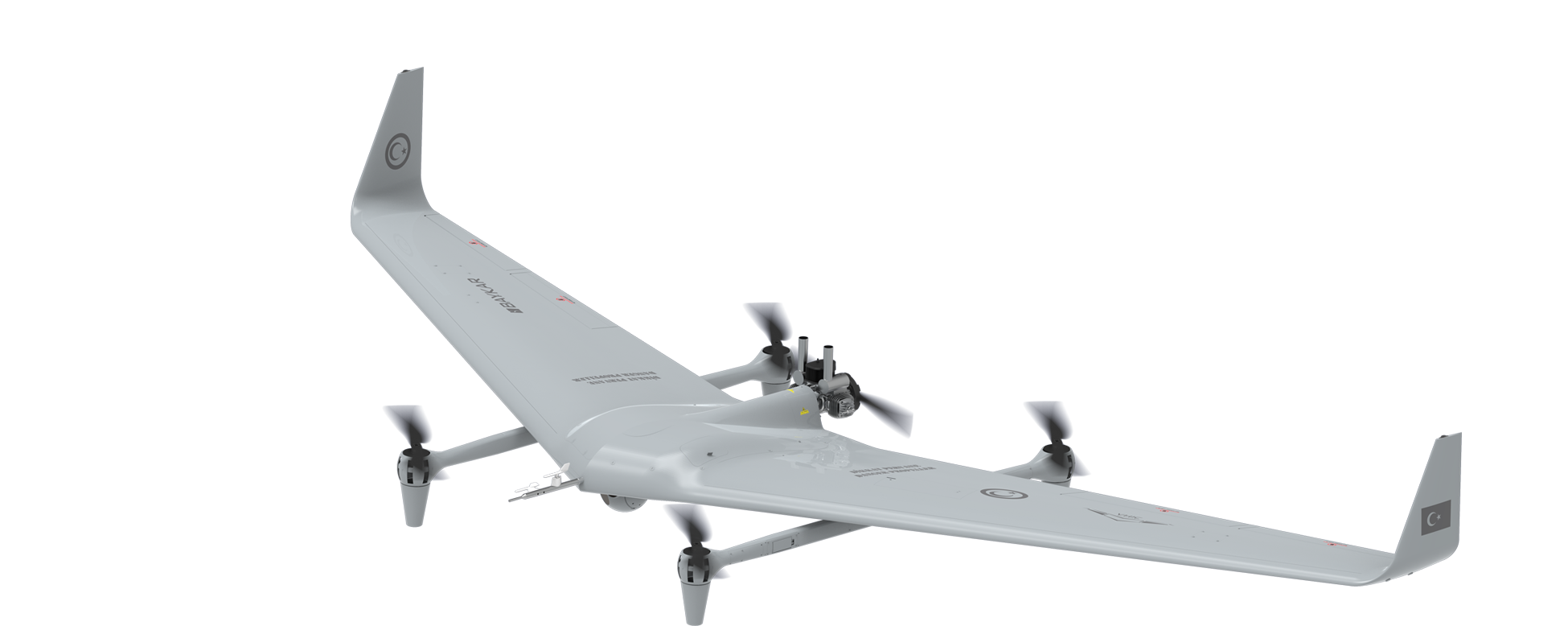
Bayraktar Mini UAV is a hand-launched, electric reconnaissance drone developed by Baykar of Turkey, first flown in October 2006 and described by the company as Turkey's first fully indigenous unmanned aircraft system. It entered service with the Turkish Armed Forces in 2007 and remains in production as a short-range day and night ISR platform.
Overview
Baykar began developing the Bayraktar Mini in 2004 for short-range reconnaissance and surveillance, building the airframe, electronics, software and ground control software entirely in-house. After a prototype designated Bayraktar A flew in October 2006 and completed autonomous flight demonstrations, the Turkish Armed Forces ordered serial production; an initial batch of 19 aircraft was used mainly in southeastern Turkey for counter-terrorism operations. A longer-range variant, the Bayraktar B, became operational in December 2007 and was first shown publicly in 2010 at the Efes military exercise. Baykar states that Turkey's first indigenous UAV export took place in 2012, and Wikipedia's sourced operator list also names Qatar, Libya and Ukraine as later export customers; Wikipedia lists production at more than 500 Bayraktar Mini aircraft.
The system was the first in the Baykar product line that led to the company's larger Bayraktar TB2 and other tactical and medium-altitude UAVs, giving Baykar its early experience with autonomous flight control and domestic payload integration before it moved on to larger airframes.
Design and capabilities
Baykar's current specification sheet lists the Bayraktar Mini at 1.25 m long with a 2.45 m wingspan and a maximum take-off weight of 5.8 kg, carrying a 580 g interchangeable day or night camera payload on a stabilised gimbal. The company quotes an endurance of 100 minutes, a communication range beyond 15 km, a maximum speed of 30–35 knots true airspeed (roughly 56–65 km/h), a service ceiling of 8,000 ft (about 2,440 m) and a normal operational altitude of 3,000 ft. The aircraft is powered by a battery-electric motor, launched by hand with an automated takeoff sequence, and recovered either by automatic parachute, belly landing or an automatic overhead landing manoeuvre, needing no runway.
These figures describe Baykar's current production configuration; earlier Bayraktar A and B variants from the system's 2006–2007 introduction had smaller dimensions and shorter range, per Wikipedia — the Bayraktar A weighed about 3.5 kg with a 1.6 m wingspan, and the Bayraktar B weighed about 4.5 kg with an optional 2.5 m wingspan and a 15 km range using an auto-tracking antenna, both still 1.2 m long. Baykar's official figures and the historical Wikipedia figures for endurance, speed and ceiling should therefore be read as describing different points in the type's development rather than a single unchanging airframe.
Operational history
Bayraktar Mini has operated with the Turkish Armed Forces since 2007, and Baykar credits the system with more than 100,000 operational flight sorties to date. Beyond Turkey, Wikipedia's sourced operator list names Qatar's armed forces (from 2012), Libya (from 2020) and Ukraine (from 2022) as export operators.
Frequently asked questions
What is the Bayraktar Mini UAV used for?
Short-range day and night reconnaissance and surveillance, launched by hand and flown without a runway.
How long can the Bayraktar Mini UAV fly?
Baykar quotes an endurance of 100 minutes for its current production configuration; earlier variants were rated for over 60 minutes.
Who uses the Bayraktar Mini UAV?
The Turkish Armed Forces since 2007, and export operators reported to include Qatar, Libya and Ukraine.
When did the Bayraktar Mini UAV first fly?
The Bayraktar A prototype first flew in October 2006; the Bayraktar B variant became operational in December 2007.
How is the Bayraktar Mini UAV launched and recovered?
It is launched by hand with an automated takeoff sequence, and recovered by automatic parachute, belly landing, or an automatic overhead landing manoeuvre.