BETA Technologies ALIA A250
BETA Technologies · United States · Air Mobility · also known as ALIA-250, BETA ALIA, Alia A250, ALIA 250 · Updated
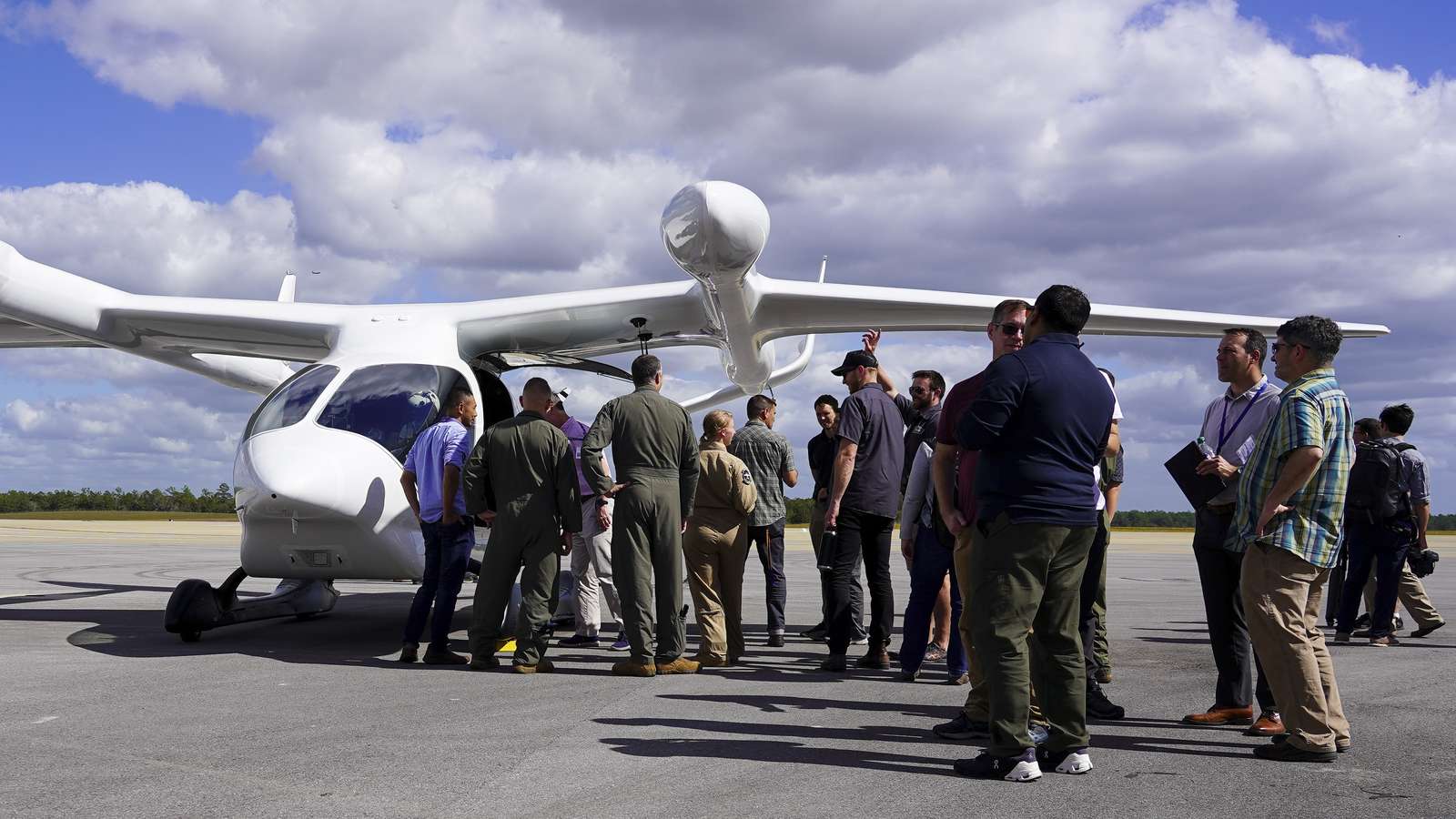
ALIA is an all-electric aircraft family built by BETA Technologies of South Burlington, Vermont, in the United States. The A250, also written ALIA-250, is the vertical take-off and landing version; the CX300 is a conventional take-off and landing variant of the same airframe that uses a runway. Both are flown by a pilot seated on board, and BETA has delivered aircraft to customers and defence users while type certification work continues.
Design and capabilities
The A250 is a lift-plus-cruise design. Four rotors mounted at wing level lift the aircraft vertically, and a single pusher propeller at the rear drives it forward once it is flying on the wing. Unlike a tilting-rotor layout, the lift rotors and the cruise propeller are separate, which simplifies the mechanics at the cost of carrying the lift rotors through cruise. The wingspan is given as 50 ft, about 15 m, the weight as 6,000 lb, about 2,720 kg, and the cabin as taking five passengers or about 200 cubic feet, 5.7 cubic metres, of cargo. With one pilot the total is six occupants. Published performance figures give a cruise speed of 170 mph, roughly 270 km/h, and a range of 250 nautical miles, about 460 km, with a recharge time under an hour.
The CX300 shares the 50 ft wingspan but drops the lift rotors, taking off and landing conventionally with one rear-mounted pusher propeller driven by a BETA H500A electric motor turning a five-bladed fixed-pitch Hartzell propeller. Reported figures for the CX300 include a maximum speed of 176 mph, about 283 km/h, and a range of 387 miles, roughly 622 km. BETA has also shown an uncrewed hybrid-electric military variant, the MV250, with a planned range of over 1,000 nautical miles.
Programme status
Tethered hover testing of ALIA SN1 began in 2020, and the aircraft completed its first conventional take-off and landing flight the same year. In May 2021 BETA received a United States Air Force airworthiness certificate under the AFWERX Agility Prime programme, and in April 2021 UPS ordered ten A250s with options for up to 150 more. FAA test pilots carried out a qualitative evaluation in 2023, and an ALIA was delivered to the Air Force's 413th Test Squadron that year.
The first CX300 off BETA's production line flew on 13 November 2024, and the FAA issued that aircraft a multipurpose special airworthiness certificate in November 2024. In June 2025 BETA flew what it describes as the first electric passenger-carrying flight in the United States, from East Hampton to JFK. Air New Zealand began flying a CX300 in New Zealand in October 2025 and completed a demonstration programme of more than 100 flights in February 2026. BETA listed on the New York Stock Exchange in late 2025. A type certificate had not been issued at the time of writing.
FAQ
Is it flying today? Yes. ALIA aircraft fly regularly, including with customers such as Air New Zealand and Bristow, under special airworthiness certificates rather than a type certificate.
How many people does it carry? Up to six in the A250: one pilot and five passengers, or cargo instead of passengers.
What is the difference between the A250 and the CX300? The A250 takes off and lands vertically; the CX300 uses a runway.