MV250
BETA Technologies · United States · also known as BETA MV250, Beta Defense MV250 · Updated
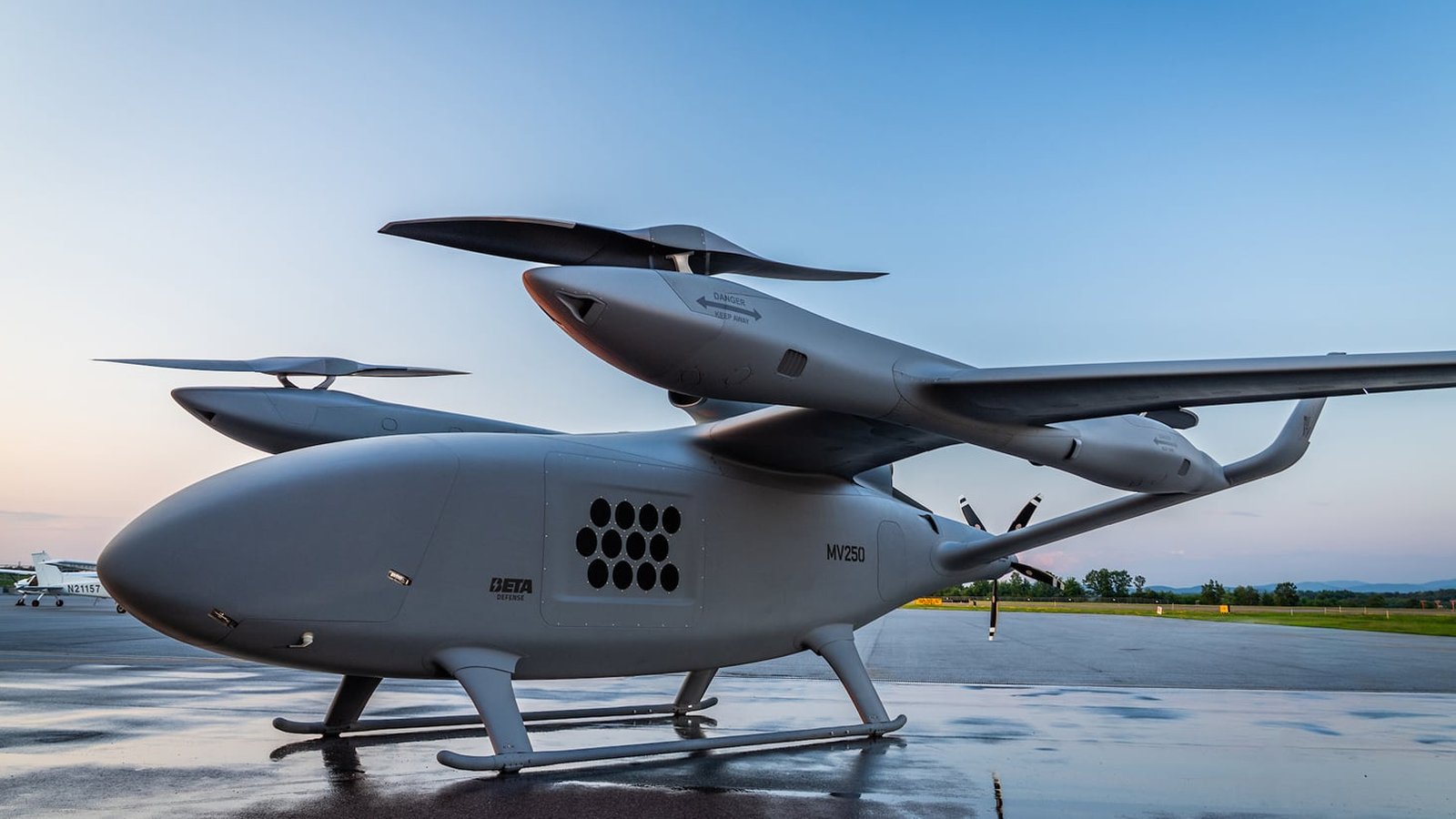
MV250 is an uncrewed, hybrid-electric vertical take-off and landing (VTOL) cargo aircraft developed by BETA Defense, the defence arm of BETA Technologies of South Burlington, Vermont, United States. BETA unveiled it in static display at the Farnborough International Airshow on 20 July 2026 as an autonomous military logistics variant of the company's crewed ALIA A250 eVTOL.
Overview
MV250 shares its basic airframe and major systems with BETA's ALIA family of lift-plus-cruise eVTOL aircraft, built on existing BETA Technologies production lines, but removes the cockpit and crew to fly autonomously. BETA designed it for military logistics: cargo resupply to forward or contested locations, launching smaller air-launched effects (ALEs) from side-mounted tubes, casualty and medical evacuation, intelligence, surveillance and reconnaissance (ISR), and acting as a forward power source for ground forces. The aircraft shown at Farnborough had not flown; BETA described it as built from "all-flyable components." No MV250 customer or operator has been publicly named; BETA says it expects to take part in upcoming large-scale military exercises.
Design and capabilities
MV250 uses the same 50 ft (15.24 m) wingspan as the crewed ALIA, with four fixed-pitch propellers mounted on long booms providing vertical lift and a single variable-pitch pusher propeller at the rear of the fuselage for forward flight; the wings connect to a V-shaped tail via the lift booms. Cargo loads through an upward-opening nose visor into a cabin BETA gives as roughly 7.1 m³ (250 cubic feet), and the aircraft is rated to carry a 2,000 lb (907 kg) payload.
Power comes from a series hybrid-electric system: a turbogenerator developed with GE Aerospace, built around a CT7/T700-based core and running on NATO-compatible fuels (JP-8, JP-5, F-34/F-44), charges a high-voltage battery bus that drives the electric motors; the engine can shut down in flight with the battery alone supplying power. BETA's published figures give an operational radius above 250 nautical miles (463 km) carrying cargo, a cruise speed above 170 kn (315 km/h), and a 12-hour ferry endurance at 20,000 ft when unladen. BETA's own release separately quotes a 1,300 nautical mile (2,408 km) unladen repositioning range, a different figure from the loaded operational radius. The system can also export up to 500 kW of power to ground forces as a forward tactical power source. Trade publication TWZ has noted that BETA's claim the MV250 outperforms tiltrotor aircraft is not fully supported by the figures BETA has published.
For flight control, MV250 is built on an open, modular architecture compatible with both Sikorsky's MATRIX autonomy system and BETA's own autonomy software; BETA describes build-up flight tests as having demonstrated both. At minimum this supports autonomous flight along pre-programmed waypoints, with more advanced capabilities such as dynamic route replanning described as a goal rather than a demonstrated feature.
Operational history
BETA Defense unveiled the MV250 as a static display at the Farnborough International Airshow on 20 July 2026. As of the access date below, it had not flown, no military service had placed an order, and BETA had not disclosed a unit price.
Variants
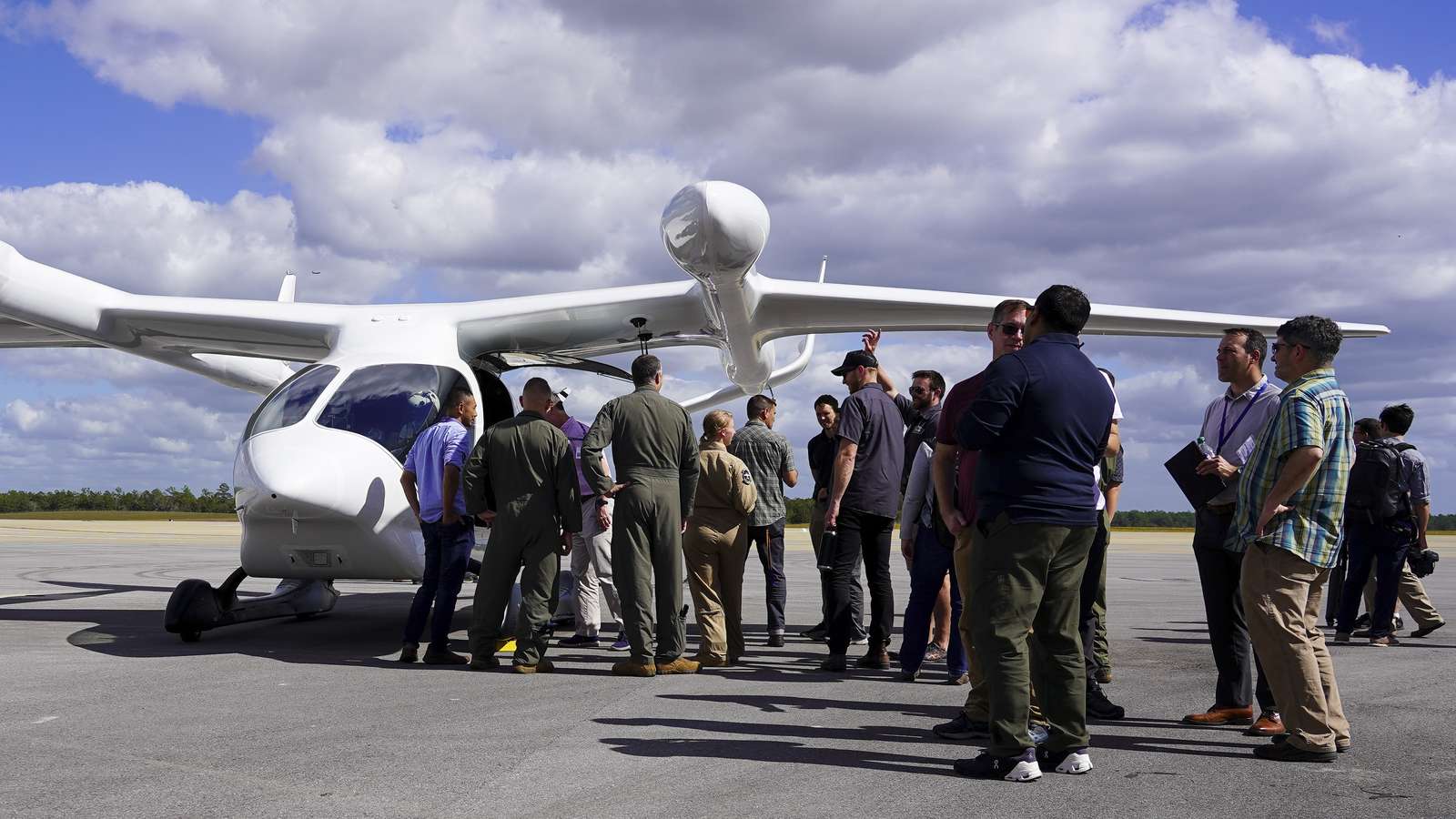
MV250 is the uncrewed military variant of BETA's ALIA family. The crewed ALIA A250 is the VTOL passenger/cargo version flown by civil and some military operators such as the US Air Force and UPS, and the CX300 is a related conventional take-off and landing aircraft; both share production lines and core systems with the MV250.
Frequently asked questions
What is the payload of the MV250?
BETA rates it at 2,000 lb (907 kg).
What is its range?
BETA gives an operational radius above 250 nautical miles (463 km) when carrying cargo, and separately quotes a 1,300 nautical mile (2,408 km) unladen repositioning range.
Has the MV250 flown?
Not as of its Farnborough 2026 unveiling. BETA described the displayed airframe as built from "all-flyable components" but did not state a first-flight date.
What powers the MV250?
A series hybrid-electric system: a GE Aerospace-developed turbogenerator charges a battery bus that drives four lift propellers and one pusher propeller.
Who makes the MV250?
BETA Defense, the defence division of BETA Technologies of South Burlington, Vermont.
Is the MV250 related to the ALIA A250?
Yes. It shares the ALIA A250's basic airframe, wingspan and production lines, with the cockpit removed so it can fly autonomously.