Space Rider
ESA · European Union · Space · also known as Space Reusable Integrated Demonstrator for Europe Return, PRIDE · Updated
Space Rider is an uncrewed, reusable orbital vehicle being developed by the European Space Agency as a free-flying laboratory that returns its payloads to the ground. ESA describes it as roughly the size of two minivans. It is due to launch on a Vega-C rocket from the Guiana Space Centre, spend about two months in low Earth orbit, then re-enter and land under a steerable parafoil. The vehicle is in development and has not yet flown.
Design and capabilities
The vehicle is made up of a lifting-body re-entry module carrying the cargo bay, mated to a service module derived from the AVUM+ upper stage of Vega-C, which provides power, propulsion and attitude control while in orbit. The full stack is about 8.04 metres long, with a maximum launch mass near 4,900 kg and a landing mass of up to about 2,850 kg. The environmentally controlled cargo bay holds up to 600 kg of payload, or about 1,000 litres by volume.
Recovery is what distinguishes the design. After the deorbit burn and the hypersonic phase, drogue parachutes deploy at roughly 12 to 15 km altitude, and a large steerable parafoil then guides the module to a runway touchdown. ESA reports a demonstrated landing accuracy of about 150 metres in drop tests. Each vehicle is designed for at least five re-flights, with the module unloaded and refurbished between missions. Typical payloads are intended to cover pharmaceutics, biomedicine, biology and physical sciences, alongside technology demonstrations for robotic exploration, Earth observation and telecommunications.
Programme status
Space Rider grew out of ESA's PRIDE programme and the Intermediate eXperimental Vehicle, which flew a suborbital re-entry test in 2015. Thales Alenia Space and Avio are co-prime contractors, leading a consortium of more than twenty European companies; Thales Alenia Space Italy runs the descent and landing test campaign.
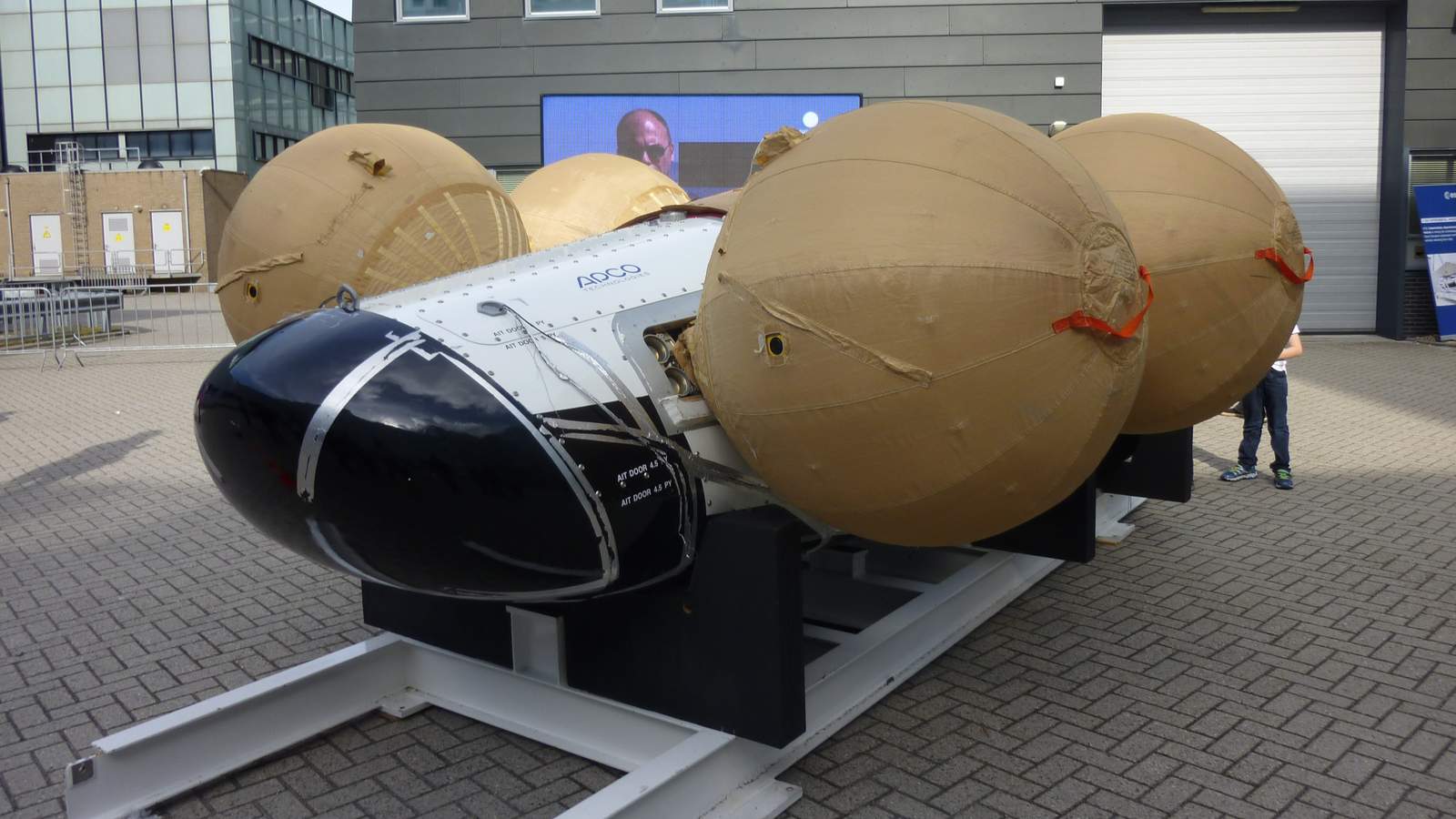
A drop-test campaign at the Salto di Quirra range in Sardinia, reported by ESA in July 2025, released re-entry module models from a helicopter at altitudes of 1 to 2.5 km. The parafoil system brought a model down at about 2 metres per second after a twelve-minute descent, landing within 150 metres of its target. In April 2026 ESA announced that the first full-size drop-test model was complete: built at Romania's INCAS institute in Craiova, integrated at CIRA in Capua in Italy, 4.6 metres long and 2,950 kg, with a parafoil 27 metres long and 10 metres wide. Further drops from up to 3 km were planned for later in 2026. As of November 2025 all flight hardware had been manufactured and was awaiting integration or in test, with the first orbital flight scheduled for the first quarter of 2028.
FAQ
Is it flying today? No. Space Rider is in development and testing, and its first orbital flight is scheduled for 2028.
How many people does it carry? None. It is an uncrewed robotic laboratory with no seats or life support.