X-34
NASA · United States · Space · also known as Orbital Sciences X-34, X-34 Technology Testbed Demonstrator · Updated
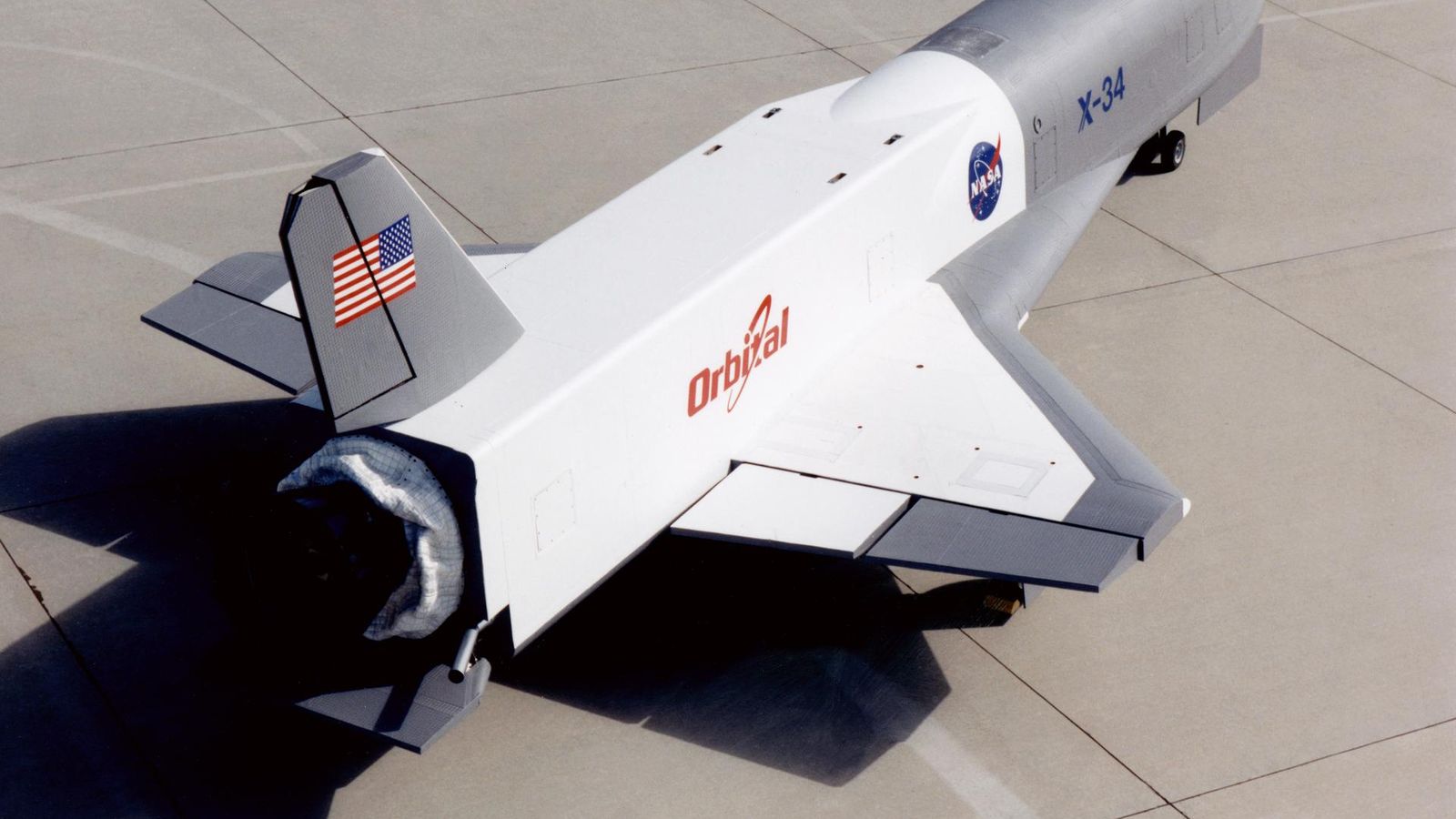
The X-34 was an uncrewed reusable technology demonstrator developed by Orbital Sciences Corporation for NASA to test hardware for low-cost reusable launch vehicles. It was rocket-powered and designed to be air-launched from a modified L-1011 airliner, but it was cancelled in March 2001 before any powered flight took place. Two airframes were completed and neither survives.
Design and capabilities
The airframe is 17.77 metres long with a wingspan of 8.44 metres. NASA gave its unfuelled weight as about 18,000 pounds, roughly 8,200 kg, with capacity for a further 30,000 pounds, around 13,600 kg, of liquid oxygen and RP-1 kerosene. Power came from a single Fastrac engine designed at NASA's Marshall Space Flight Center, burning that propellant combination and producing about 60,000 pounds of thrust, or some 270 kN. The engine was deliberately simple and intended to be reused between flights.
On paper the vehicle was to be dropped from its carrier aircraft, climb to around 50 miles altitude, reach about Mach 8 and land on a runway, with a target flight rate of up to 25 sorties a year. Those were design goals. Because the X-34 never flew under its own power, none of them were demonstrated, and no measured speed, altitude or range figure exists for the vehicle.
Programme status
The programme began in 1996. Three airframes, designated A-1, A-2 and A-3, were planned; only two were completed. Flight testing never went beyond unpowered work. The first captive-carry flight, with the vehicle attached to the Orbital Sciences L-1011 mothership, took place on 29 June 1999, and two further captive-carry flights followed later that year.
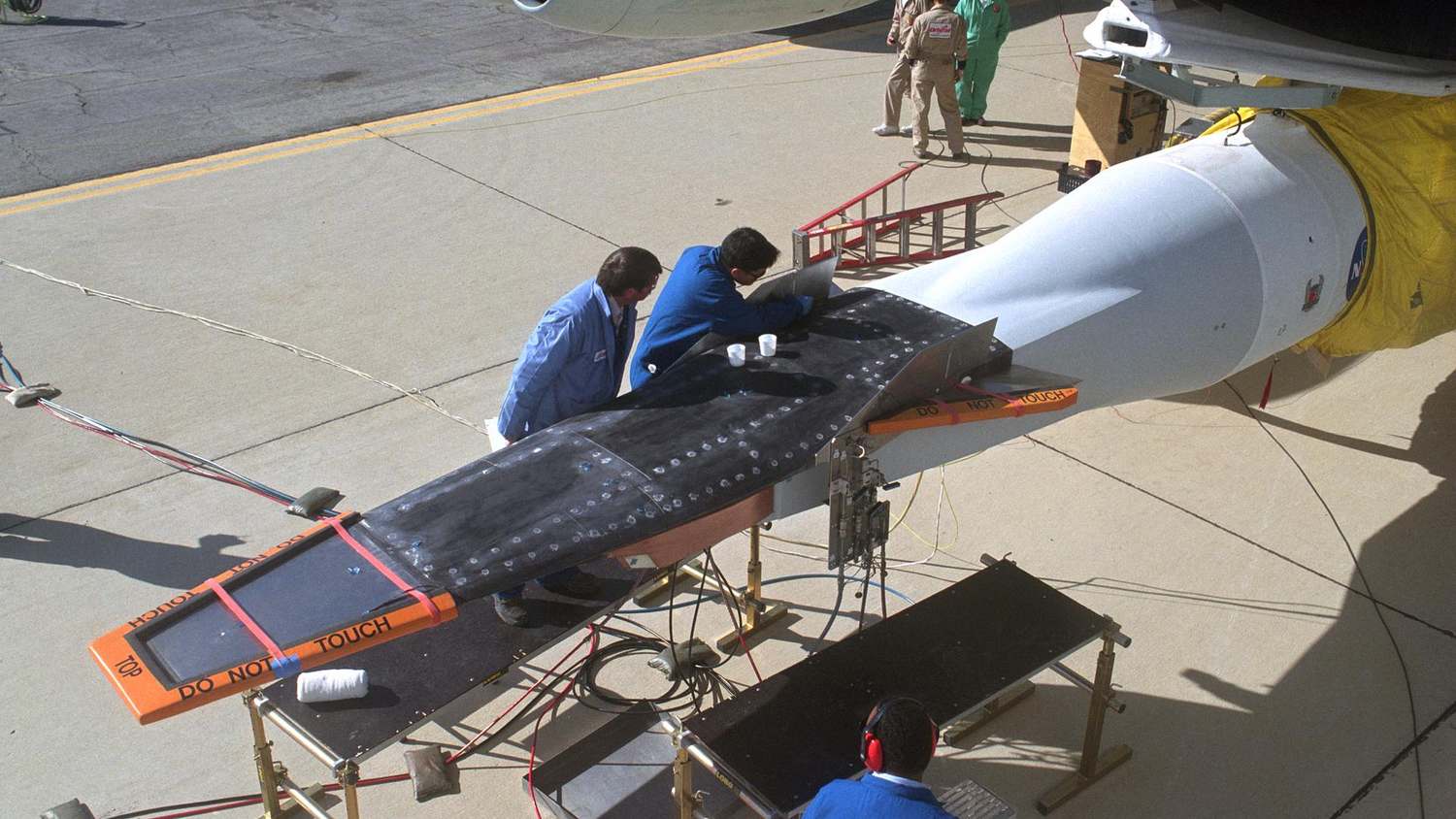
In July 2000 NASA's Dryden Flight Research Center began ground tow tests at Edwards Air Force Base in California to check handling. On 20 July 2000 the vehicle was towed and released twice, at 5 and 10 miles per hour; on 24 July 2000 it was towed and released twice more, at 10 and 30 miles per hour. A series of about twelve tow-and-release runs at speeds up to 80 miles per hour was planned over roughly six weeks. The X-34 never flew free of a carrier aircraft.
On 1 March 2001 NASA announced it would not put Space Launch Initiative funds into the X-34, and the cooperative agreement with Orbital Sciences ended on 31 March 2001. NASA said the projected cost of completing the programme at an acceptable level of risk had risen well above the available budget. The first flight vehicle was close to complete at that point.
The completed airframes were transferred to the United States Air Force in 2002, returned to NASA, and stored at Edwards Air Force Base. In late 2010 they were moved to Mojave, California. In April 2020 both were found in the yard of a crane company at Lancaster, California, and were afterwards moved to a scrapyard.
FAQ
Is it flying today? No. The X-34 was cancelled on 31 March 2001, never made a powered flight, and the two completed airframes were scrapped.
How many people does it carry? None. The X-34 was designed to fly uncrewed under automatic control.