DJI Flip
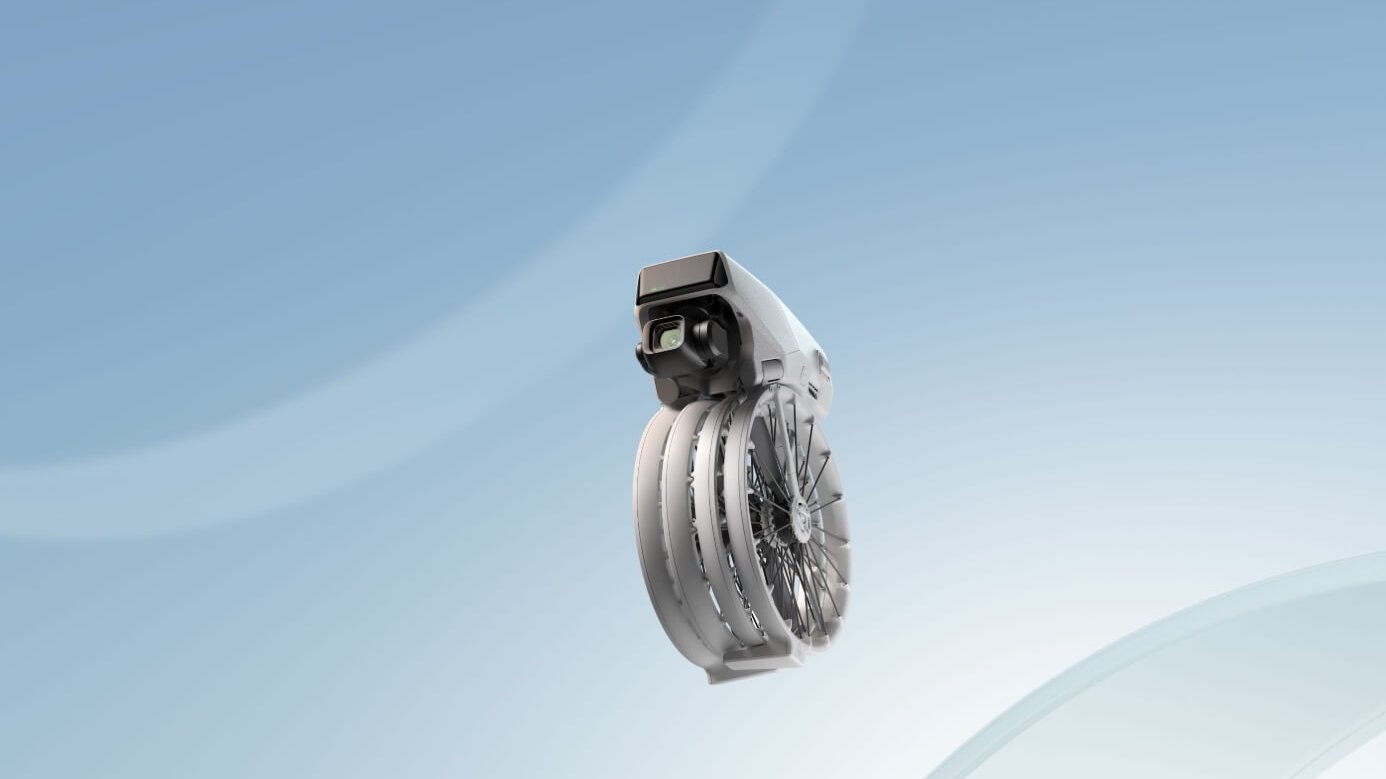
DJI Flip is a sub-249 g folding camera drone developed by DJI of Shenzhen, China, announced on 14 January 2025. DJI positions it as a standalone line rather than a variant of the Mini or Neo series, built around full-coverage propeller guards and a camera DJI describes as combining "the simplicity of the DJI Neo with the stunning photo capabilities of the DJI Mini."
Overview
DJI announced the Flip in the United States on 14 January 2025 as a travel and vlogging camera drone aimed at pilots who want Mini-level image quality with the safety margin of guarded propellers. Unlike the hand-launched DJI Neo, the Flip folds like the Mini and Air series and ships with a choice of the RC-N3 or RC 2 remote controller. DJI markets it alongside, not in place of, the existing Neo and Mini lines, and the catalog carries it as a separate model rather than a Mini or Neo variant for that reason.
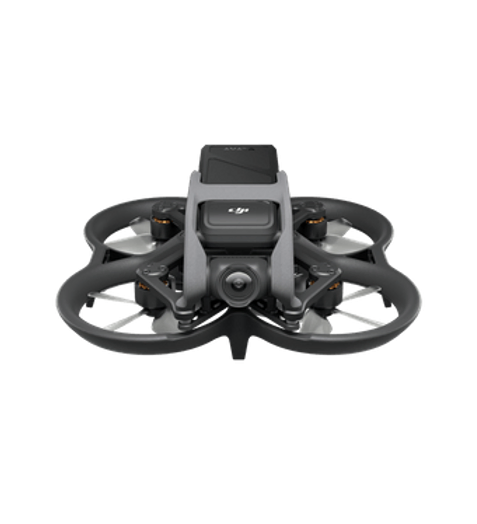
The aircraft's defining feature is a set of four foldable propeller guards built from lightweight carbon-fibre string rather than solid polycarbonate, which DJI says weighs roughly a sixtieth as much as a conventional guard while fully enclosing each rotor. Combined with a forward- and downward-facing 3D infrared sensing system for automatic braking, DJI pitches the design at pilots flying near people, pets or indoor spaces, including at night.
Design and capabilities
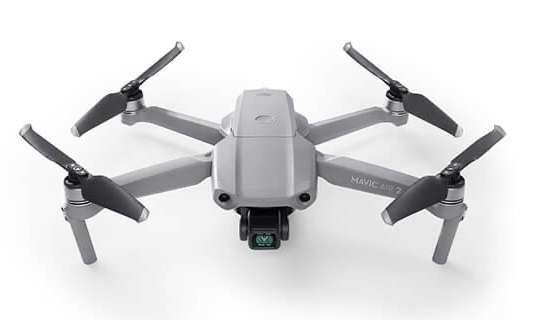
DJI Flip weighs under 249 g and measures 136 × 62 × 165 mm folded, 233 × 280 × 79 mm unfolded. It carries a 1/1.3-inch CMOS sensor with 48 MP stills and a fixed f/1.7 lens with an 82.1° field of view on a three-axis mechanical gimbal, recording 4K video at up to 60 fps (4K/100 fps in slow motion) with HDR and the 10-bit D-Log M colour profile; still photos are captured at 12 MP or 48 MP. DJI quotes a maximum flight time of 31 minutes and a hovering time of 28 minutes in still air, a maximum horizontal speed of 12 m/s (43.2 km/h) in Sport mode, wind resistance up to 10.7 m/s (Level 5) and a maximum operating altitude of 3,000 m. The O4 video transmission system supports a maximum control range of 13 km under FCC rules. A Local Data Mode disconnects the aircraft and controller from internet connectivity for privacy during flight.
Six automated shooting modes — Dronie, Circle, Rocket, Spotlight, Helix and Boomerang — fly the aircraft through pre-set camera moves, alongside AI subject tracking, MasterShots, Hyperlapse, FocusTrack and panorama capture. Because it weighs under 250 g, DJI Flip does not require FAA registration for recreational flying in the United States, though Remote ID and other operating rules for specific use cases still apply.
Use cases
DJI markets the Flip at vloggers, travellers and aerial photographers who want simple, protected flight rather than a professional inspection or mapping tool. The guarded, foldable airframe is built for launching and flying in tighter spaces — around people or indoors — than an unguarded camera drone, while the 1/1.3-inch sensor and 4K/60 recording target the same social-video audience as DJI's Mini and Air lines.
Frequently asked questions
How much does the DJI Flip cost?
It launched at US$439 for the base kit with the RC-N3 controller; the RC 2 kit is US$639 and the Fly More Combo (RC 2) is US$779.
How long does the DJI Flip fly?
DJI quotes a maximum flight time of 31 minutes and a hovering time of 28 minutes in still air.
Does the DJI Flip need to be registered with the FAA?
At under 249 g it is exempt from FAA registration for recreational flying in the United States, though Remote ID and other rules still apply depending on how it is flown.
What makes the DJI Flip different from the DJI Neo?
The Flip folds and uses a remote controller like the Mini and Air series, while the Neo is a smaller, lighter palm-launch drone that can fly without a controller. DJI sells both alongside each other rather than replacing one with the other.
What is the DJI Flip's transmission range?
DJI's O4 transmission system is rated at up to 13 km under FCC rules.