DJI Air series
DJI · China · also known as DJI Mavic Air, DJI Mavic Air 2, DJI Air 2S, DJI Air 3, DJI Air 3S, Air 3S · Updated
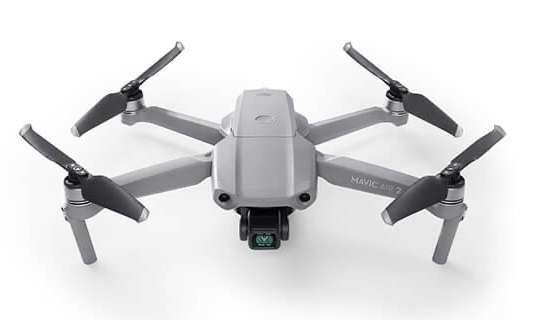
DJI Air series is a family of folding consumer camera drones developed by DJI of China, introduced in January 2018 as the Mavic Air and currently represented by the Air 3S, released in October 2024. The specifications on this page refer to the Air 3S unless stated otherwise. The Air 3S weighs 724 g at take-off, flies for up to 45 minutes, reaches 21 m/s (75.6 km/h) and has a maximum O4 video-transmission distance of 20 km under FCC rules.
Overview
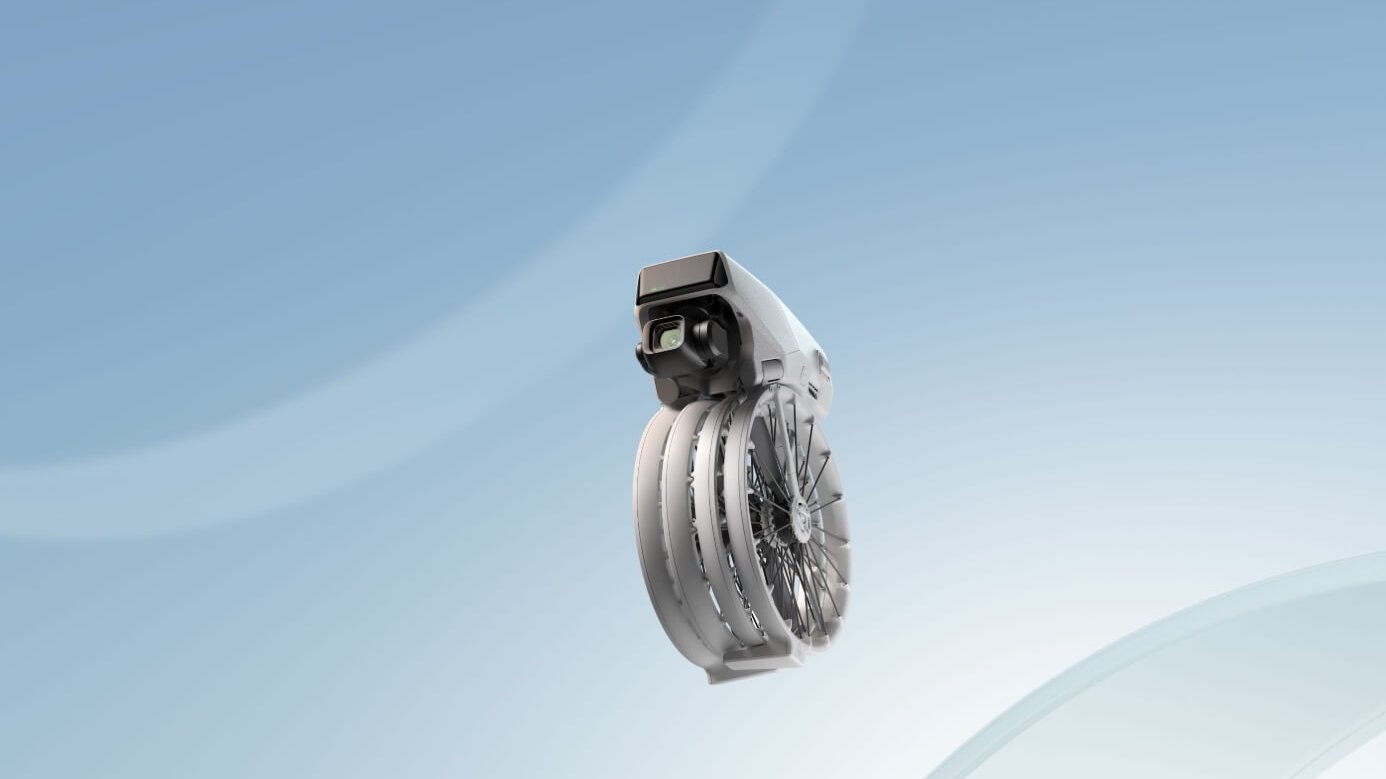
The Air line sits between DJI's sub-250 g Mini series and the larger Mavic series. Its purpose is to offer a mid-sized folding quadcopter with a camera and sensing package closer to the Mavic flagships while keeping a body that fits in a small bag. All models fold their four arms against the fuselage for transport and use DJI's consumer flight controller, gimbal camera and remote-controller ecosystem.
The first model, the Mavic Air of January 2018, had a 12-megapixel camera and a 21-minute flight time. The Mavic Air 2 (2020) raised flight time to 34 minutes, the Air 2S (2021) dropped the Mavic name and introduced a 1-inch sensor, and the Air 3 (July 2023) added a second, medium-telephoto camera, a 46-minute flight time and O4 transmission with a 20 km range.
The Air 3S was announced on 15 October 2024. It keeps the dual-camera layout of the Air 3 but replaces the wide-angle sensor with a 50-megapixel 1-inch CMOS, adds a forward-facing LiDAR sensor for obstacle detection at night, and includes 42 GB of internal storage. As of September 2026 DJI's website lists the Air 3S as the current model in the line.
Design and capabilities
The Air 3S is a quadcopter with four brushless electric motors and folding arms. DJI lists the take-off weight as 724 g, the unfolded dimensions as 266.11 mm long, 325.47 mm wide and 106.00 mm high, and the folded dimensions as 214.19 by 100.63 by 89.17 mm. Power comes from a 4276 mAh (62.5 Wh) battery that gives a maximum flight time of 45 minutes and a maximum hovering time of 41 minutes under standard test conditions; the maximum flight distance on one battery is 32 km.
Maximum horizontal speed is 21 m/s (75.6 km/h), ascent and descent speeds are 10 m/s, the maximum take-off altitude is 6000 m above sea level and the aircraft tolerates winds up to 12 m/s. DroneDJ's guide cites a higher figure of about 97 km/h; this page uses the manufacturer's 21 m/s.
The gimbal carries two cameras: a 50-megapixel 1-inch CMOS wide-angle camera and a 48-megapixel 1/1.3-inch CMOS medium-telephoto camera. Both record 4K video at up to 120 frames per second, with 10-bit colour and up to 14 stops of dynamic range according to DroneLife. Obstacle sensing combines omnidirectional vision sensors, infrared sensors and a forward-facing LiDAR unit with a stated detection range of 0.5 to 25 m, which allows obstacle detection and return-to-home in low light.
The O4 transmission system provides a 1080p/60fps live feed with a maximum transmission distance of 20 km under FCC rules and 10 km under CE, SRRC and MIC rules; the 20 km FCC figure is the range in the specs block. DJI's launch announcement gave a United States price of 1,099 USD for the aircraft with the RC-N3 controller.
Use cases
The Air series is aimed at travel, landscape and hobby photographers and videographers who want a larger sensor and longer flight time than the Mini series without the size and cost of the Mavic flagships. Because every Air model weighs more than 250 g, pilots in most jurisdictions must register the aircraft.
Variants
- Mavic Air (January 2018) – 12-megapixel 1/2.3-inch camera, 21-minute flight time, Wi-Fi link of about 4 km.
- Mavic Air 2 (April 2020) – 48-megapixel 1/2-inch sensor, 34-minute flight time, OcuSync 2.0 transmission up to 10 km.
- Air 2S (April 2021) – first Air with a 20-megapixel 1-inch sensor; O3 transmission up to 12 km; 31-minute flight time.
- Air 3 (July 2023) – first dual-camera Air (wide-angle plus 3x telephoto, both 1/1.3-inch 48-megapixel); 720 g; 46 minutes; O4 up to 20 km.
- Air 3S (October 2024) – 50-megapixel 1-inch wide-angle camera, forward-facing LiDAR, 42 GB internal storage; 724 g; 45 minutes; O4 up to 20 km.
Frequently asked questions
What is the range of the DJI Air series?
The Air 3S has a maximum O4 transmission distance of 20 km under FCC rules and 10 km under CE, SRRC and MIC rules. Its maximum flight distance on one battery is 32 km, but pilots must keep the aircraft within visual line of sight in most countries.
How long can the DJI Air 3S fly?
DJI rates the Air 3S at a maximum flight time of 45 minutes and a maximum hovering time of 41 minutes; the Air 3 is rated at 46 minutes.
How fast is the DJI Air 3S?
The maximum horizontal speed is 21 m/s, which is 75.6 km/h, with ascent and descent speeds of 10 m/s.
How much does the DJI Air 3S weigh?
The take-off weight is 724 g, so it does not qualify for the sub-250 g exemptions that apply to the DJI Mini series.
Is the DJI Air 3S still in production?
Yes. As of September 2026 the Air 3S remains listed on DJI's website as the current model in the Air line.