DJI FlyCart series
DJI · China · also known as DJI FlyCart 30, DJI FlyCart 100 · Updated
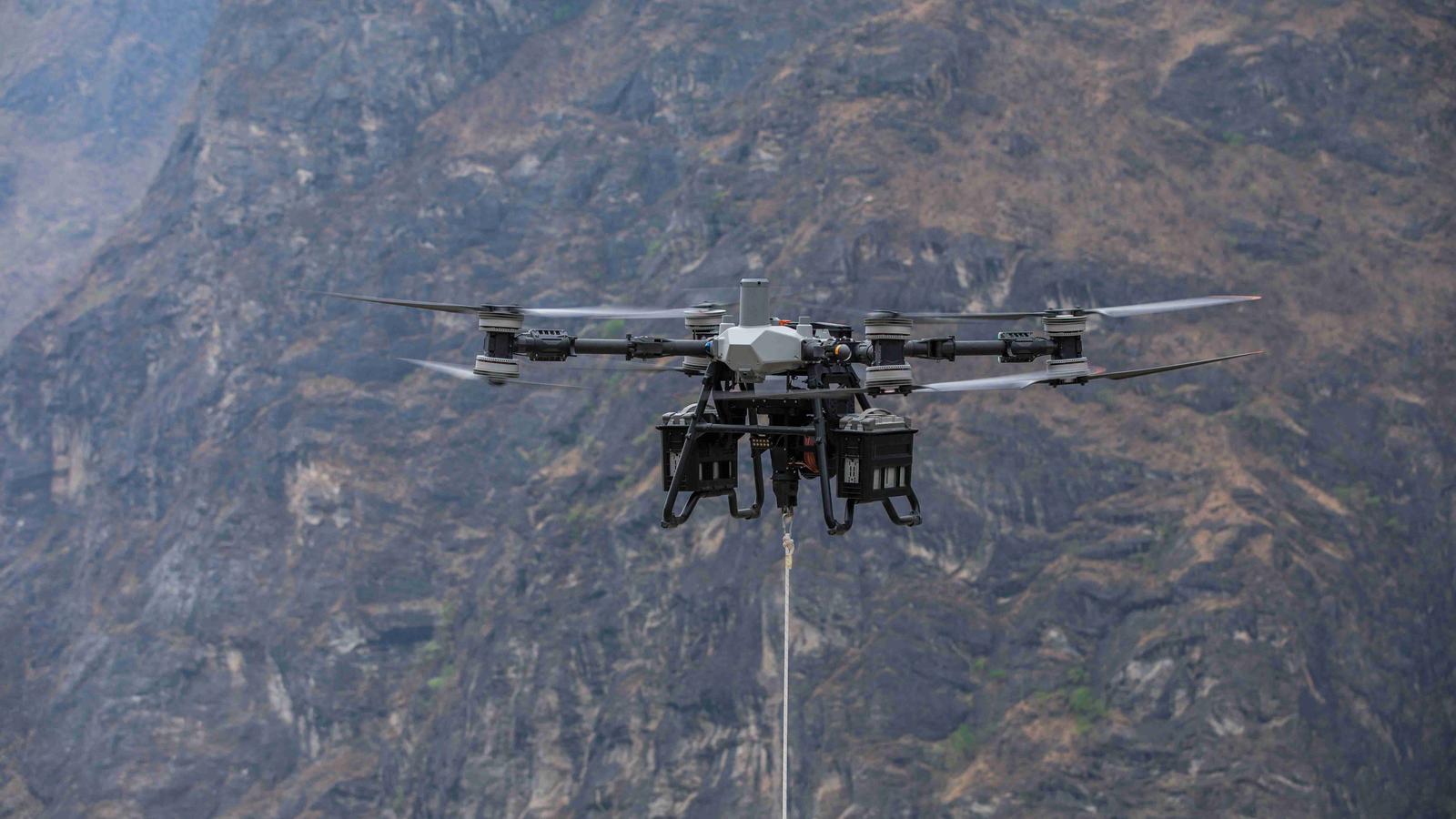
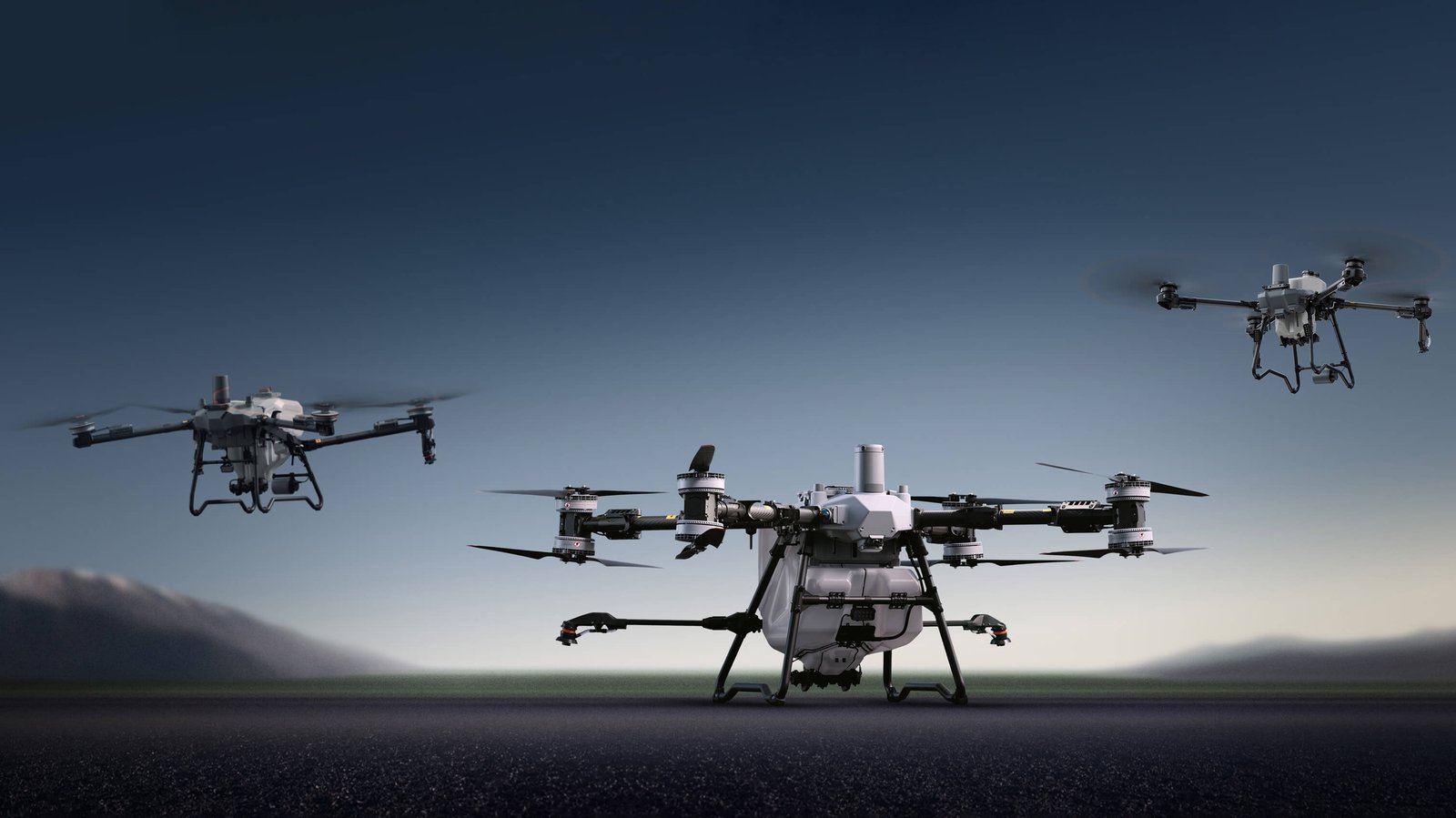
The DJI FlyCart series is a line of heavy-lift delivery drones made by DJI of China, designed to carry cargo by winch or cargo box rather than a camera. It began with the DJI FlyCart 30 in 2023 and continues with the larger DJI FlyCart 100, announced on 4 December 2025. The specifications on this page refer to the FlyCart 100 unless stated otherwise.
Overview
DJI, headquartered in Shenzhen, China, built the FlyCart series to move DJI's multirotor platform beyond photography and into logistics: last-mile parcel delivery, farm-to-market transport, and cargo runs to sites that are hard to reach by road. The FlyCart 30 was DJI's first aircraft in the category, introduced in China in August 2023 and rolled out to further markets from January 2024; DJI notes it has been used for supply runs on Mount Everest and in other difficult terrain. The FlyCart 100, announced on 4 December 2025, is presented by DJI as the direct successor, carrying a larger cargo load on a larger airframe.
Design and capabilities
The FlyCart 100 is a coaxial eight-rotor multirotor built around a foldable airframe: DJI's own specifications list it at 3,220 × 3,224 × 975 mm with its eight arms and 62-inch carbon-fibre propellers unfolded, folding down to 1,105 × 1,265 × 975 mm for transport. The aircraft itself weighs 55.2 kg with its cargo-lifting system or 60.2 kg with its winch system, before batteries or cargo; DJI rates its maximum take-off weight at 170 kg (150 kg in Brazil, Japan, Australia, Turkey, Saudi Arabia and Argentina, where local rules cap it lower).
DJI's own product page states a maximum payload capacity of 85 kg with two batteries; at that loaded weight, DJI's specifications rate flight time at 14 minutes and flight distance at 12 km. A single-battery mode trades payload for shorter emergency hops: DRONELIFE reports DJI rating it at up to 80 kg for a 6-minute, 6 km flight. Maximum horizontal speed is 20 m/s (72 km/h) and DJI gives a service ceiling of 6,000 m above sea level, or 1,500 m relative to the take-off point, with wind resistance up to 12 m/s and an IP55 rating for dust and water.
Cargo is carried in an interchangeable lifting (cargo-box) system or a winch system with a 30 m retractable cable that reels in or out at 1.2 m/s; DJI added an electric hook to the winch on the FlyCart 100. Obstacle sensing combines LiDAR terrain mapping, millimetre-wave radar and a "penta-vision" camera array, and the aircraft carries a built-in parachute rated for a 6 m/s descent if deployed. The smaller FlyCart 30 uses the same coaxial eight-rotor layout on a lighter frame: DJI's specifications list it unfolded at 2,800 × 3,085 × 947 mm, with a 95 kg maximum take-off weight, a maximum payload of 30 kg with two batteries (up to 40 kg with one), a flight time of 29 minutes unloaded or 18 minutes at its 30 kg loaded weight, and a maximum range of 28 km unloaded.
Use cases
DJI markets the FlyCart series for logistics and delivery rather than photography: retail and food delivery, agricultural supply runs, and cargo transport to sites without easy road access, including the mountain resupply work DJI cites for the FlyCart 30. The larger payload of the FlyCart 100 extends this to heavier cargo and disaster-relief-style logistics, though as of the FlyCart 100's announcement DJI had not disclosed a price and DRONELIFE reported it would not be sold in the United States.
Variants
- DJI FlyCart 30 (2023) – DJI's first heavy-lift delivery drone; 95 kg maximum take-off weight, up to 30 kg payload with two batteries (40 kg with one), 29-minute unloaded flight time.
- DJI FlyCart 100 (announced 2025-12-04) – larger successor; 170 kg maximum take-off weight, up to 85 kg payload with two batteries, adds LiDAR terrain mapping, millimetre-wave radar and a parachute system.
Frequently asked questions
How much can the DJI FlyCart 100 carry?
DJI's own product page rates its maximum payload capacity at 85 kg flying on two batteries; DRONELIFE reports a single-battery mode rated at up to 80 kg for shorter, emergency-style flights.
How far can the DJI FlyCart 100 fly?
DJI rates the dual-battery configuration at up to 12 km at its rated payload, in about 14 minutes; the single-battery mode is rated at 6 km in about 6 minutes.
How is the FlyCart 100 different from the FlyCart 30?
The FlyCart 100 has a higher maximum take-off weight (170 kg versus 95 kg) and nearly triple the two-battery payload capacity (85 kg versus 30 kg), and adds LiDAR terrain mapping, millimetre-wave radar and a parachute system that the FlyCart 30 does not have.
When was the DJI FlyCart 100 announced?
DJI announced it on 4 December 2025, describing it as a successor to the FlyCart 30.
Is the DJI FlyCart 100 sold in the United States?
No. DRONELIFE reported at launch that the FlyCart 100 would not be made available in the US market.
How much does a DJI FlyCart cost?
DJI had not published a price for the FlyCart 100 as of this writing. The earlier FlyCart 30 has been sold in China and other markets, but DJI's own pages do not list a price.