DJI FPV series
DJI · China · also known as DJI FPV, DJI FPV Combo, DJI FPV drone, DJI Digital FPV System · Updated
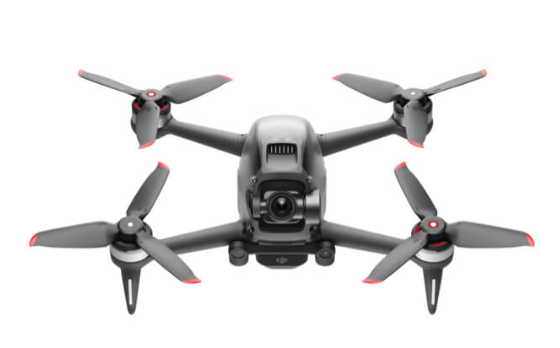
DJI FPV series is DJI's family of ready-to-fly first-person-view (FPV) aircraft and goggles, represented by the DJI FPV quadcopter announced by DJI of China on 2 March 2021. The DJI FPV weighs approximately 795 g, reaches 39 m/s (about 140 km/h) in Manual mode, flies for about 20 minutes and streams video to the DJI FPV Goggles V2 over the O3 transmission system at up to 10 km under FCC rules with latency of 28 ms or less. The specifications on this page refer to the DJI FPV aircraft.
Overview
DJI entered FPV flying, in which the pilot wears goggles showing the view from a camera on the aircraft, in 2019 with the DJI Digital FPV System, a high-definition digital video link consisting of goggles, an air unit and a camera that custom builders could fit to their own airframes; DJI's 2021 news release describes it as the predecessor of the O3 system used on the DJI FPV.
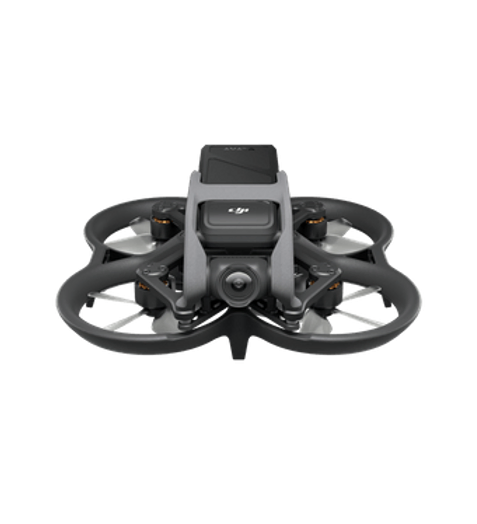
The DJI FPV of March 2021 was DJI's first complete FPV aircraft. It was sold as a combo with the aircraft, the DJI FPV Goggles V2 and a conventional two-stick remote controller, with an optional single-handed Motion Controller that steers the drone by hand movements. DJI positioned it as an FPV drone that beginners could fly, while retaining a fully manual mode for experienced pilots. The smaller, propeller-guarded DJI Avata series that followed in 2022 applies the same concept to a cinewhoop-style airframe.
DJI's website continues to host product and support pages for the DJI FPV, and in 2023 the aircraft gained compatibility with DJI's newer Goggles 2 and Goggles Integra, but DJI has not published a statement on whether it remains in production, so its status is recorded here as unknown.
Design and capabilities
The DJI FPV is a fixed-arm quadcopter with four brushless electric motors. DJI's specification sheet gives a take-off weight of approximately 795 g and dimensions of 255 × 312 × 127 mm with propellers fitted (178 × 232 × 127 mm without); the specs block uses the dimensions with propellers. A 2000 mAh intelligent flight battery gives a maximum flight time of approximately 20 minutes, measured at 40 km/h in windless conditions, and the maximum take-off altitude is 6,000 m above sea level.
Three flight modes are offered. Normal (N) mode limits speed to 15 m/s and uses GPS and the downward vision system to hover and to sense obstacles ahead; Sport (S) mode raises the limit to 27 m/s; and Manual (M) mode disables the flight-assistance sensors and allows a maximum of 39 m/s, about 140 km/h (27 m/s in mainland China). DJI's news release quotes acceleration from 0 to 100 km/h in about two seconds. An Emergency Brake and Hover function, available in every mode, brings the aircraft to a stop and hover at the press of a button.
The camera uses a 1/2.3-inch CMOS sensor with 12 effective megapixels, recording 4K video at 50 or 60 frames per second at up to 120 Mbps and 1080p at up to 120 frames per second, with a 150-degree field of view available. The O3 transmission system delivers a 1080p feed to the goggles, with a maximum transmission distance of 10 km under FCC rules and 6 km under CE, SRRC and MIC rules; the 10 km FCC figure is the range in the specs block. In its low-latency mode the link's latency is 28 ms or less.
At launch DJI priced the combo at 1,299 US dollars, the Fly More Kit with two extra batteries and a charging hub at 299 US dollars and the Motion Controller at 199 US dollars, according to the news release reproduced by DroneDJ.
Use cases
The DJI FPV is used for high-speed freestyle flying, chase footage of vehicles and sports, and immersive landscape video. Its assisted modes make it a common first FPV aircraft for pilots moving from camera drones, while Manual mode allows acrobatic flying. At 795 g it must be registered in most jurisdictions, and some countries require a second person as an observer when the pilot wears goggles.
Variants
- DJI Digital FPV System (2019) – goggles, air unit and camera for custom-built FPV aircraft; the origin of DJI's HD FPV transmission.
- DJI FPV (March 2021) – complete ready-to-fly aircraft sold as a combo with FPV Goggles V2 and remote controller; optional Motion Controller.
- DJI Avata (2022) and Avata 2 (2024) – smaller ducted successors covered under the DJI Avata series.
Frequently asked questions
What is the range of the DJI FPV?
The O3 transmission system is rated at 10 km under FCC rules and 6 km under CE, SRRC and MIC rules.
How fast is the DJI FPV?
Up to 39 m/s, about 140 km/h, in Manual mode, with 0 to 100 km/h in about two seconds according to DJI; Normal and Sport modes are limited to 15 m/s and 27 m/s.
How long can the DJI FPV fly?
Approximately 20 minutes on the 2000 mAh battery, measured by DJI at a constant 40 km/h in still air.
Is the DJI FPV still sold?
DJI still hosts the product and support pages, but has not confirmed whether the aircraft remains in production; the DJI Avata 2 is the company's current ready-to-fly FPV model.