DJI Phantom series
DJI · China · also known as DJI Phantom, Phantom 1, Phantom 2, Phantom 2 Vision, Phantom 2 Vision+, Phantom 3, Phantom 3 Standard, Phantom 3 Advanced, Phantom 3 Professional, Phantom 4, Phantom 4 Pro, Phantom 4 Advanced, Phantom 4 Pro V2.0, Phantom 4 Pro+ V2.0, Phantom 4 RTK, P4 Multispectral · Updated
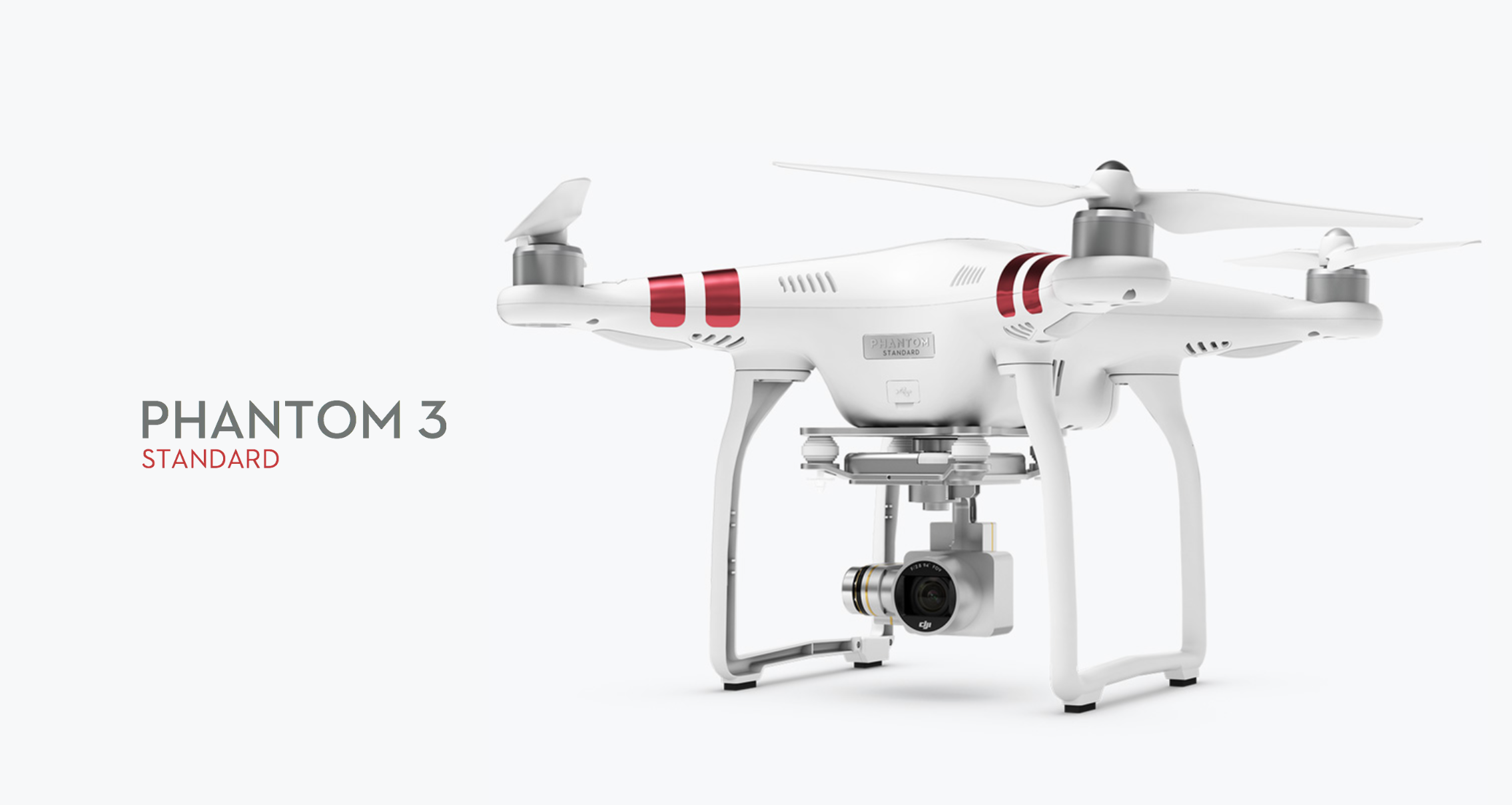
DJI Phantom series is a family of consumer and professional camera quadcopters developed by DJI of China, first released in January 2013 and produced through several generations up to the Phantom 4 Pro V2.0 and Phantom 4 RTK of 2018. Its white four-arm airframe became the visual template for the consumer camera drone. The specifications on this page refer to the Phantom 4 Pro V2.0 unless stated otherwise.
Overview
The original Phantom, released on 7 January 2013, was a ready-to-fly quadcopter with a GPS flight controller and a mount for a GoPro action camera. The Phantom 2 generation (2013–2014) added DJI's own camera, live video to a smartphone and a three-axis stabilised gimbal; the Phantom 3 (2015) brought 4K video, the Lightbridge digital link and vision positioning; and the Phantom 4 (March 2016) was the first model with forward obstacle sensing and subject tracking. The Phantom 4 Pro (November 2016) replaced the camera with a 20-megapixel 1-inch sensor, the Phantom 4 Pro V2.0 (May 2018) introduced OcuSync transmission and low-noise propellers, and the Phantom 4 RTK (October 2018) added real-time kinematic positioning for survey mapping.
Production of the Phantom 4 Pro V2.0 was suspended in late 2018 because of what DJI described as a shortage of parts from a supplier, and resumed in January 2020. In September 2019 DJI removed the Phantom line from sale in the United States; in 2026 DJI's US store still lists the Phantom 4 Pro V2.0 as not available. DJI ended service support for the Phantom 4 Pro and Phantom 4 Advanced on 1 June 2025. No Phantom 5 was released; the role of the Phantom was taken over by the folding Mavic line (see DJI Mavic series). The series is therefore treated here as retired, although DJI's support pages for the Phantom 4 Pro V2.0 and Phantom 4 RTK remain online and do not carry a discontinuation notice.
Design and capabilities
The Phantom 4 Pro V2.0 is a fixed-arm quadcopter with a diagonal motor-to-motor distance of 350 mm (the width figure on this page) and a take-off weight of 1,375 g including battery and propellers. It is powered by four brushless electric motors driven by field-oriented-control electronic speed controllers, which together with the 9455S propellers reduce noise compared with the 2016 Phantom 4 Pro. A 5,870 mAh, 15.2 V lithium-polymer battery gives a maximum flight time of approximately 30 minutes.
The camera uses a 20-megapixel 1-inch CMOS sensor with a mechanical shutter and records 4K video at up to 60 frames per second (4096 x 2160 at up to 100 Mbps in H.265). The aircraft carries stereo vision sensors facing forward, backward and downward, plus infrared sensors on both sides, giving obstacle detection from 0.7 m to 30 m ahead and behind. The OcuSync link operates on 2.4 GHz and 5.8 GHz; DJI's current specification sheet gives a maximum transmission distance of 10 km under FCC rules and 6 km under CE, SRRC and MIC rules. Maximum speed is 72 km/h in Sport mode and the service ceiling is 6,000 m above sea level.
The Phantom 4 RTK shares the airframe and camera but adds a multi-frequency GNSS receiver and RTK module for centimetre-level positioning; it weighs 1,391 g and has a 7 km FCC transmission distance.
Use cases
Early Phantoms were bought by hobbyists and photographers seeking a low-cost aerial camera platform; from the Phantom 3 onwards the line was widely used for real-estate and event photography, small-scale film production and inspection work. The 1-inch sensor and mechanical shutter of the Phantom 4 Pro made it a common choice for photogrammetry, the Phantom 4 RTK was widely used for survey-grade mapping, and the P4 Multispectral was aimed at precision agriculture.
Variants
- Phantom 1 (January 2013) – ready-to-fly quadcopter with GoPro mount and no built-in camera.
- Phantom 2 / 2 Vision / 2 Vision+ (October 2013 – April 2014) – gimbal-ready model, first DJI camera with Wi-Fi live view, then a three-axis stabilised camera.
- Phantom 3 Professional / Advanced (April 2015) – 4K (Professional) or 2.7K (Advanced) camera, Lightbridge link.
- Phantom 4 (March 2016) – forward obstacle sensing and ActiveTrack.
- Phantom 4 Pro / Pro+ (November 2016) – 20 MP 1-inch sensor, five-direction sensing; Pro+ has a screen-equipped controller.
- Phantom 4 Pro V2.0 / Pro+ V2.0 (May 2018) – OcuSync link, quieter propulsion.
- Phantom 4 RTK (October 2018) – RTK module for centimetre-level mapping.
Frequently asked questions
What is the range of the DJI Phantom series?
DJI's specification for the Phantom 4 Pro V2.0 gives a maximum transmission distance of 10 km under FCC rules and 6 km under CE rules. The Phantom 4 RTK is rated at 7 km (FCC).
How long can a Phantom 4 Pro V2.0 fly?
The maximum flight time is approximately 30 minutes on a 5,870 mAh battery, in still air at a steady cruise.
Is the DJI Phantom still in production?
No new Phantom has been released since the P4 Multispectral in 2019, DJI's US store lists the Phantom 4 Pro V2.0 as not available, and service for the Phantom 4 Pro and Advanced ended on 1 June 2025. This entry treats the series as retired.
How much does a Phantom 4 Pro V2.0 weigh?
1,375 g with battery and propellers, which places it above the 250 g registration threshold used in most jurisdictions.
SourcesChecked
- Support for Phantom 4 Pro V2.0 – DJI
- Support for Phantom 4 RTK – DJI
- Phantom 4 Pro V2.0 – DJI Store
- DJI Phantom – Wikipedia
- A Closer Look at the New DJI Phantom 4 Pro V2.0 – DroneLife
- Phantom 4 Pro V2.0 out of stock. Why? Here's DJI's answer – DroneDJ
- DJI updates website – Phantom Series is no longer available in the US – DroneDJ
- DJI ending service support for Phantom 4 Pro, Advanced drones – DroneDJ