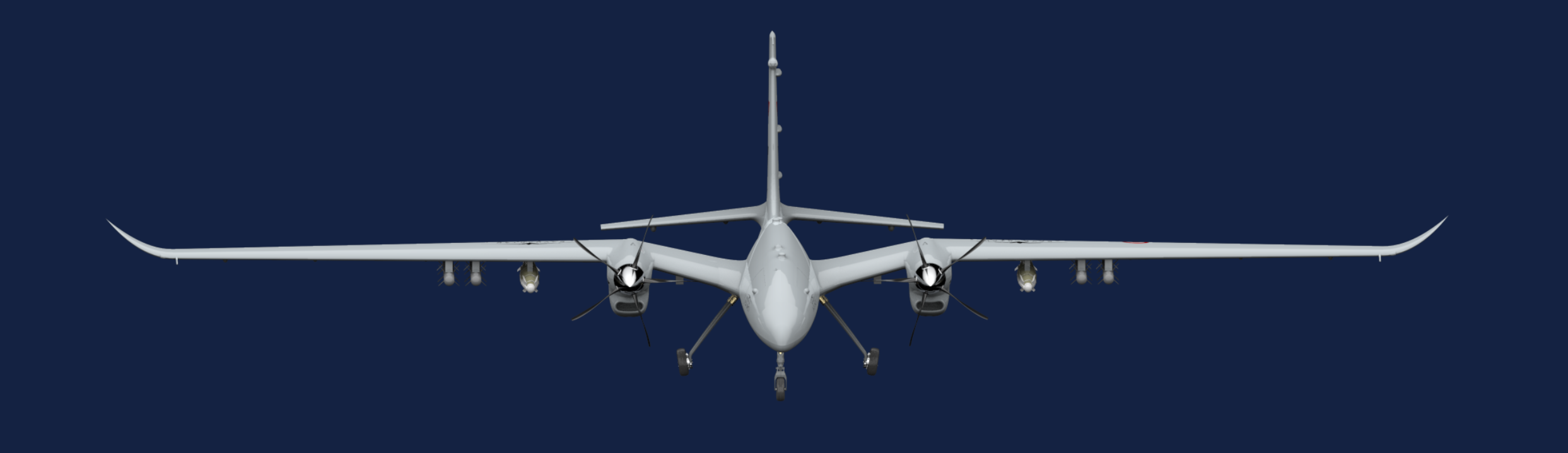
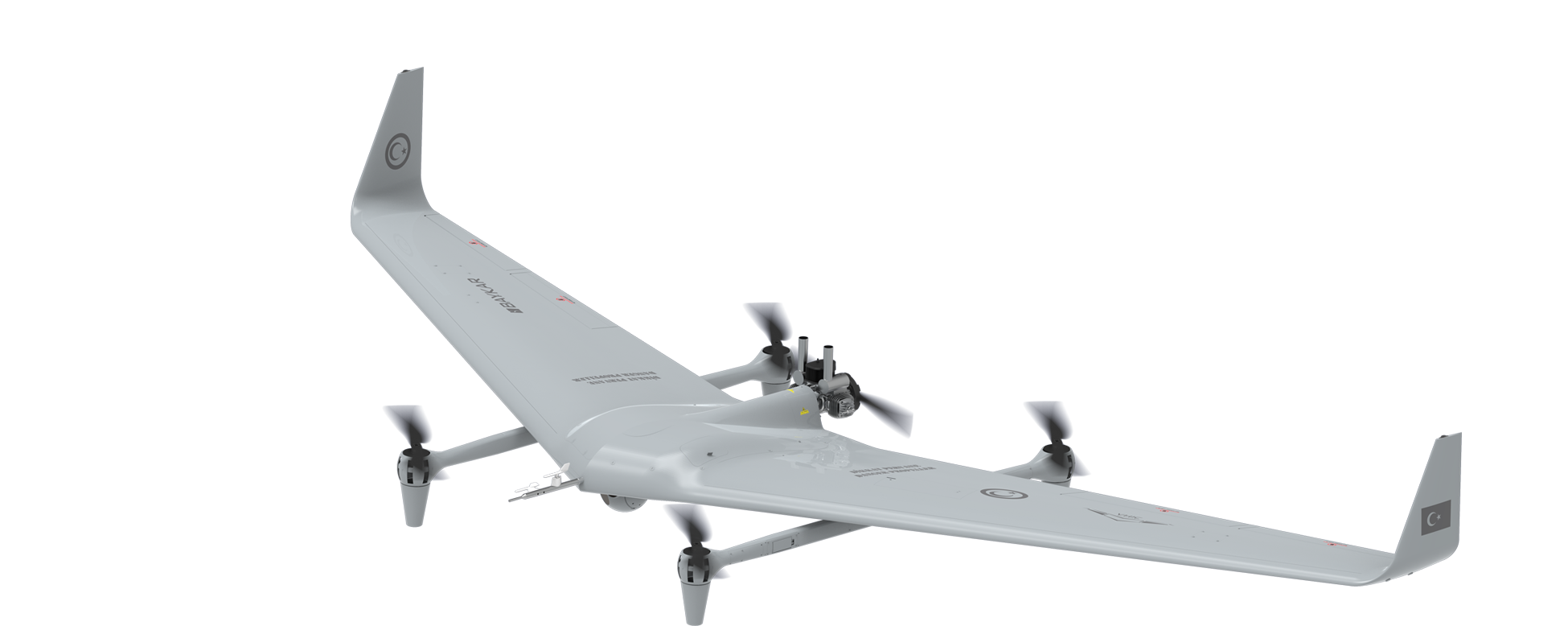
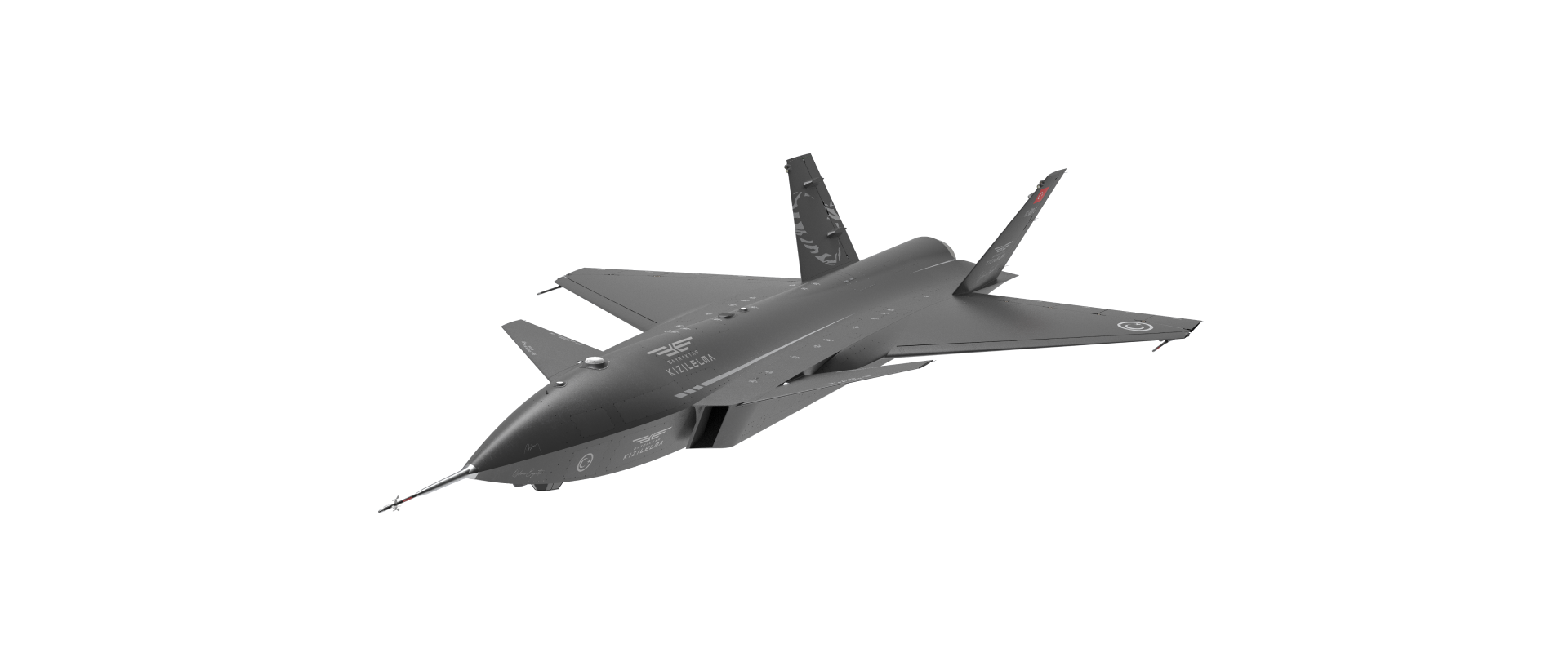
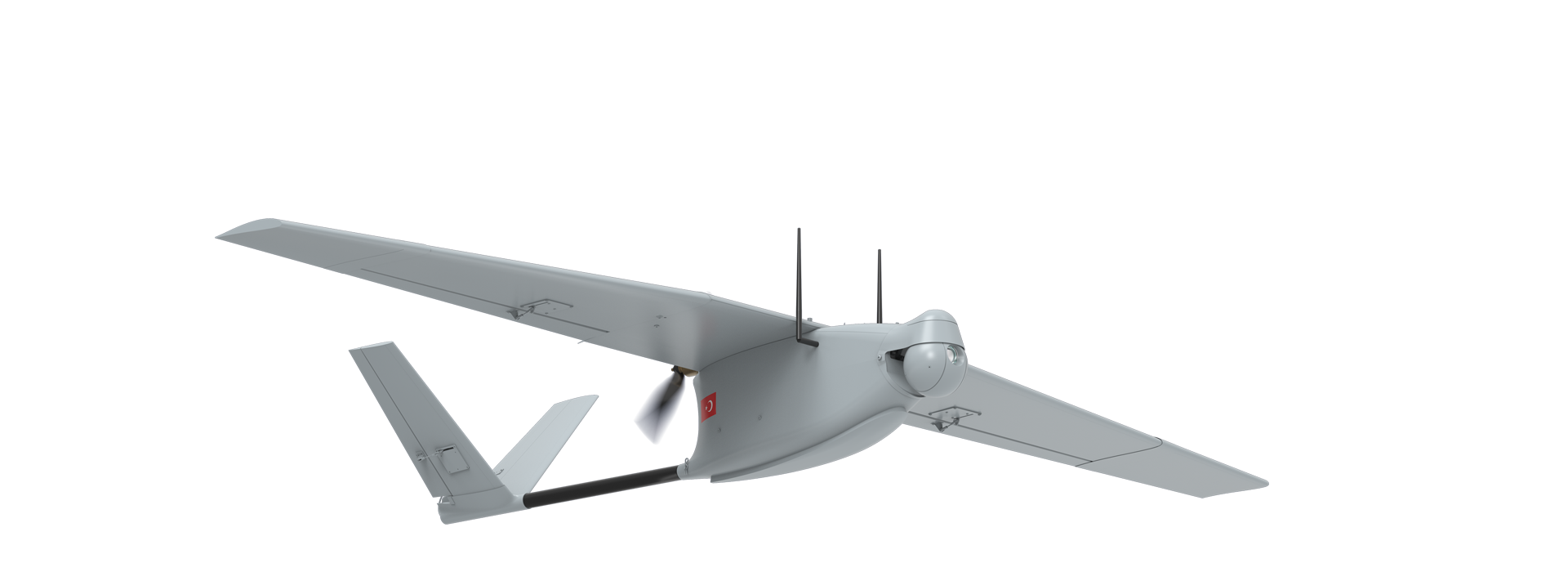
K2 Kamikaze UAV
Baykar Tech · Türkiye · also known as K2 Kamikaze, K2 · Updated
K2 Kamikaze UAV is a one-way attack UAV developed by Baykar Tech of Turkey, first flown in test formation in March 2026. Baykar describes it as the largest platform in its class, built around AI-coordinated swarm autonomy rather than a single large warhead.
Overview
Baykar first flew the K2 publicly in a 14 March 2026 press release describing formation flights over the Gulf of Saros, near the company's Keşan Flight Training and Test Center in Edirne province. Five K2 aircraft flew together over two days, with each airframe using its own onboard AI and sensors to hold "right echelon," "line" and "V" formations relative to the others; Baykar also credits the platform with "Turan" and "wall" formation modes, though it did not say these were flown during this test.
On 24 April 2026, Baykar flew the K2 alongside its companion munition, the Sivrisinek loitering munition, again from the Keşan test center, as part of what the company calls its next-generation platform family. The two aircraft were shown together to the public for the first time at the SAHA 2026 defence exhibition in Istanbul, 5–9 May 2026.
Baykar positions the K2 as a low-cost, mass-producible one-way attack platform, and has said it is researching a reusable version that could return to base after releasing its munition.
Design and capabilities
The K2 has a maximum takeoff weight of 800 kg, a 200 kg warhead payload, a length of 5.1 m and a wingspan of 10 m. It is powered by a 100 hp internal combustion engine in a pusher configuration and is designed to take off and land from short, unimproved airstrips rather than a dedicated runway. Baykar states a cruise speed of 70 KTAS (about 130 km/h) and a maximum speed of 110 KTAS (about 204 km/h), an operational range of more than 2,000 km, an endurance of more than 13 hours, and a service ceiling of 10,000 ft (3,048 m).
Navigation is designed to continue in GNSS-denied and electronic-warfare environments through visual terrain matching from an EO/IR gimbal camera and a night-capable fuselage-mounted camera, which also provide visual target lock-on and coordinate-based or visual dive attacks. Takeoff, cruise, landing and taxi are flown autonomously, and Baykar states the system includes adaptive route generation and autonomous emergency handling in the event of thrust loss. Communications run over line-of-sight and optional beyond-line-of-sight satellite datalinks, with a stated line-of-sight range beyond 100 km, and the aircraft can relay through Baykar's Bayraktar TB2, Bayraktar TB3 or Bayraktar Akıncı.
The company markets the K2 around swarm operation: multiple aircraft coordinate formation and strike patterns using onboard autonomy rather than continuous ground control, which Baykar presents as a way to multiply the effect of a single attack UAV over a target area.
Operational history
As of the SAHA 2026 debut, Baykar has not disclosed an operator, customer or export contract for the K2; the company's public material covers only its own test flights at the Keşan Flight Training and Test Center and the Gulf of Saros. The platform remains in flight testing.
Variants
Baykar has not announced a separate named variant of the K2 itself; the aircraft is developed and marketed alongside the smaller Sivrisinek loitering munition as part of the same next-generation family, flying together in company demonstrations.
Frequently asked questions
What is the range of the K2 Kamikaze UAV?
Baykar states an operational range of more than 2,000 km.
How much does the K2 Kamikaze UAV weigh?
It has a maximum takeoff weight of 800 kg, including a 200 kg warhead payload.
How long can the K2 Kamikaze UAV fly?
Baykar states an endurance of more than 13 hours.
Who makes the K2 Kamikaze UAV?
Baykar Tech of Turkey, which also builds the Sivrisinek loitering munition and the Bayraktar TB2, Bayraktar TB3 and Bayraktar Akıncı UAVs.
Is the K2 Kamikaze UAV in service?
No. As of its SAHA 2026 public debut in May 2026, it remained in flight testing, with no disclosed operator or production contract.
How does the K2 Kamikaze UAV navigate without GPS?
Baykar states it can estimate its position by visually matching terrain through an onboard gimbal camera, allowing it to operate in GNSS-denied and electronic-warfare environments.